Beyond the Surface: Unmasking the Invisible Architectures Driving Tomorrow's Tech Landscape
In the whirlwind of digital transformation, the term "technology trends" often conjures images of sleek new gadgets, viral social media features, or the latest advancements in artificial intelligence that capture headlines. Yet, beneath this visible layer of innovation lies a profound, often overlooked realm: the invisible architectures. These are the foundational frameworks, the subterranean forces, and the complex interdependencies that truly dictate the pace, direction, and impact of technological evolution. To merely observe the surface is to miss the intricate symphony of algorithms, protocols, hardware breakthroughs, and philosophical shifts that are quietly orchestrating our digital future. Understanding these unseen architects is paramount for anyone seeking to truly grasp the subterranean forces driving tomorrow's tech landscape.
This article aims to deconstruct these hidden layers, moving beyond superficial product releases to explore the fundamental shifts that are reshaping industries, societies, and our very understanding of what technology can achieve. From the deep learning models powering AI to the decentralized ledgers of Web3, and the nascent quantum computers promising an entirely new computational paradigm, we will delve into the underlying structures that are not just trending, but fundamentally building the world of tomorrow.
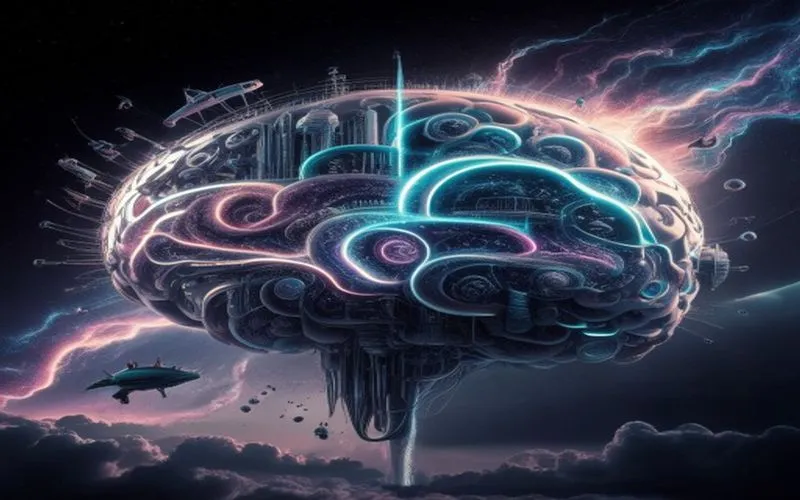
The AI Substructure: From Applications to Foundational Models
Artificial Intelligence (AI) has dominated technology news for years, but the current wave is distinct. It’s no longer just about discrete AI applications solving specific problems; it’s about the emergence of powerful, generalized foundational models. These large-scale models, trained on vast datasets, are not merely tools; they are evolving into a new kind of computational substrate, capable of understanding, generating, and transforming information across modalities. This shift is an architectural one, moving from task-specific algorithms to versatile, adaptable cognitive engines.
The core of this invisible architecture lies in transformer networks, neural network architectures that allow models to weigh the importance of different parts of input data, revolutionizing natural language processing and now extending to image, video, and even biological sequences. These models are not just learning to perform tasks; they are learning latent representations of knowledge, enabling them to generalize to new, unseen tasks with remarkable proficiency. The trend here is the commoditization of intelligence itself, where access to these foundational models, often via APIs, allows virtually any developer to infuse sophisticated AI capabilities into their products and services.
Challenges, however, are an integral part of this foundational architecture. Ethical considerations around bias, transparency, and control are not external problems but inherent design flaws or features that must be addressed at the architectural level. The energy consumption of training these colossal models demands a re-evaluation of sustainable AI infrastructure. Furthermore, the centralization of power in a few large corporations developing these models raises questions about digital sovereignty and equitable access. The future of AI will be defined not just by what these models can do, but by how their underlying architectures are designed to be robust, fair, and accessible.
Quantum Computing's Nascent Foundations: Reimagining Computation
While still largely in research labs, quantum computing represents an architectural paradigm shift far more profound than any classical computational advancement. It's not just a faster computer; it's a fundamentally different way of processing information, leveraging the principles of quantum mechanics – superposition and entanglement. The invisible architecture here is one of qubits, quantum gates, and cryogenic environments, a delicate dance of physics and engineering designed to manipulate information at its most fundamental level.
The current trend isn't widespread commercial adoption, but rather the steady, incremental progress in building stable, error-corrected quantum computers. Companies and research institutions are pouring resources into developing quantum processors, increasing qubit counts, and improving coherence times. While practical, large-scale applications are still a decade or more away, the foundational work being done today is crucial. Industries like pharmaceuticals, materials science, and cryptography are already exploring quantum algorithms that could solve problems intractable for even the most powerful supercomputers. For instance, simulating molecular interactions for drug discovery or designing new materials with specific properties could be revolutionized.
The architectural challenge for quantum computing is immense: maintaining quantum states, error correction, and interfacing these delicate systems with classical computation. The 'news' in quantum computing isn't about immediate market impact but about breakthroughs in quantum error correction, advancements in qubit stability, and the development of new quantum programming languages and algorithms. These are the invisible blueprints being drawn for a future where computational limits are redefined, promising a revolution in areas like secure communication, complex optimization, and drug development.
Decentralized Digital Architectures (Web3/Blockchain): Rebuilding Trust and Ownership
The concept of Web3, powered by blockchain and decentralized ledger technologies (DLT), represents an architectural overhaul of the internet itself. Moving beyond the centralized platforms of Web2, Web3 aims to create a more open, trustless, and user-centric digital environment. The invisible architecture here is distributed: data is not stored on single servers but across a network of nodes, secured by cryptographic proofs, and governed by consensus mechanisms.
The current trend sees blockchain technology extending far beyond cryptocurrencies. We are witnessing the development of decentralized finance (DeFi), where traditional financial services are rebuilt on public blockchains, removing intermediaries. Non-fungible tokens (NFTs) are establishing new paradigms for digital ownership and intellectual property. Decentralized Autonomous Organizations (DAOs) are experimenting with new models of governance and collective action, providing frameworks for communities to make decisions without hierarchical control. These are not merely applications but new architectural patterns for digital interactions and value exchange.
This architectural shift challenges established power structures and introduces novel considerations. Scalability remains a significant hurdle for many blockchain networks, prompting continuous innovation in layer-2 solutions and alternative consensus mechanisms. User experience, often cumbersome in early Web3 applications, is being refined. Regulatory frameworks are scrambling to catch up with the rapid pace of innovation. Ultimately, Web3's architecture is about redefining the fundamental relationship between users, data, and digital platforms, aiming for a future where digital ownership is inherent and trust is distributed rather than centralized. Decoding these unseen currents is key to understanding the next phase of digital evolution.
The Intelligent Edge: Beyond Cloud Centralization
For the past decade, cloud computing has been the dominant architectural paradigm, centralizing processing and storage. However, the proliferation of IoT devices, autonomous systems, and real-time data needs is driving a new architectural shift towards the 'intelligent edge.' Edge computing brings computation and data storage closer to the sources of data generation, reducing latency, conserving bandwidth, and enabling immediate decision-making.
The invisible architecture of the intelligent edge is a vast, distributed network extending from data centers to local servers, smart devices, sensors, and even individual machines. The trend isn't to replace the cloud but to augment it, creating a hybrid architecture where the cloud handles large-scale data analytics and long-term storage, while the edge processes critical, time-sensitive data locally. This is particularly crucial for applications like autonomous vehicles, smart factories, remote healthcare monitoring, and augmented reality, where milliseconds of delay can have significant consequences.
The challenges in building this architecture include managing immense numbers of diverse edge devices, ensuring robust security across a fragmented landscape, and developing new software frameworks that can seamlessly distribute workloads between the edge and the cloud. Edge AI, where machine learning models run directly on edge devices, is a critical component, enabling real-time inference without constant communication with a central server. This distributed computational nervous system is fundamentally reshaping how data is collected, processed, and acted upon, laying the groundwork for truly intelligent environments.
Advanced Materials & Nanotechnology: The Physical Undercurrents
While much of the technology discussion focuses on software and digital paradigms, the physical world—specifically advanced materials and nanotechnology—forms an essential, often overlooked, architectural layer. Innovations at the atomic and molecular scale are enabling new hardware capabilities that drive subsequent digital advancements. This invisible architecture is about crafting the very building blocks of future technology.
The current trends involve the development of novel materials with extraordinary properties. Graphene and other 2D materials promise breakthroughs in electronics, energy storage, and sensors due to their unparalleled strength, conductivity, and flexibility. Metamaterials are engineered to possess properties not found in nature, such as manipulating light or sound in unprecedented ways, leading to advancements in optics, stealth technology, and communication. Self-assembling materials and molecular manufacturing, though nascent, hint at a future where devices are built atom by atom with incredible precision.
These material innovations are the silent enablers of more powerful processors, more efficient batteries, smaller and more sensitive sensors, and even new forms of human-machine interfaces. They are the physical bedrock upon which quantum computers are being built, the components that will make edge devices more energy-efficient, and the substrates for next-generation AI hardware. Understanding these physical undercurrents reveals how breakthroughs in fundamental science are continually reshaping the possibilities of the digital realm.
Bio-Convergence & Digital Health Infrastructure: Blending Biological and Digital Realms
Another crucial architectural trend lies at the intersection of biology and digital technology, often termed bio-convergence. This involves the integration of biological systems with computational systems, leading to profound advancements in healthcare, biotech, and even human augmentation. The invisible architecture here is a complex interplay of genetic sequencing data, AI-driven diagnostics, sophisticated bio-sensors, and personalized therapeutic platforms.
Key trends include personalized medicine, where genetic profiles and vast health data are analyzed by AI to tailor treatments specifically for individuals. Wearable technologies are evolving into sophisticated health monitoring devices, continuously collecting biometric data that feeds into larger digital health ecosystems. Brain-Computer Interfaces (BCIs), while still highly experimental, are pushing the boundaries of human-machine interaction, offering potential for restoring lost function or even augmenting cognitive abilities.
The architectural challenge in bio-convergence is immense, requiring seamless integration of diverse data types (genomic, phenotypic, environmental), ensuring data privacy and security, and developing robust AI models that can interpret complex biological signals. This trend is not just about new medical devices; it’s about building a digital infrastructure that can understand, interact with, and even modify biological systems, opening up unprecedented possibilities for extending human health and capabilities, while also raising significant ethical and societal questions about the nature of humanity.
Cybersecurity as the Invisible Shield: Architecting Resilience in a Connected World
As these intricate, interconnected architectures of AI, quantum, Web3, edge, and bio-convergence continue to evolve, one invisible architecture becomes increasingly critical: cybersecurity. It is the defensive layer, the unseen shield that must be woven into the very fabric of every new technological advancement. Without robust cybersecurity, the benefits of these innovations are undermined by vulnerabilities to attack, data breaches, and systemic failures.
The trend in cybersecurity is no longer merely reactive defense but proactive, adaptive resilience. This means architecting security from the ground up, implementing zero-trust principles, and leveraging AI and machine learning to detect and respond to threats in real-time. With the rise of quantum computing, post-quantum cryptography is emerging as a critical architectural shift, preparing our digital infrastructure for a future where current encryption methods may be vulnerable.
Furthermore, the decentralized nature of Web3 and edge computing presents unique cybersecurity challenges, requiring new approaches to identity management, data integrity, and consensus security. The bio-convergence trend, dealing with highly sensitive personal health data and potentially invasive technologies, demands the highest standards of privacy and data protection. Cybersecurity, therefore, is not a separate feature but an integral, foundational architecture that underpins the trust and stability of our entire digital ecosystem. Its invisible hand ensures that the revolutionary potential of other technologies can be realized securely.
Conclusion: The Symbiotic Dance of Invisible Architectures
The future of technology, as evidenced by the latest news and trends, is not merely a collection of flashy innovations but a complex tapestry of invisible architectures that are continually being designed, refined, and interconnected. From the profound algorithmic structures of foundational AI models to the quantum-mechanical blueprints of future computers, the distributed networks of Web3, the intelligent web of edge devices, the atomic precision of advanced materials, the biological-digital interfaces of bio-convergence, and the pervasive shield of cybersecurity—each layer plays a critical role.
These architectures are not developing in isolation; they are engaged in a symbiotic dance, each influencing and enabling the others. AI accelerates material discovery; quantum computing could break current encryption and require new cybersecurity; edge computing empowers AI on devices; and bio-convergence relies on advanced sensors and data processing. To truly understand the trajectory of technology and its impact on society, we must look beyond the visible manifestations and appreciate the intricate, often unseen, engineering marvels that form its very foundation. It is in deconstructing these underlying forces that we gain a deeper insight into the revolutionary potential and inherent challenges of our rapidly evolving digital world, and how it will continue to shape our future.