Unseen Architects: Deconstructing the Subterranean Forces Driving Tomorrow's Tech Landscape
In a world saturated with buzzwords and fleeting fads, understanding the true trajectory of technology requires more than just skimming headlines. While concepts like Artificial Intelligence, blockchain, and augmented reality frequently dominate discussions, their profound impact isn't merely in their surface-level applications. True insight lies in deconstructing the underlying architectures, the subtle symbiotic relationships, and the often-unseen currents that are meticulously reshaping our digital and physical realities. This article delves beyond the algorithms and hype to explore the foundational shifts, the unseen architects, and the intertwined forces driving the latest technology news and trends.
The digital revolution isn't a singular event but a continuous, multi-layered transformation, powered by intricate systems that often operate beneath our conscious awareness. To truly grasp the future, we must look at the synergistic evolution of these components, how they interlock, and the systemic changes they precipitate. It's about recognizing that every major breakthrough is not an isolated phenomenon but a node in a vast, interconnected network of innovation, constantly influencing and being influenced by its peers. This unique perspective allows us to anticipate not just the next big gadget, but the fundamental shifts in how we live, work, and interact with the world.
The Symbiotic Evolution: AI at the Edge of Intelligence
Artificial Intelligence (AI) has moved beyond the realm of science fiction to become a ubiquitous presence, but its latest evolution is less about raw processing power in centralized clouds and more about distributed intelligence. The symbiotic relationship between AI and edge computing is perhaps one of the most critical, yet often understated, trends shaping current technology. Edge computing, by processing data closer to its source, addresses critical issues of latency, bandwidth, and privacy, making AI applications more responsive, efficient, and secure. Instead of sending all data to a distant server for analysis, AI models are increasingly deployed directly on devices – from autonomous vehicles and smart factories to wearables and IoT sensors.
This architectural shift enables real-time decision-making, which is paramount for critical applications. Imagine a self-driving car reacting to an unexpected obstacle, or a smart factory optimizing production based on immediate sensor feedback. The efficiency gains are enormous, reducing the computational load on central servers and minimizing data transfer, which in turn leads to lower energy consumption. Furthermore, privacy is significantly enhanced as sensitive data can be processed and analyzed locally without ever leaving the device or network. This synergy represents a foundational re-architecture of how AI operates, moving from a centralized brain to a distributed nervous system, with intelligence permeating every corner of our interconnected world. Understanding this symbiotic architecture and its unseen interconnections is key to predicting the next wave of AI-driven innovation.
Quantum Computing's Subterranean Ripple: Reshaping the Unseen Foundations
While still nascent and largely confined to research labs, quantum computing continues to make significant, albeit subterranean, progress. Its impact is not yet felt in everyday technology, but the theoretical and experimental advancements create ripple effects that promise to fundamentally redefine vast sectors. Unlike classical computers that store information as bits (0s or 1s), quantum computers use qubits, which can exist in multiple states simultaneously (superposition) and be entangled with each other. This allows them to perform complex calculations at speeds impossible for even the most powerful supercomputers.
The unseen currents generated by quantum computing are primarily in its potential to break current encryption standards, revolutionize materials science, accelerate drug discovery, and optimize complex logistical problems. While a fully fault-tolerant quantum computer is still years away, the mere prospect drives innovation in post-quantum cryptography, forcing governments and corporations to prepare for a future where traditional security protocols might be obsolete. This foundational shift, though hidden from the public eye, is compelling a re-evaluation of security architectures globally. Furthermore, the ability to simulate molecular interactions with unprecedented accuracy holds the promise of developing new materials with extraordinary properties and designing drugs with pinpoint precision, ushering in an era of scientific discovery previously unimaginable.
Web3 and Decentralization: Deconstructing the Digital Monoliths
Beyond the volatile world of cryptocurrencies, Web3 represents a profound architectural shift in the very structure of the internet. It envisions a decentralized web, where control and ownership are distributed among users rather than concentrated in the hands of a few tech giants. This movement, driven by blockchain technology, smart contracts, and decentralized autonomous organizations (DAOs), is quietly deconstructing the hidden architectures behind the current digital revolution.
At its core, Web3 is about empowering individuals through self-sovereign identity, data ownership, and censorship resistance. Imagine an internet where your digital identity isn't tied to a single platform but is universally recognized and controlled by you. Imagine social media platforms where content creators genuinely own and monetize their work, free from arbitrary algorithmic changes or content policies. While the journey to a fully decentralized web is fraught with challenges related to scalability, usability, and regulation, the underlying architectural principles are already inspiring new forms of digital governance, economic models, and community building. This trend is not merely about new applications; it's about rewriting the foundational rules of the internet, leading to a more open, transparent, and equitable digital future.
Augmented Reality: The Blurring of Realities and Spatial Computing
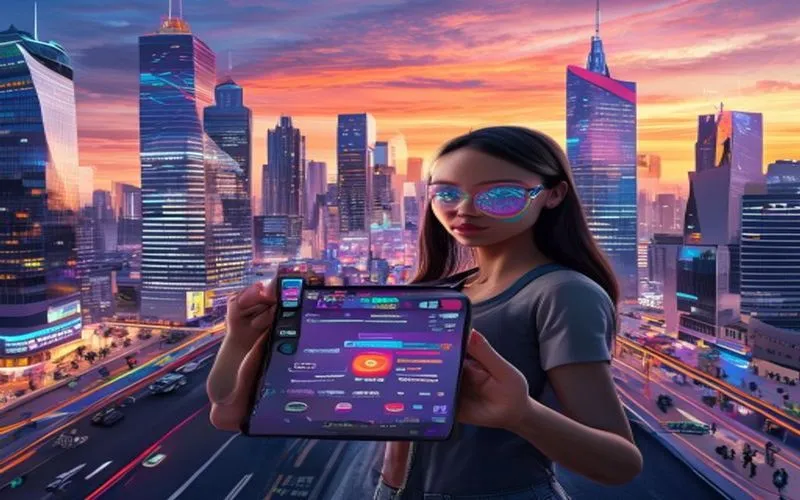
Augmented Reality (AR) is often perceived through the lens of immersive gaming or fancy new headsets. However, the true architectural significance of AR lies in its ability to seamlessly blend digital information with the physical world, creating a new paradigm of spatial computing. It's not just about overlaying graphics; it's about understanding and interacting with our environment in entirely new ways, fueled by advanced sensor fusion, real-time mapping, and sophisticated computer vision algorithms.
The unseen forces driving AR are rooted in the development of robust spatial anchors, persistent digital content layers, and intuitive human-computer interfaces that extend beyond traditional screens. From industrial maintenance technicians receiving real-time instructions overlaid on complex machinery, to surgeons planning intricate procedures with 3D anatomical models, AR is transforming professional fields. In consumer spaces, it's evolving from novelty filters to practical tools for navigation, education, and enhanced shopping experiences. The convergence of AI, advanced optics, and miniaturized processing power is pushing AR devices towards becoming lighter, more powerful, and ultimately, an invisible layer of digital intelligence enriching our perception of the real world. This trend is unmasking convergent forces that will redefine how we consume information and interact with our surroundings, leading to a future where the line between the physical and digital becomes increasingly blurred.
Sustainable Technology: A New Imperative for Architecture
As technology permeates every aspect of our lives, the environmental footprint of our digital world is growing exponentially. From the energy consumption of massive data centers to the e-waste generated by rapidly evolving hardware, the sustainability of technology has become a critical architectural imperative. The latest technology trends are witnessing a conscious shift towards designing systems that are not only efficient and powerful but also environmentally responsible.
This includes the development of greener hardware, utilizing recycled materials, and designing components for longevity and ease of repair. More profoundly, it involves optimizing software and algorithms for energy efficiency, recognizing that lines of code can have a tangible impact on carbon emissions. Cloud providers are investing heavily in renewable energy sources for their data centers, and innovative cooling technologies are becoming standard. The push for a circular economy within the tech industry—where products are designed for durability, reusability, and recyclability—is not just an ethical choice but a strategic one, driven by both consumer demand and regulatory pressures. This unseen architectural shift towards sustainability is critical for the long-term viability of technological progress and our planet. It highlights a growing awareness that the foundations of tomorrow's tech must be built on principles of environmental stewardship.

The Ethics and Governance of Emerging Technologies
With great technological power comes great responsibility. As AI systems become more autonomous, data collection more pervasive, and digital interactions more intertwined with our identities, the ethical and governance frameworks governing these technologies are becoming as crucial as the technologies themselves. This is an invisible architectural layer, a societal infrastructure that must evolve in lockstep with innovation.
Discussions around algorithmic bias, data privacy, the future of work, and the potential for misuse of powerful AI tools are no longer academic debates but urgent societal challenges. Legislators globally are grappling with how to regulate AI, ensure data sovereignty, and protect individual rights in an increasingly digital world. This trend highlights the critical need for a human-centric approach to technology design, where ethical considerations are baked into the very architecture of systems from conception. It requires a multidisciplinary effort involving technologists, ethicists, policymakers, and civil society to establish robust frameworks that guide responsible innovation and mitigate potential harms, ensuring that technology serves humanity's best interests.
The Future of Human-Technology Interaction: Beyond Screens
For decades, our primary interface with technology has been through screens and physical input devices. However, a significant subterranean shift is occurring in how we interact with the digital realm, moving towards more intuitive, immersive, and less intrusive methods. This involves advancements in natural language processing, haptic feedback, brain-computer interfaces (BCIs), and ambient computing.
Imagine conversing with AI systems that understand context and nuance as well as a human, receiving tactile feedback that simulates virtual textures, or even controlling digital devices with thought alone. Ambient computing envisions a world where technology seamlessly integrates into our environment, anticipating our needs without explicit commands, fading into the background until needed. These advancements represent a profound re-architecture of the human-computer interface, making technology an extension of ourselves rather than a separate tool we consciously operate. It promises a future where technology is truly ubiquitous, yet almost invisible, enhancing our capabilities in ways that feel natural and intuitive.
The Role of Data Architectures in an AI-Driven World
Behind every intelligent system lies a meticulously crafted data architecture. In an AI-driven world, the quality, accessibility, and governance of data are more critical than ever, forming the bedrock upon which all advanced analytics and machine learning models are built. This foundational aspect, though often unseen by the end-user, is a major trend shaping the effectiveness and reliability of modern technology.
Organizations are investing heavily in robust data pipelines, data lakes, and data fabrics that can handle vast volumes of disparate data, ensuring it is clean, structured, and readily available for AI algorithms. Concepts like MLOps (Machine Learning Operations) are emerging to manage the entire lifecycle of AI models, from data ingestion and model training to deployment and monitoring, ensuring scalability, reproducibility, and ethical compliance. The ability to architect resilient, secure, and ethical data systems is becoming a core competency for any entity leveraging AI. Without sound data architecture, even the most sophisticated AI algorithms are rendered ineffective, highlighting data as the silent, yet essential, architect of the intelligent future.
Cybersecurity as the Foundational Layer: An Ever-Evolving Architecture
As our world becomes increasingly digital and interconnected, cybersecurity transcends being a mere feature to become the foundational architectural layer upon which all other technologies rest. The constant evolution of cyber threats necessitates an equally dynamic and adaptive security architecture, a continuous process of building and rebuilding digital defenses.
The latest trends in cybersecurity move beyond perimeter defenses to embrace a 'zero-trust' model, where no entity, inside or outside the network, is automatically trusted. This involves micro-segmentation, continuous verification, and least-privilege access, fundamentally altering how digital assets are protected. AI and machine learning are increasingly integrated into security operations for threat detection, anomaly analysis, and automated response, creating intelligent defense systems. Furthermore, the push for quantum-resistant cryptography, as mentioned earlier, is a proactive measure to secure future digital communications. The architects of tomorrow's technology must inherently build security from the ground up, making it an intrinsic part of every design choice, ensuring resilience against an ever-more sophisticated threat landscape. This invisible layer of defense is the silent guardian of our digital civilization, continuously adapting to new challenges.
Conclusion: The Unseen Tapestry of Tomorrow
The latest technology news and trends, when viewed through the lens of their underlying architectures and symbiotic relationships, reveal a landscape far more intricate and profound than surface-level observations suggest. From the distributed intelligence of edge AI and the future-proofing potential of quantum computing, to the empowering decentralization of Web3, the immersive spatial computing of AR, the ethical considerations embedded in design, the intuitive evolution of human-tech interaction, the critical role of data architectures, and the foundational necessity of cybersecurity—each trend is a thread in a vast, unseen tapestry.
Understanding these subterranean shifts allows us to move beyond passive consumption of technological advancements to active engagement and foresight. The future of technology is not merely about what new devices emerge, but about how these unseen architects are reshaping the very fabric of our digital existence, driving us towards a future of unprecedented interconnectedness, intelligence, and complexity. By looking beyond the obvious, we gain a deeper appreciation for the forces at play and better position ourselves to navigate, influence, and ultimately thrive in the evolving digital era.