The Unseen Currents: Decoding the Subterranean Architectures Driving Digital Evolution
In a world captivated by the dazzling display of technological innovation, from viral AI art generators to the immersive promises of the metaverse, it’s easy to focus on the surface-level manifestations of digital progress. Yet, beneath this visible layer, a complex tapestry of unseen currents is shaping the very foundation of our digital future. These subterranean architectures – the intricate interdependencies, ethical undercurrents, and fundamental shifts in how technology is conceived, built, and deployed – are the true drivers of the next wave of revolution. To truly comprehend the trajectory of the latest technology news and trends, we must venture beyond the immediate headlines and explore these deeper, often overlooked forces that are quietly redefining human-computer interaction, economic structures, and societal norms. This article delves into these profound transformations, dissecting the unseen yet powerful currents that are propelling digital evolution forward, providing a perspective that moves beyond the superficial to grasp the underlying complexities.
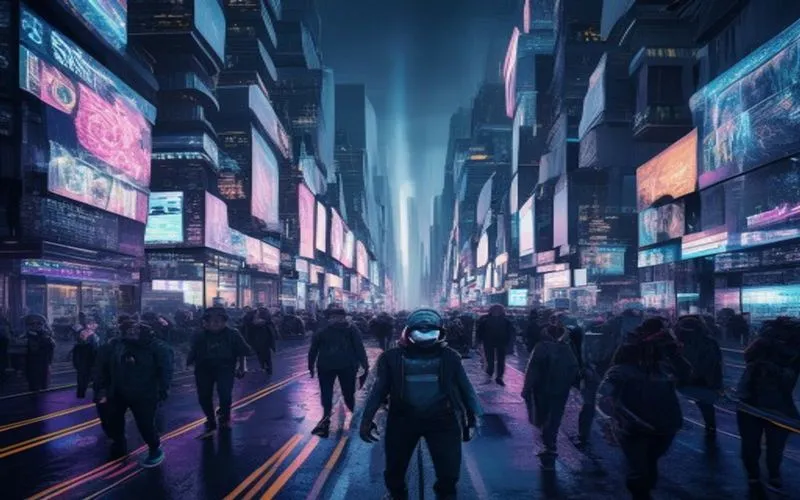
The AI Epoch: Beyond the Generative Hype to Algorithmic Architectures
Artificial Intelligence (AI) has dominated headlines, particularly with the meteoric rise of generative AI models capable of creating text, images, and even code with astonishing proficiency. However, the true impact of AI extends far beyond these impressive, user-facing applications. The unseen current of AI lies in its deepening integration into the core infrastructure of nearly every industry. We're witnessing the silent automation of complex decision-making processes, the optimization of supply chains, and the personalization of vast digital experiences—often without explicit user awareness. This pervasive embedding of AI into critical systems raises profound questions about the architectures we are building.
Consider the algorithms that govern financial markets, health diagnostics, or even judicial systems. These are not merely tools but increasingly autonomous agents with significant power. The "unseen" here refers to the opaque nature of many of these algorithms – their training data, their inherent biases, and the criteria they use to make decisions. The challenge for 2026 and beyond is not just developing more powerful AI, but building explainable AI (XAI), where the reasoning behind an AI's output is transparent and auditable. The architectural shift involves moving from black-box models to transparent, ethically aligned systems that can be scrutinized and held accountable. This deep integration also necessitates robust AI governance frameworks and regulatory oversight to ensure fairness, privacy, and control, addressing the often-invisible biases embedded within vast datasets that propagate societal inequalities. The future of AI is not just about what it can do, but how we engineer its ethical foundations and ensure its underlying logic serves humanity responsibly.
Quantum Computing: The Cryptic Promise of Computational Redefinition
While still largely confined to laboratories and high-performance computing centers, quantum computing represents a potent unseen current with the potential to fundamentally redefine the very architecture of computation. Unlike classical computers that store information as bits (0s or 1s), quantum computers use qubits, which can exist in multiple states simultaneously (superposition) and be interconnected (entanglement). This allows them to process vast amounts of information in ways impossible for even the most powerful supercomputers, promising breakthroughs in fields from cryptography to material science and drug discovery.
The "unseen" aspect here is two-fold. Firstly, its immediate practical applications are not yet mainstream, but its development is driving immense research and investment, setting the stage for future disruption. Secondly, the very principles of quantum mechanics that underpin it are counter-intuitive and largely invisible to our classical understanding, yet they hold the key to unlocking unprecedented computational power. As quantum research advances, it's also fueling a race in quantum-resistant cryptography, preparing for a future where current encryption methods could be easily broken. This architectural shift in computing paradigms represents a long-term, foundational change that will ripple through every aspect of digital infrastructure, from secure communication to advanced simulations, necessitating a complete re-evaluation of our digital security frameworks long before quantum machines become readily available. The ongoing, quiet advancements in quantum error correction and qubit stability are the unseen battles being fought today, paving the way for a quantum-powered tomorrow.
Web3 and Decentralization: Rebuilding the Digital Trust Foundation
The concepts of Web3, blockchain, and decentralization are often misunderstood, frequently conflated with speculative cryptocurrencies or fleeting NFT trends. However, their true significance lies in a profound architectural shift: the endeavor to rebuild the foundational trust mechanisms of the internet. The current Web2 paradigm is characterized by centralized platforms controlling user data, content, and transactions. Web3 seeks to create a more distributed, peer-to-peer internet where ownership and control are returned to the users.
The unseen current here is the re-engineering of digital interactions at a protocol level. Instead of relying on central authorities, blockchain technology, the backbone of Web3, creates immutable, transparent ledgers secured by cryptographic proofs. This enables the development of decentralized applications (dApps), self-sovereign identity systems, and decentralized autonomous organizations (DAOs) that operate without intermediaries. The shift from a client-server model to a distributed network architecture promises greater resilience, censorship resistance, and data privacy. While challenges remain—scalability, regulatory uncertainty, and user experience—the underlying philosophy and architectural blueprints of Web3 are pushing for a more equitable and democratic digital ecosystem. It represents an unseen but powerful undercurrent towards a future where digital trust is verifiable by code, not by corporate policy, fundamentally reshaping how we interact with digital assets, services, and each other, ensuring that data sovereignty becomes an inherent right rather than a granted privilege. The development of robust, secure, and user-friendly decentralized infrastructures is the ongoing, unseen work.
The Metaverse: Interconnected Fabrics of Persistent Digital Worlds
The metaverse, often presented as merely a collection of virtual reality (VR) headsets, is in fact a much grander, unseen architectural aspiration: the creation of persistent, interconnected digital worlds that blend physical and virtual realities. This isn't just about gaming or entertainment; it's about building a new computational layer where digital and physical experiences converge, impacting work, social interaction, commerce, and identity. The unseen currents driving the metaverse are the advancements in spatial computing, digital twins, real-time 3D rendering, and interoperability protocols that will allow seamless transitions between diverse virtual environments.
Consider the potential for digital twins in urban planning, where entire cities can be simulated and optimized in a virtual realm before physical construction. Or the possibility of remote work evolving into collaborative experiences within immersive 3D spaces, complete with digital avatars and interactive tools. The architectural challenge lies in building these interoperable frameworks, establishing shared standards for digital assets and identities, and creating a robust, low-latency infrastructure capable of supporting billions of concurrent users. Furthermore, ethical considerations surrounding digital ownership, privacy within virtual spaces, and the psychological impact of prolonged immersion are critical unseen dimensions that must be addressed as this complex ecosystem evolves. The metaverse isn't a singular destination but an evolving fabric of interconnected digital experiences, woven together by unseen standards and shared protocols that allow for a truly expansive digital existence. The invisible labor of defining these standards and building the foundational tools is shaping tomorrow's immersive realities.
Sustainable Tech and Green Computing: The Environmental Imperative
As the digital revolution accelerates, an increasingly urgent, yet often unseen, current is the imperative for sustainable technology and green computing. The environmental footprint of our digital lives is substantial, from the enormous energy consumption of data centers and AI training models to the growing problem of electronic waste (e-waste). The architectural shift here involves designing technology with environmental impact in mind, from chip level to data center operations and the entire product lifecycle.
This unseen current drives innovation in energy-efficient hardware, renewable energy sources for data centers, and optimized algorithms that require less computational power. Companies are exploring circular economy principles for electronics, emphasizing repair, reuse, and recycling to minimize waste. Furthermore, technology itself is being leveraged as a tool for sustainability, with AI optimizing energy grids, IoT sensors monitoring environmental conditions, and blockchain tracing sustainable supply chains. The future of technology is inextricably linked to its environmental responsibility. This requires an architectural paradigm shift where sustainability is not an afterthought but a core design principle, from the materials used in manufacturing to the energy sources powering the cloud, prompting a fundamental re-evaluation of every component's ecological impact. The quiet but powerful movement towards carbon-neutral computing and responsible resource management is an essential, often invisible, component of long-term digital progress, directly influencing the ethical undercurrents of current technology trends.
Neurotechnology and Human-Computer Interface (HCI): The Intimate Frontiers
Perhaps the most intimate and ethically complex of the unseen currents is the rapid advancement in neurotechnology and sophisticated Human-Computer Interfaces (HCI), particularly Brain-Computer Interfaces (BCIs). While still in nascent stages for widespread consumer use, BCIs are already showing incredible promise in medical applications, enabling individuals with severe paralysis to communicate or control prosthetic limbs with their thoughts. This technology represents a profound architectural shift in how humans interact with machines, moving beyond physical interfaces to direct neural communication.
The "unseen" here is the direct bridging of the human mind with digital systems, blurring the lines between biological and artificial intelligence. This current raises unprecedented ethical, philosophical, and societal questions about mental privacy, potential cognitive augmentation, and the very definition of human identity in an increasingly augmented world. The architectural challenges involve not just the hardware—developing non-invasive, high-resolution BCI devices—but also the software and data analytics to accurately interpret neural signals and translate them into actionable commands or insights. As neurotechnology advances, its influence will extend beyond medical applications to potentially enhance learning, creativity, and communication, pushing the boundaries of what it means to be human in the digital age. The subtle, yet profound, integration of our biological minds with digital systems constitutes an invisible revolution in human interaction, requiring careful consideration of the long-term societal and individual implications, particularly concerning data security and mental autonomy.
The Symbiotic Nexus of Progress and Ethics
Each of these unseen currents—AI's pervasive algorithms, quantum's disruptive potential, Web3's decentralized trust, the Metaverse's interconnected realities, sustainable tech's environmental imperative, and neurotechnology's intimate interfaces—does not exist in isolation. They form a symbiotic nexus, an intricate web of interdependencies that collectively defines the future of digital evolution. The architectural strength of this nexus will depend not just on technological prowess but equally on the robust ethical frameworks and governance structures we build around them.
The unseen force that binds these currents is the urgent need for a proactive, human-centric approach to technological development. This involves embedding ethical considerations—such as privacy-by-design, algorithmic fairness, data sovereignty, and digital inclusivity—into the very architecture of these emerging technologies. It requires cross-disciplinary collaboration among technologists, ethicists, policymakers, and civil society to navigate complex dilemmas that arise from unprecedented capabilities. The conversations about digital rights, responsible innovation, and the societal impact of automation are not peripheral but central to building a sustainable and equitable digital future. Understanding these intricate relationships and their ethical undercurrents is paramount to shaping a digital world that truly serves humanity, rather than merely advancing technological frontiers.
Conclusion: Navigating the Depths of Digital Evolution
The landscape of technology news and trends is far richer and more complex than what meets the eye. By peeling back the layers and exploring the unseen currents—the subterranean architectures, ethical undercurrents, and fundamental shifts—we gain a deeper appreciation for the forces driving digital evolution. From the silent integration of AI into our infrastructure to the profound redefinition of trust and interaction promised by Web3 and neurotechnology, these deeper trends are reshaping our world in ways that are both exhilarating and challenging. Understanding these underlying mechanisms allows us to move beyond passive observation to active participation, enabling us to influence the direction of these powerful currents.
As we stand at the precipice of these transformative changes, it is incumbent upon us to look beyond the immediate dazzling innovations and focus on the unseen architects of tomorrow's digital realm. The future will be defined not just by what technology can do, but by the thoughtful, ethical, and inclusive architectures we build beneath the surface, ensuring that the digital age truly elevates human potential and addresses our collective challenges. The real revolution is not just in the trends themselves, but in the unseen foundations being laid for generations to come, fostering a responsible and sustainable technological future.