Decoding PPOB System Architecture and Logic: The Unsung Hero of Modern Finance
Understanding the PPOB System: A Unique Perspective
Payment Point Online Bank (PPOB) systems are the unsung heroes of modern finance, bridging traditional cash-based transactions with digital payment ecosystems. While often overshadowed by cryptocurrencies and blockchain technologies, PPOB systems form the backbone of financial accessibility for millions. This article analyzes its architecture, dissecting its layered design and operational logic to highlight its critical role in global economies.
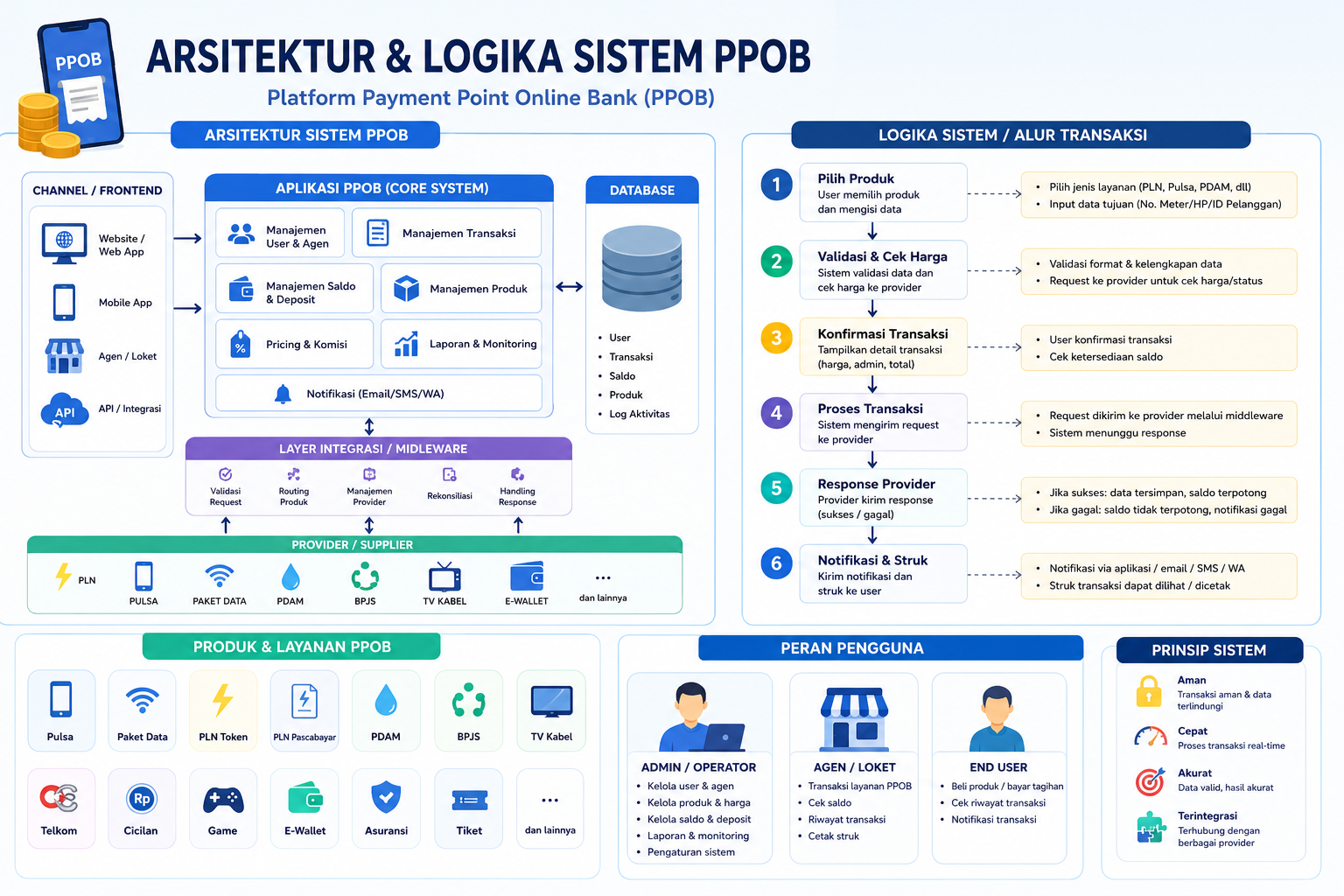
Layered Architecture of PPOB Systems
PPOB systems adopt a multi-tier architecture to ensure scalability, security, and efficiency. The core components include:
- Customer Interface Layer: A user-friendly platform (mobile app, web portal, or physical kiosks) for initiating transactions.
- Payment Gateway Layer: Handles encryption, authentication, and routing of payments between users and financial institutions.
- Back-End Processing Layer: Manages transaction validation, settlement, and reconciliation with banks and service providers.
- Data Storage & Analytics Layer: Stores transaction data securely while enabling real-time analytics for fraud detection and operational insights.
This design mirrors cloud-based architectures, allowing PPOB systems to dynamically scale during high-traffic events like holiday sales or utility bill cycles.
Operational Logic: From Swipe to Settlement
The logic of a PPOB system is a tightly choreographed sequence of events. Here’s a simplified breakdown:
- User Initiation: A customer selects a service (e.g., electricity bill payment) via the interface.
- Authentication: The system verifies the user’s identity using biometrics, OTPs, or PINs.
- Transaction Routing: Payment data is encrypted and sent to the appropriate financial institution for processing.
- Settlement: Funds are transferred, and the service provider confirms receipt, updating the user’s account in real time.
- Reconciliation: The system reconciles all transactions to ensure accuracy and compliance with regulatory standards.
This logic is optimized for speed and redundancy, with fail-safes to handle errors like network outages or invalid card details.
Security and Fraud Mitigation
PPOB systems employ advanced security protocols to protect sensitive data. Key measures include:
- End-to-End Encryption: Data is encrypted during transmission and at rest, adhering to PCI DSS standards.
- Multi-Factor Authentication (MFA): Combines passwords, biometrics, and one-time codes to prevent unauthorized access.
- Real-Time Fraud Detection: Machine learning models analyze transaction patterns to flag anomalies instantly.
This focus on security aligns with the digital financial inclusion goals of governments and NGOs, ensuring safe access to services for underserved populations.
Future Trends in PPOB Systems
As digital economies evolve, PPOB systems are integrating emerging technologies:
- AI-Driven Personalization: Recommending services based on user behavior to enhance engagement.
- Blockchain for Transparency: Using immutable ledgers to audit transactions and reduce disputes.
- Integration with IoT: Enabling automatic payments for smart devices (e.g., connected home appliances).
These innovations ensure PPOB systems remain relevant in a world where speed and convenience are paramount.
Conclusion: The Invisible Enabler
PPOB systems are the invisible engines powering modern finance. Their architecture ensures seamless transaction processing, while their logic prioritizes security and efficiency. As digital economies expand, these systems will play an even greater role in connecting people to essential services—proving that sometimes, the most impactful technologies are the ones we never see.