The Silent Architects: Decoding the Undercurrents of Modern Tech Trends
In a world captivated by the dazzling display of artificial intelligence, virtual realities, and hyper-connected devices, it’s easy to get swept away by the surface-level marvels of technological advancement. Every day brings a new headline, a groundbreaking product, or a paradigm-shifting concept that promises to redefine our existence. Yet, beneath this visible layer of innovation, a complex interplay of forces, often unseen and underestimated, meticulously shapes the trajectory of our digital future. These are the silent architects – the foundational shifts, scientific breakthroughs, societal pressures, and ethical considerations that dictate not just what technologies emerge, but how they evolve and integrate into the fabric of our lives.
This article embarks on a journey beyond the hype, delving into the unseen currents and hidden drivers that are truly shaping the latest technology trends. By understanding these undercurrents, we can gain a more profound appreciation for the future landscape, equipping ourselves to navigate its complexities and harness its potential responsibly.
Artificial Intelligence: Beyond the Algorithmic Veil
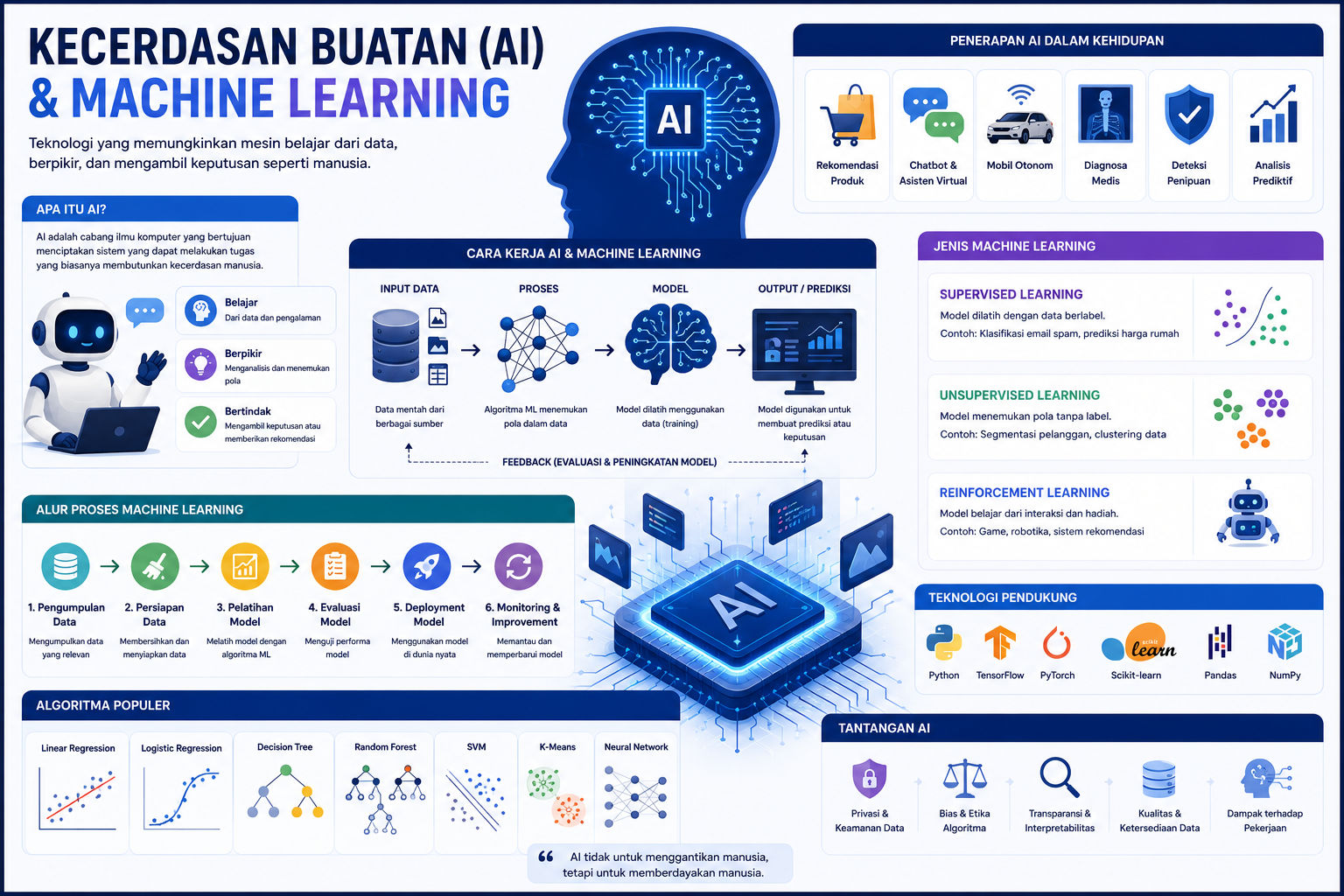
Artificial Intelligence (AI) undoubtedly stands as the titan of current technological discourse. From generative AI creating stunning art and eloquent text to sophisticated machine learning models powering personalized experiences and automating complex tasks, AI's omnipresence is undeniable. But its dominance isn't merely a testament to clever algorithms; it's a culmination of several powerful, often overlooked, foundational elements.
The Data Deluge and Its Democratization
At the heart of AI's accelerated growth lies an unprecedented explosion of data. Every click, transaction, sensor reading, and digital interaction generates petabytes of information, acting as the raw fuel for AI models. This data, once siloed and inaccessible, is now increasingly democratized through cloud computing platforms and open-source initiatives. The ability to access, process, and learn from such vast datasets has transformed AI from a theoretical concept into a practical, pervasive tool.
Computational Power and Cloud Infrastructure: The Invisible Engines
Parallel to data proliferation, the relentless advancement in computational power, particularly through specialized hardware like GPUs and TPUs, has been critical. This, coupled with the ubiquitous availability of scalable cloud infrastructure, provides AI developers with the "invisible engines" necessary to train increasingly complex models. Without these powerful, distributed computing resources, many of today's sophisticated AI applications would remain computationally unfeasible. It's this intricate network of unseen architectures that empowers AI to transcend theoretical boundaries and impact real-world applications, as explored in articles like Unseen Architectures: The Hidden Drivers Shaping the Latest Technology Trends.
Algorithmic Refinement and Open-Source Collaboration
Beyond raw power, the continuous refinement of AI algorithms and the collaborative spirit of the open-source community have played a pivotal role. Researchers globally share breakthroughs, tools, and even pre-trained models, accelerating innovation at an unprecedented pace. This collective intelligence fosters an environment where cutting-edge AI becomes accessible, allowing diverse applications to flourish rapidly.
The Decentralized Horizon: Web3's Underlying Principles
Web3, with its promise of decentralization, data ownership, and a more equitable internet, is more than just a buzzword encompassing cryptocurrencies and NFTs. It represents a fundamental philosophical shift driven by a desire to reclaim control from centralized entities. Its underlying principles are rooted in deeper societal and technological movements.
Trust Erosion and the Push for Transparency
A significant driver for Web3's emergence is the growing distrust in centralized institutions, be they tech giants controlling personal data or financial institutions dictating economic access. Web3 offers a transparent, immutable, and permissionless alternative, where rules are encoded in smart contracts and transactions are publicly verifiable. This societal push for accountability and transparency underpins the appeal of decentralized autonomous organizations (DAOs) and self-sovereign identity solutions.
Cryptographic Advancements and Blockchain Innovation
Technologically, Web3 relies heavily on sophisticated cryptographic advancements and continuous innovation in blockchain technology. The evolution from simple ledgers to complex, scalable, and interoperable networks is a hidden architectural feat. Zero-knowledge proofs, sharding, and layer-2 solutions are not just technical jargon; they are the unseen mathematical and engineering breakthroughs enabling Web3 to move beyond niche applications into mainstream utility.
Quantum Computing: The Genesis of a New Computational Era
Often perceived as a distant future, quantum computing is steadily progressing, promising to solve problems currently intractable for even the most powerful supercomputers. Its advancement is a testament to the confluence of various scientific and engineering disciplines.
Materials Science and Qubit Stability
The creation of stable, error-corrected qubits—the fundamental building blocks of quantum computers—is an immense materials science and engineering challenge. Breakthroughs in superconductivity, trapped ions, photonic entanglement, and topological qubits are the unseen heroes enabling this revolution. These are not just theoretical constructs but require precision engineering at the atomic level, pushing the boundaries of what is physically possible.
Theoretical Physics and Algorithm Development
Behind the hardware, a vibrant community of theoretical physicists and computer scientists is developing quantum algorithms (like Shor's and Grover's) that can harness the unique properties of quantum mechanics. This intellectual frontier, constantly pushing the boundaries of our understanding of computation and the universe, is a critical, yet often unseen, driver of quantum computing's potential.
Hyper-Connectivity: The Pervasive Reach of IoT and Edge Computing
The Internet of Things (IoT) and Edge Computing are transforming our environments into intelligent, responsive ecosystems. From smart homes to industrial sensors, countless devices are generating and processing data at the source, reducing latency and enhancing autonomy. This pervasive connectivity is powered by several foundational advancements.
Miniaturization and Sensor Technology
The ability to create increasingly smaller, more powerful, and energy-efficient sensors and microcontrollers is a key hidden driver. These tiny components, integrated into everything from wearable tech to smart city infrastructure, are the eyes and ears of the IoT. Their continuous refinement, often involving advanced manufacturing techniques and novel material science, is what allows for the seamless collection of real-time data from the physical world.

5G/6G Networks: The Invisible Data Highways
The rollout of 5G networks, and the impending arrival of 6G, provide the high-bandwidth, low-latency communication infrastructure essential for IoT and edge computing. These invisible data highways enable devices to communicate instantaneously, facilitating real-time decision-making and robust distributed systems. Without these network advancements, the true potential of billions of connected devices would remain unrealized.
Distributed Ledger Technologies (DLT) for Enhanced Security
As the number of connected devices explodes, securing these vast networks becomes paramount. Distributed Ledger Technologies (DLT), including blockchain, are emerging as a hidden driver for enhanced IoT security. By providing immutable records and cryptographic security for device identities and data transactions, DLT helps create a more resilient and trustworthy hyper-connected environment, addressing critical privacy and integrity concerns at a foundational level.
Sustainability and Ethical Tech: The Conscience of Innovation
Increasingly, technological advancements are being scrutinized not just for their capabilities but also for their environmental and societal impact. Sustainability and ethical considerations are no longer footnotes but fundamental drivers shaping how technology is developed and deployed.
Regulatory Pressure and ESG Investing
Governments worldwide are enacting stricter regulations regarding data privacy, energy consumption, and environmental footprint. Simultaneously, the rise of Environmental, Social, and Governance (ESG) investing pressures companies to integrate sustainable practices. These external pressures act as powerful, unseen forces compelling tech companies to innovate with responsibility at their core, leading to greener data centers, energy-efficient algorithms, and ethical AI development frameworks.
Consumer Demand and Ethical Supply Chains
A growing global consciousness among consumers drives demand for products and services that are not only effective but also ethically sourced and environmentally friendly. This market-driven shift encourages transparency in supply chains, pushes for the use of recycled materials, and fosters the development of "tech for good" initiatives. Companies that prioritize these values gain a competitive edge, turning ethical considerations into a strategic business driver.
Advancements in Renewable Energy and Circular Economy Principles
The very infrastructure supporting digital technology is undergoing a transformation driven by advancements in renewable energy. Solar, wind, and geothermal power are becoming more efficient and cost-effective, allowing data centers and manufacturing plants to reduce their carbon footprint. Concurrently, the principles of the circular economy – designing products for longevity, repairability, and recyclability – are influencing hardware design and software lifecycle management, aiming to minimize waste and maximize resource efficiency.
Conclusion: Navigating the Unseen Currents
The world of technology is a dynamic and ever-evolving landscape. While the visible trends—AI's increasing intelligence, Web3's decentralized promise, quantum computing's nascent power, and IoT's pervasive reach—capture our imagination, it is the underlying, often invisible forces that truly steer the ship of innovation. Data proliferation, computational breakthroughs, cryptographic advancements, materials science discoveries, robust network infrastructures, and the growing imperative for ethical and sustainable practices are the silent architects shaping our digital destiny.
To truly understand where technology is headed, we must look beyond the surface. We must analyze the foundational shifts, anticipate the societal needs, and recognize the scientific breakthroughs that empower these visible trends. By doing so, we not only gain a deeper insight into the present but also equip ourselves to actively participate in shaping a future where technology serves humanity responsibly and sustainably, guided by these powerful, yet often unseen, currents of innovation.