The Unseen Architects: Deconstructing the Foundational Shifts Driving Modern Technology Trends
In a world captivated by the dazzling display of new gadgets and revolutionary software, it's easy to get lost in the surface-level narratives of technological advancement. Every year brings a fresh wave of buzzwords—AI, IoT, Web3, Metaverse, Quantum Computing—each promising to reshape our future. Yet, beneath this visible tapestry of innovation lies a more profound, less-discussed reality: a continuous evolution of fundamental architectures and philosophical shifts that truly drive these trends. This article aims to pull back the curtain, exploring the 'unseen architects'—the core structural and conceptual changes that are not just shaping the latest technology news and trends but are fundamentally redefining our digital existence.
To truly understand where technology is headed, we must look beyond the features and functionalities to the underlying forces that govern how data is created, processed, stored, and utilized. These foundational shifts dictate the possibilities and limitations of every application, every service, and every digital interaction we experience. It's about deconstructing the very blueprints upon which our digital future is being built, recognizing that the most impactful innovations often stem from changes in fundamental design principles, rather than mere incremental improvements.
The Ubiquitous Data Fabric: Data as the New Foundational Layer
At the heart of nearly every modern technological breakthrough is data. But it's not just about the volume of data; it's about the evolution of the 'data fabric'—the architecture that encompasses data ingestion, processing, storage, governance, and analysis across diverse environments. We are moving from siloed data lakes to a unified, intelligent data fabric that spans cloud, edge, and on-premises systems, making data accessible and actionable in real-time, wherever it resides.
This architectural shift is crucial for advanced AI, particularly machine learning models that thrive on vast, high-quality datasets. It's enabling predictive analytics in everything from healthcare to urban planning, powering hyper-personalized user experiences, and optimizing complex supply chains. The challenge, however, lies in managing this omnipresent data responsibly. Ethical data governance, privacy-enhancing technologies (PETs), and robust cybersecurity frameworks are no longer optional add-ons but integral components of this new data architecture. The trend is towards data architectures that are not only efficient but also inherently secure and privacy-compliant by design, reflecting a growing global emphasis on digital sovereignty and individual rights.
Decentralization's Quiet Revolution: Beyond Blockchain Hype
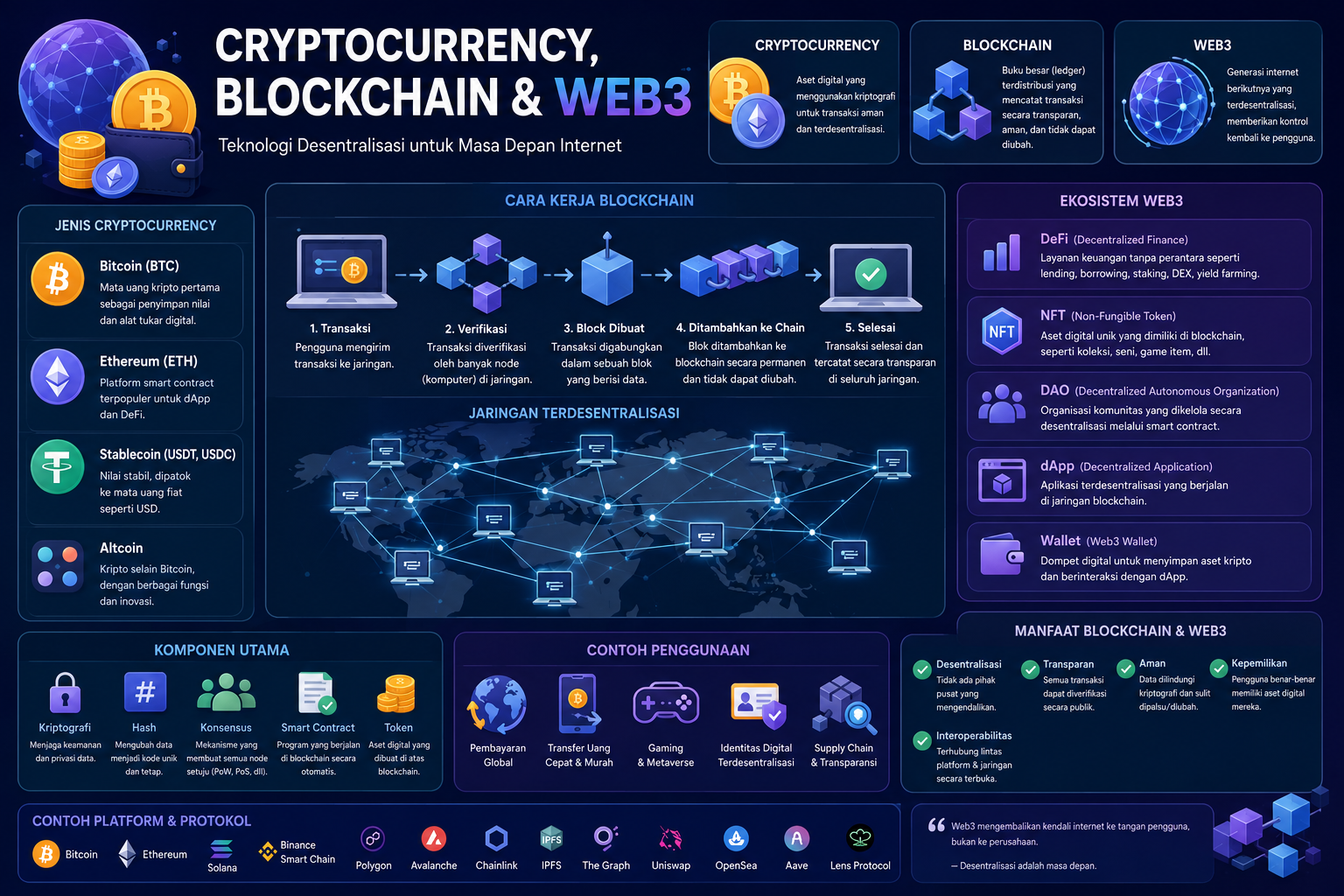
While often associated primarily with cryptocurrencies and Web3, the architectural principle of decentralization is quietly instigating a profound revolution across various technological domains. It represents a fundamental shift from centralized control and single points of failure to distributed, resilient, and trust-minimized systems. This isn't just about blockchain; it encompasses a broader movement towards edge computing, peer-to-peer networks, and distributed ledger technologies (DLT) that aim to empower users and enhance system robustness.
Edge computing, for instance, pushes computation and data storage closer to the source of data generation, reducing latency, conserving bandwidth, and enabling real-time decision-making in IoT environments. This architectural design is critical for autonomous vehicles, smart factories, and augmented reality applications where immediate responses are paramount. Meanwhile, the principles behind blockchain—immutability, transparency, and cryptographic security—are finding applications far beyond digital currencies, from supply chain traceability and verifiable digital identities to secure data sharing and decentralized autonomous organizations (DAOs). These hidden forces deconstructing technology trends are challenging traditional client-server models, fostering a new era of digital autonomy and resilience.
Cognitive Augmentation: Beyond Human-Computer Interaction

The relationship between humans and computers is undergoing a radical transformation, moving beyond simple interaction to a realm of 'cognitive augmentation.' This shift is driven by advancements in Artificial Intelligence (AI) and Extended Reality (XR - encompassing VR, AR, and Mixed Reality), which are blurring the lines between the physical and digital, and between human thought and digital action. Instead of merely issuing commands, users are increasingly engaging with systems that understand context, anticipate needs, and proactively assist.
AI is becoming an embedded layer in almost every digital product and service, making systems more intuitive, adaptive, and intelligent. From conversational AI that understands natural language nuances to generative AI that creates content, code, and designs, the architecture of AI is evolving from rule-based systems to complex neural networks capable of learning and adaptation. Simultaneously, XR technologies are creating immersive interfaces that move computing off flat screens and into our physical environments. This spatial computing paradigm requires new architectural approaches for rendering complex 3D environments, processing real-time sensor data, and maintaining seamless user presence. Early explorations into Brain-Computer Interfaces (BCIs), though nascent, represent the ultimate frontier of cognitive augmentation, promising direct neural control over digital systems and further reshaping the fundamental interface architecture between mind and machine.
The Imperative of Sustainability and Ethics in Tech Architecture
Increasingly, discussions around technology trends are no longer solely focused on capability and speed, but also on responsibility and impact. This is not just a societal expectation but a growing architectural imperative. As technology permeates every facet of life, the unseen architectural paradigms driving tech evolution are being designed with sustainability and ethics baked into their core.
- Green Computing and Sustainable Infrastructure: The energy consumption of data centers and AI models is immense. Future architectural trends are prioritizing energy efficiency, renewable energy sources, and sustainable hardware design. This includes innovations in cooling technologies, liquid immersion cooling, and even the strategic geographical placement of data centers to leverage natural climates.
- Ethical AI Frameworks: The responsible development and deployment of AI require architectural solutions that address bias, fairness, transparency, and accountability. This translates into designing AI systems with built-in interpretability features, robust auditing capabilities, and mechanisms for identifying and mitigating algorithmic biases.
- Privacy-by-Design and Security-by-Design: Rather than patching security holes or adding privacy features retroactively, new architectures are integrating these considerations from the ground up. This involves using advanced encryption, homomorphic encryption for computation on encrypted data, federated learning that keeps data localized, and secure multi-party computation to ensure data integrity and confidentiality throughout its lifecycle.
These ethical and sustainable considerations are becoming non-negotiable architectural requirements, influencing everything from processor design to cloud infrastructure and software development methodologies. They reflect a growing maturity in the tech industry, acknowledging its profound impact on the planet and society.
The Convergence of Invisible Forces: A New Digital Blueprint
These architectural shifts—the ubiquitous data fabric, the move towards decentralization, cognitive augmentation, and the imperative of ethics and sustainability—do not operate in isolation. Instead, they are deeply interconnected, converging to form a new digital blueprint that will define the next decade of technological innovation. For instance, the demand for processing vast amounts of decentralized data at the edge fuels the need for more efficient and sustainable hardware architectures. Cognitive augmentation via AI and XR relies heavily on sophisticated data fabrics and, increasingly, on decentralized identity and data ownership models.
The synergy between these forces is creating exponential possibilities. Imagine smart cities powered by an intelligent data fabric, where decentralized sensors communicate securely at the edge, feeding AI models that optimize traffic flow and energy consumption, all while respecting citizen privacy and adhering to sustainable operational practices. Or consider personalized healthcare delivered through immersive XR interfaces, driven by AI that processes an individual's securely shared, decentralized health data, offering proactive and preventative care. The boundaries between industries dissolve as these foundational shifts empower cross-sector innovation.
Conclusion
Understanding the latest technology news and trends requires more than just knowing what's new; it demands a deeper appreciation for the architectural shifts that underpin these developments. The unseen architects—the evolving data fabric, the decentralization paradigm, advancements in cognitive augmentation, and the growing imperative for ethical and sustainable design—are collectively redrawing the blueprints of our digital world. By focusing on these foundational changes, we gain a more robust framework for anticipating future innovations, navigating technological complexities, and contributing to a digital future that is not only advanced but also responsible, equitable, and resilient. The true power of future technology lies not just in its visible applications, but in the sophisticated, often invisible, architectures that make it all possible.