The Silent Revolution: Unpacking the Latest Tech Trends and Their Profound Impact on Tomorrow
In an era defined by rapid innovation, staying abreast of the latest technology news and trends isn't just an advantage; it's a necessity. We are witnessing a silent revolution, a continuous, often imperceptible shift driven by groundbreaking advancements that are fundamentally reshaping our world. Unlike the dramatic, flashy announcements of yesteryear, today's transformative technologies are often integrated seamlessly into our daily lives, working tirelessly behind the scenes to optimize, connect, and personalize our experiences. This article delves into the most compelling and current technological trajectories, exploring their interconnectedness and forecasting their profound, long-term impact on industries, societies, and individual lives.
The Pervasive Reach of Artificial Intelligence: Beyond the Hype
Artificial Intelligence (AI) continues to dominate headlines, but its true significance lies not just in its impressive feats, but in its pervasive, quiet integration across virtually every sector. Generative AI, exemplified by models like GPT and DALL-E, has moved from a niche concept to a mainstream tool, democratizing content creation and accelerating innovation in design, coding, and marketing. Yet, its impact extends far beyond generating text or images.
AI is the invisible engine powering enhanced predictive analytics in healthcare, optimizing supply chains, personalizing education, and even managing smart cities. Its ability to process vast datasets, identify patterns, and make informed decisions at scale is driving a profound, often unseen digital transformation. We're seeing AI systems becoming more context-aware, capable of understanding nuances and adapting to complex situations, moving closer to truly intelligent assistance rather than just automated responses.
However, this rapid advancement brings critical discussions around ethics, bias, and regulation. The development of Responsible AI frameworks is paramount to ensure these powerful tools are used equitably and safely, mitigating risks while maximizing societal benefits. The trajectory of AI suggests a future where it's not a separate entity, but an intrinsic component of every digital interaction and system, making its ethical governance more critical than ever.
The Evolution of the Digital Economy: Web3 and Decentralization
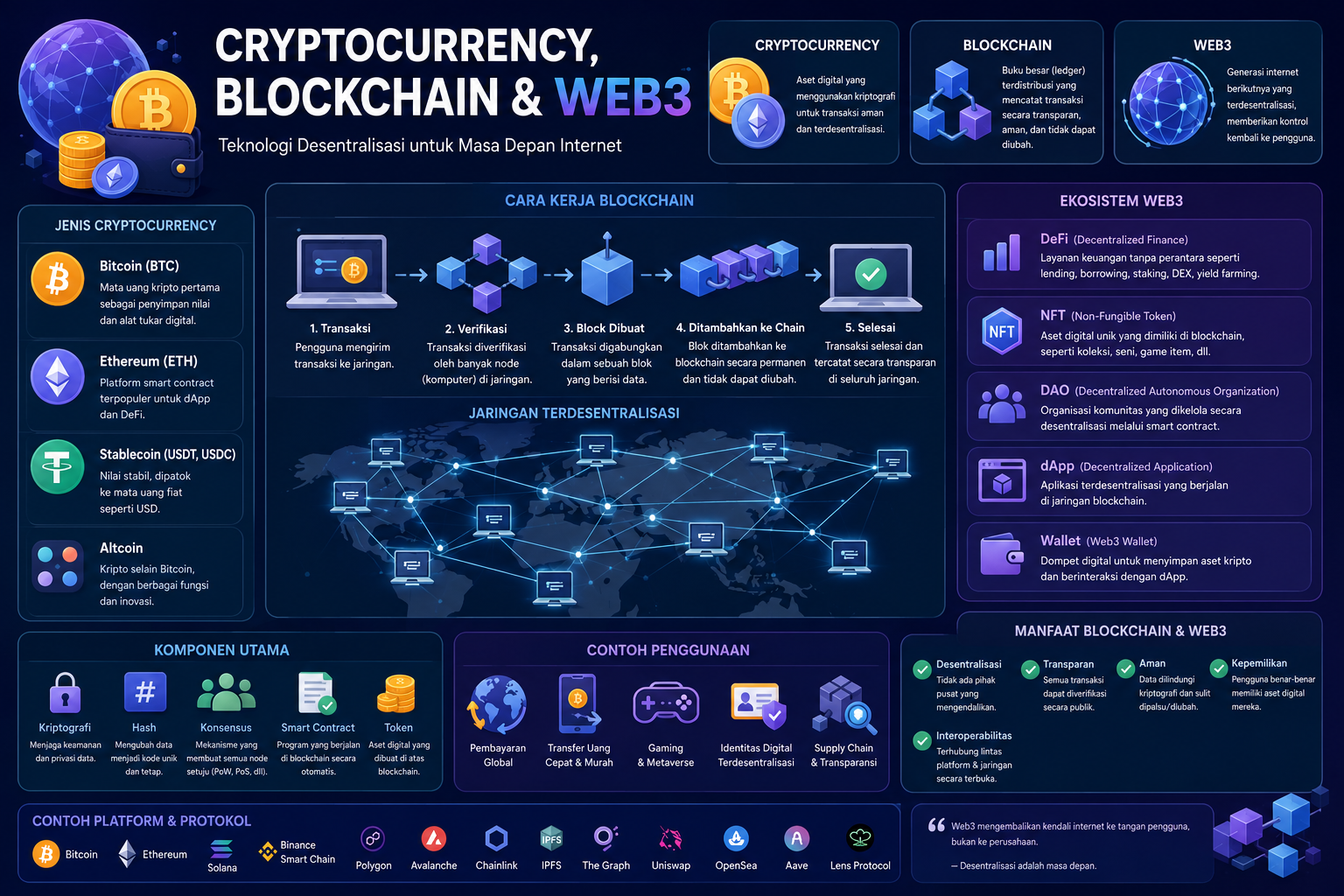
While the cryptocurrency market experiences its cycles, the underlying technological principles of Web3 – decentralization, blockchain, and digital ownership – continue to mature and find new applications. Beyond speculative assets, blockchain technology is proving its worth in creating transparent, immutable records for supply chain management, digital identity verification, and intellectual property rights. The vision of a truly decentralized internet, where users have greater control over their data and digital assets, is slowly but surely taking shape.
Decentralized Finance (DeFi) continues to innovate, offering new models for lending, borrowing, and trading without traditional intermediaries. While still nascent and volatile, the principles of DeFi – transparency, accessibility, and user-centricity – represent a significant shift in financial paradigms. Non-Fungible Tokens (NFTs), though often associated with digital art, are evolving into tools for digital identity, event ticketing, and even real-world asset tokenization, laying the groundwork for a more verifiable and interoperable digital existence.
This shift towards a more open and user-owned internet is not without its challenges, including scalability, regulatory uncertainty, and user experience complexities. However, the foundational premise of Web3 – empowering individuals and fostering trust through technology – positions it as a key driver of the next wave of the digital economy.
Hyper-Connectivity: The Internet of Things (IoT) and Beyond
The proliferation of interconnected devices, from smart home gadgets to industrial sensors, forms the backbone of the Internet of Things (IoT). This network is expanding exponentially, creating intelligent environments that respond to our needs and optimize resource usage. Advanced 5G networks, and the impending arrival of 6G, are accelerating this trend, providing the ultra-low latency and high bandwidth necessary for real-time data exchange between billions of devices.
Edge computing, processing data closer to its source rather than relying solely on centralized cloud servers, is becoming crucial for IoT. This reduces latency, enhances security, and allows for faster decision-making in critical applications like autonomous vehicles and industrial automation. The synergy between IoT, 5G/6G, and edge computing is creating a mesh of hyper-connectivity that blurs the lines between the physical and digital worlds, leading to smarter cities, more efficient industries, and more responsive personal environments.
The true potential of hyper-connectivity lies in its ability to generate unprecedented amounts of data, which, when analyzed by AI, can unlock new insights and efficiencies across countless domains. From predictive maintenance in manufacturing to personalized healthcare delivery, the interconnected future promises a world where every device is a data point, contributing to a vast, intelligent ecosystem.
Sustainable Technology and Green Innovation
As technological advancement accelerates, so does the awareness of its environmental footprint. A significant and growing trend is the focus on sustainable technology and green innovation. This encompasses everything from designing energy-efficient hardware and software to leveraging technology for environmental monitoring and climate change mitigation.
Data centers, traditionally massive energy consumers, are adopting renewable energy sources and more efficient cooling techniques. Software developers are focusing on "green coding" practices that minimize computational resources. Furthermore, AI and IoT are being deployed to optimize energy grids, manage waste, and monitor biodiversity, providing critical data for conservation efforts. The concept of a circular economy is gaining traction in tech, with increased emphasis on repairability, recycling, and responsible sourcing of materials.
This commitment to sustainability is driven not only by environmental concerns but also by regulatory pressures and consumer demand. Companies that integrate eco-friendly practices into their tech development and operations are increasingly seen as responsible and forward-thinking, making green tech a vital component of future innovation.
Personalized Experiences and Human-Computer Interaction (HCI)
Technology is becoming increasingly tailored to individual needs and preferences. This trend is evident in the rise of highly personalized content recommendations, adaptive learning platforms, and customized user interfaces. Advances in Human-Computer Interaction (HCI) are making these interactions more intuitive, natural, and immersive.
Augmented Reality (AR) and Virtual Reality (VR) are moving beyond gaming and entertainment, finding practical applications in training, remote collaboration, and design visualization. Haptic feedback technologies are becoming more sophisticated, allowing for tactile interaction with digital environments. Looking further ahead, research into brain-computer interfaces (BCIs) hints at a future where thought alone could control digital systems, pushing the boundaries of interaction beyond physical gestures.
The goal is to make technology disappear into the background, becoming an extension of human intent rather than a separate tool. This quest for seamless, personalized interaction will continue to drive innovation in sensor technology, AI-driven contextual understanding, and immersive display systems, leading to experiences that feel less like using a machine and more like interacting with an intelligent environment.
Cybersecurity: The Ever-Evolving Frontier
With every technological leap, the landscape of cybersecurity becomes more complex and critical. As more aspects of our lives migrate online, and as devices become more interconnected, the attack surface for malicious actors expands dramatically. The latest trends in cybersecurity reflect a constant arms race, with defenders leveraging advanced AI and machine learning to detect and respond to threats, while attackers develop more sophisticated techniques.
Key areas of focus include zero-trust architectures, which assume no user or device can be inherently trusted; advanced threat detection systems that use behavioral analytics; and the growing importance of quantum-safe cryptography to protect against future quantum computing attacks. Data privacy regulations, such as GDPR and CCPA, continue to shape how companies handle personal information, driving innovation in privacy-enhancing technologies.
The human element remains crucial in cybersecurity. Training, awareness, and robust security protocols are essential in preventing social engineering attacks and insider threats. As technology becomes more deeply embedded in critical infrastructure and personal lives, cybersecurity will remain at the forefront of innovation, ensuring the safety and integrity of our digital world.
Conclusion: Navigating the Interconnected Future
The invisible revolution driven by today's latest technology news and trends is characterized by interconnectedness. AI is amplified by IoT data, which is secured by advanced cybersecurity, and all are increasingly guided by principles of sustainability and user-centric design. These aren't isolated advancements but components of a grander digital tapestry that is continuously woven and rewoven.
Understanding these trends means recognizing their synergistic effects and anticipating the complex challenges and opportunities they present. For businesses, it means strategic adoption and adaptation. For individuals, it means embracing lifelong learning and critical thinking in an increasingly digitized world. The future is not a distant concept but an ongoing construction, shaped by these transformative technologies that are redefining what's possible, one innovation at a time.