Unveiling the Hidden Currents: A Fresh Lens on Today’s Tech News & Trends
In an era where headlines flash faster than the processors powering our devices, staying ahead of the curve demands more than a cursory glance at the daily tech feed. This article adopts a systems‑thinking perspective—treating the tech ecosystem as an interconnected architecture where seemingly disparate innovations converge to reshape societies, economies, and even our cognitive habits. By mapping these hidden currents, we reveal why certain trends matter beyond their buzzwords and how they collectively sketch the blueprint of tomorrow.
1. The Convergence Engine: AI Meets Edge & Quantum
Artificial Intelligence (AI) no longer lives solely in cloud data centers. The edge‑AI movement pushes inference capabilities to devices at the network's periphery—smartphones, IoT sensors, and even autonomous drones. This shift reduces latency, safeguards privacy, and opens doors for real‑time decision‑making in critical sectors like healthcare and manufacturing.
Simultaneously, quantum computing, once a theoretical curiosity, is inching toward practical relevance. Companies such as IBM, Google, and emerging startups are delivering quantum‑ready cloud services that enable hybrid algorithms—classical processors handling routine tasks while quantum cores tackle optimization problems that stump conventional CPUs.
When edge‑AI and quantum computing intersect, a new paradigm emerges: quantum‑enhanced edge intelligence. Imagine a fleet of delivery drones that not only process visual data locally but also tap into quantum‑accelerated route optimization in milliseconds, dramatically improving logistics efficiency while conserving energy.
2. Decentralized Finance (DeFi) and the Maturation of Blockchain
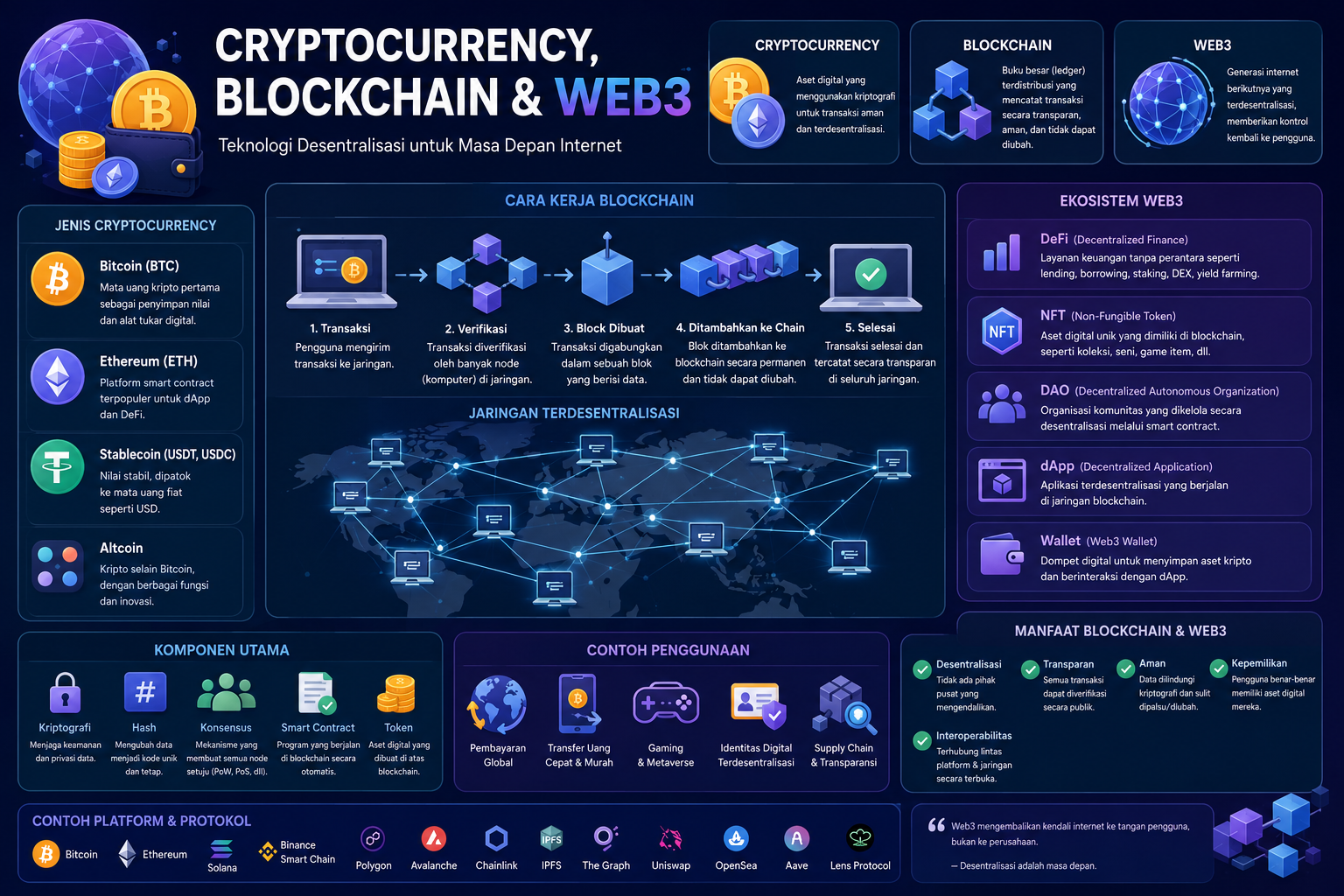
Blockchain technology has graduated from the speculative realm of cryptocurrencies to a foundational layer for decentralized finance (DeFi), supply‑chain transparency, and digital identity. While Bitcoin remains a store of value, platforms like Ethereum, Solana, and newer Layer‑2 solutions are engineering programmable money that can execute complex contracts without intermediaries.
One pivotal development is the rise of cross‑chain interoperability. Protocols such as Polkadot and Cosmos enable disparate blockchains to communicate, fostering a multi‑network economy where assets flow seamlessly across ecosystems. This interoperability is crucial for the next wave of DeFi applications that demand liquidity, composability, and regulatory compliance.
To illustrate the broader impact, consider a farmer in Southeast Asia who uses a blockchain‑based platform to tokenize harvest yields. Investors worldwide can purchase fractional shares, providing the farmer with upfront capital while granting investors transparent, real‑time performance data. Such use cases blur the line between traditional finance and decentralized ecosystems, heralding a more inclusive economic model.
3. The Metaverse Recalibrated: From Virtual Real Estate to Functional Collaboration
While the term “metaverse” once evoked images of virtual real estate hype, the current trajectory points toward pragmatic, enterprise‑focused applications. Companies are leveraging immersive 3D environments for remote collaboration, product design, and training simulations. The integration of digital twins—virtual replicas of physical assets—enables engineers to test modifications in a risk‑free sandbox before deployment.
Key enablers include advancements in WebXR standards, low‑latency 5G networks, and haptic feedback devices that bridge the sensory gap between the physical and digital worlds. As a result, the metaverse is evolving from a novelty into a functional layer of the digital economy, where design cycles shrink and cross‑geographical teams operate as if co‑located.
4. Sustainable Tech: Green Computing and Circular Design
Environmental concerns are reshaping technology roadmaps. Data centers, responsible for roughly 1% of global electricity consumption, are adopting renewable energy sources, liquid cooling, and AI‑driven workload optimization to slash carbon footprints. Moreover, the concept of circular design—where hardware is built for disassembly, reuse, and recycling—is gaining traction among manufacturers.
Startups are pioneering “right‑to‑repair” platforms that provide modular components and open‑source firmware, extending device lifespans and reducing e‑waste. Governments are also introducing regulations that mandate energy‑efficiency metrics for consumer electronics, nudging the industry toward greener practices.
5. Web Development: The Rise of Full‑Stack Serverless Architectures
Web development is undergoing a quiet revolution. The traditional monolithic stack—front‑end, back‑end, database, and server— is being supplanted by serverless and Jamstack architectures. Developers now deploy functions as a service (FaaS) on platforms like AWS Lambda, Azure Functions, or Cloudflare Workers, allowing code to run on demand without provisioning servers.
This shift yields several benefits: automatic scaling, reduced operational overhead, and cost efficiency tied directly to usage. Coupled with static site generators (e.g., Next.js, Hugo) and headless CMS solutions, the modern web stack delivers lightning‑fast user experiences while simplifying deployment pipelines.

6. HealthTech: AI‑Driven Diagnostics and Remote Monitoring
The pandemic accelerated the adoption of telemedicine, but the next frontier lies in AI‑augmented diagnostics. Machine learning models now analyze radiology images, pathology slides, and even raw genomic data with accuracy rivaling human experts. When integrated into point‑of‑care devices, these models enable early disease detection in low‑resource settings.
Remote patient monitoring platforms combine wearable sensors, edge analytics, and secure data pipelines to provide clinicians with continuous health metrics. This real‑time feedback loop not only improves chronic disease management but also reduces hospital readmission rates, delivering both clinical and economic value.
7. Ethical AI and Governance: From Principles to Practice
As AI systems permeate decision‑making, the demand for ethical frameworks intensifies. Governments worldwide are drafting regulations that address bias mitigation, transparency, and accountability. The European Union’s AI Act, for instance, categorizes AI applications by risk level and mandates conformity assessments for high‑risk systems.
Companies are responding by embedding responsible AI practices into their development lifecycles—conducting impact assessments, establishing model cards, and adopting explainable AI (XAI) techniques. These measures aim to build public trust and ensure that AI benefits are distributed equitably.
8. The Invisible Architects: How Convergent Technologies Shape Our Future
All the trends discussed are not isolated; they are the invisible architects of a new technological landscape. Their convergence creates emergent capabilities that no single innovation could achieve alone. For a deeper dive into this concept, see our article Beyond the Buzz: Decoding the Invisible Architectures of Today's Tech Revolution, which explores how these hidden forces intertwine.
Similarly, the multilingual piece 「見えない建築家」としてのテクノロジー:収斂が織りなす未来の深層 offers a cross‑cultural perspective on the same phenomenon, underscoring its global relevance.
Conclusion: Navigating the Currents with a Systems Mindset
Today's tech news is a surface rippling over a deep, interconnected ocean of innovation. By recognizing the hidden currents—edge‑AI, quantum acceleration, blockchain interoperability, sustainable design, serverless web stacks, AI‑driven health, and ethical governance—we can anticipate not just the next headline, but the structural shifts that will define the next decade.
For professionals, investors, and policymakers, the key takeaway is clear: adopt a systems mindset, look beyond isolated hype, and invest in the convergent pathways that amplify impact across domains. In doing so, you’ll not only stay informed but become an active participant in shaping the invisible architecture of our shared technological future.