Beyond the Buzz: Decoding the Invisible Architectures of Today's Tech Revolution
In the relentless sprint of technological advancement, headlines often blare about the latest gadgets, viral apps, or groundbreaking research. Yet, beneath this surface-level commotion, a more profound transformation is quietly unfolding. It’s an intricate dance of converging technologies, an 'invisible architecture' silently reshaping our societies, economies, and very understanding of reality. This article delves beyond the ephemeral hype to explore the deep currents and underlying forces driving current technology news and trends, revealing how seemingly disparate innovations are, in fact, parts of a grand, interconnected design.
The true story of today’s tech revolution isn't just about what's new, but about how these innovations are interweaving to create an entirely new fabric of existence. From artificial intelligence to decentralized networks, from ubiquitous sensors to advanced biotechnologies, these aren't isolated phenomena. Instead, they represent a hidden architecture that dictates the pace and direction of our collective future. Understanding these underlying structures is crucial for anyone hoping to navigate, and indeed shape, the coming decades.
The AI Tsunami: More Than Just Chatbots
The most dominant narrative in recent tech news has undoubtedly been the rise of Artificial Intelligence, particularly generative AI. Tools like ChatGPT, Midjourney, and Stable Diffusion have captured public imagination, demonstrating capabilities once confined to science fiction. But to view AI merely as a sophisticated chatbot or image generator is to miss the forest for the trees.
The true significance of current AI advancements lies in the democratization of complex capabilities and the unprecedented ability to synthesize vast amounts of data. Large Language Models (LLMs) and diffusion models are not just mimicking human creativity; they are acting as powerful accelerators, compressing years of traditional R&D into weeks or even days. This isn't just about automation; it's about augmentation on a scale never before imagined.
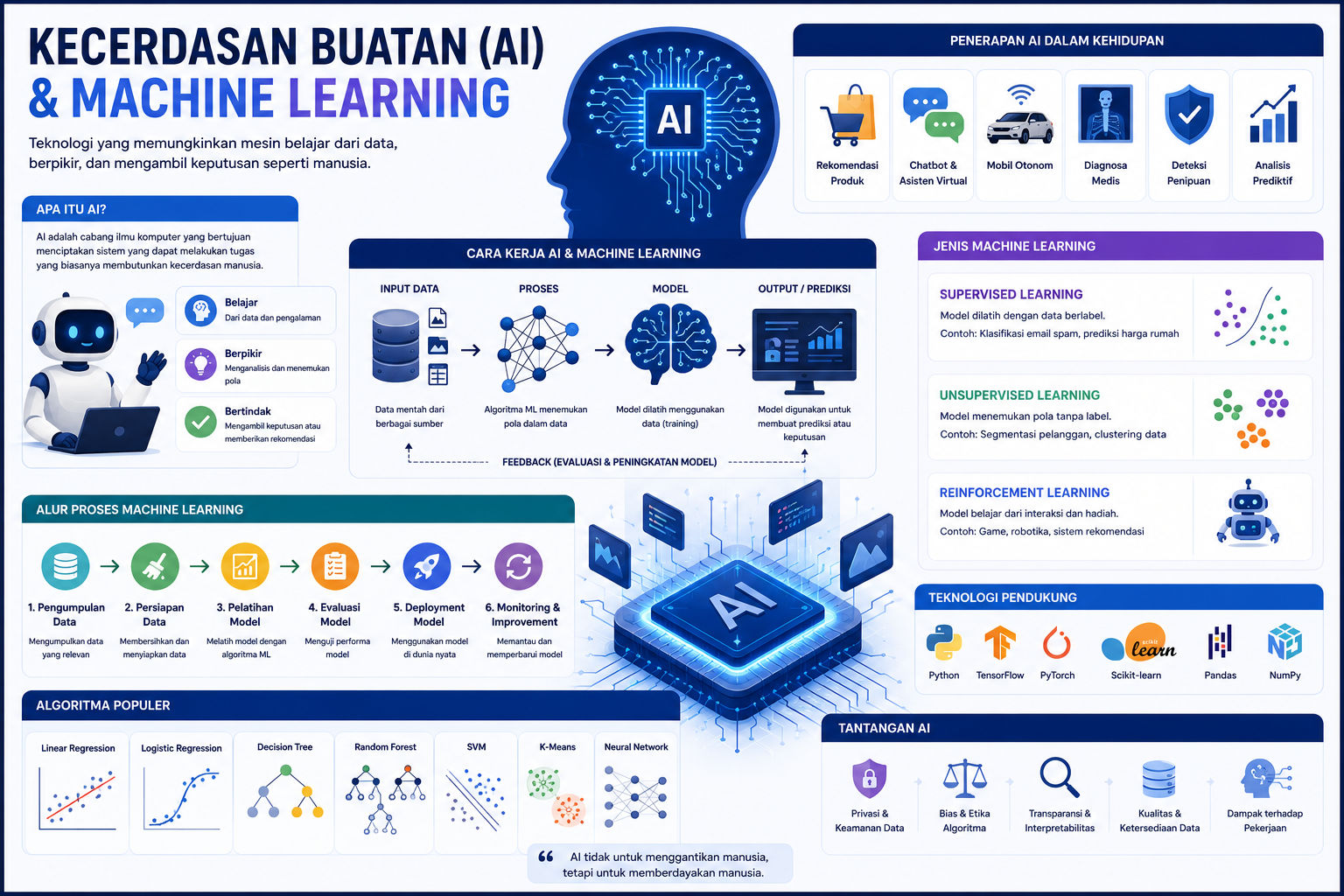
Consider the impact across industries:
- Healthcare: AI is revolutionizing drug discovery, identifying potential compounds and predicting their efficacy with remarkable speed. It's enhancing diagnostic accuracy in medical imaging and powering personalized treatment plans based on individual genomic data.
- Education: Personalized learning platforms driven by AI can adapt to individual student paces and learning styles, offering bespoke content and feedback. This promises to redefine the classroom experience, making education more accessible and effective.
- Creative Arts: While controversial, generative AI is providing artists, designers, and musicians with powerful new tools for ideation, iteration, and production, pushing the boundaries of what's creatively possible.
- Software Development: AI-powered coding assistants are making development faster, more efficient, and accessible to a broader range of individuals, potentially lowering barriers to entry in tech.
Yet, this wave also brings critical ethical considerations to the forefront. Issues of data privacy, algorithmic bias, the potential for job displacement, and the need for robust regulatory frameworks are no longer hypothetical. They are immediate challenges demanding thoughtful, interdisciplinary solutions. The 'unseen hand' guiding AI’s development and integration into society requires careful observation and proactive policy-making to ensure its benefits are widely distributed and its risks mitigated. Understanding these deeper shifts is paramount to harnessing its full potential responsibly.
The Evolving Web: From Decentralization to Spatial Computing
While AI dominates the conversation, the internet itself is undergoing a fundamental metamorphosis. The initial excitement around Web3 and blockchain has tempered, but the underlying principles of decentralization, transparency, and user ownership continue to drive innovation. Blockchain technology, beyond volatile cryptocurrencies, is finding practical applications in supply chain management, digital identity verification, and secure data sharing, laying the groundwork for a more robust and trustworthy digital infrastructure.
Simultaneously, we are witnessing the burgeoning era of spatial computing. Augmented Reality (AR), Virtual Reality (VR), and Mixed Reality (MR), collectively often referred to as the "metaverse" (though the term itself is still evolving), are moving beyond niche gaming applications into mainstream utility. Companies are investing heavily in hardware and software that enable immersive digital experiences, blurring the lines between the physical and virtual worlds.
This isn't just about wearing a headset; it's about fundamentally changing how we interact with digital information and with each other. Imagine:
- Industrial Design: Engineers collaborating on 3D models in a shared virtual space, making real-time adjustments.
- Healthcare: Surgeons training for complex procedures in hyper-realistic simulations or viewing patient data overlayed onto their physical bodies during operations.
- Education: Students taking virtual field trips to ancient civilizations or exploring the human anatomy in interactive 3D.
- Remote Work: More immersive and natural virtual meeting environments that reduce digital fatigue and enhance collaboration.
The convergence here is critical. AI will power the intelligence within spatial computing environments, creating dynamic, responsive digital worlds. Blockchain could provide the framework for digital asset ownership, secure transactions, and verifiable identities within these new digital realms. This synthesis promises to create new economies, new forms of social interaction, and new avenues for human experience, all built upon an evolving digital architecture.
Ubiquitous Connectivity & IoT: The Intelligent Environment
The foundation for much of this technological convergence is an increasingly ubiquitous and high-speed global connectivity. The rollout of 5G, with 6G on the horizon, alongside the expansion of satellite internet services like Starlink, is ensuring that more devices and more people are constantly connected. This hyper-connectivity fuels the Internet of Things (IoT), transforming our environments into intelligent, responsive ecosystems.
IoT devices are no longer just smart home gadgets. They are embedded in smart cities, optimizing traffic flow, managing waste, and monitoring air quality. In industrial settings, IoT sensors are enhancing predictive maintenance, optimizing production lines, and ensuring worker safety. Agriculture is leveraging IoT for precision farming, conserving resources and increasing yields. Our homes are becoming more intuitive, our cities more efficient, and our industries more productive.
A key trend within IoT is the "intelligent edge." Instead of sending all data to a central cloud for processing, more computation is happening at the source (the "edge" of the network). This reduces latency, enhances privacy, and allows for real-time decision-making, critical for applications like autonomous vehicles or immediate response systems in smart factories. However, this expansion also brings significant challenges in terms of data privacy, cybersecurity, and energy consumption. Securing billions of interconnected devices and managing the vast datasets they generate is a monumental task that requires continuous innovation in cryptography and network security.
Biotechnology & Health Tech: The Human-Machine Interface
While often discussed separately, biotechnology is increasingly converging with digital technologies. CRISPR gene-editing technology, for instance, continues to advance, offering unprecedented potential to cure genetic diseases and even enhance human capabilities. The ethical implications are profound, sparking critical debates about the future of humanity itself.
Beyond gene editing, health technology is seeing an explosion of innovation. Wearable devices are evolving from simple fitness trackers to sophisticated diagnostic tools, continuously monitoring vital signs and detecting early signs of illness. Digital therapeutics, software-based interventions, are being prescribed to treat conditions ranging from anxiety to ADHD. The vision is one of personalized, preventative healthcare, where AI analyzes individual health data to offer tailored interventions before severe conditions even manifest.
Perhaps the most fascinating and ethically complex convergence is in the realm of Brain-Computer Interfaces (BCIs). While still in early stages, companies are developing technologies that allow direct communication between the human brain and external devices. Initially, this offers hope for individuals with severe disabilities, restoring mobility or communication. However, the long-term potential for human augmentation, memory enhancement, or even direct thought communication raises profound questions about identity, consciousness, and the very definition of being human.
The 'Invisible Architect': Convergence and Its Profound Implications
What becomes clear when we look beyond the hype of individual technologies is that the most transformative shifts occur at their intersections. AI amplifies the capabilities of IoT devices, creating truly intelligent environments. Spatial computing is enriched by AI and secured by blockchain. Biotechnology harnesses AI for accelerated discovery and is increasingly integrated with wearable digital health solutions. These technologies are not merely coexisting; they are co-evolving, creating a dynamic, self-reinforcing ecosystem.
This unseen architect of convergence means that the impact of the current tech revolution will be far greater than the sum of its parts. It points towards:
- New Economic Paradigms: Entirely new industries and job categories will emerge, while others may become obsolete. The gig economy will likely evolve into a more automated, AI-augmented services economy.
- Redefined Human-Technology Relationship: Our tools are becoming extensions of ourselves, blurring the lines between human and machine. This necessitates new literacies, ethical frameworks, and philosophical considerations.
- Global Societal Shifts: From governance and policy-making to education and social structures, every aspect of human society will be impacted. The digital divide could widen, or conversely, unprecedented access to information and resources could become a reality.
Understanding these deep currents, rather than just the surface waves, is crucial. It allows us to move beyond reactive responses to proactive engagement. It empowers policymakers, educators, business leaders, and individuals to anticipate challenges, seize opportunities, and collectively shape a future that is not just technologically advanced, but also equitable, ethical, and beneficial for all.
Conclusion
The current landscape of technology news and trends is a vibrant tapestry woven with threads of innovation, challenges, and unprecedented potential. By decoding the 'invisible architectures' and understanding the profound convergence of AI, spatial computing, ubiquitous connectivity, and advanced biotechnologies, we gain a clearer perspective on the future. This deeper understanding moves us beyond being passive observers of technological change to becoming active participants in its design. The future is not just happening to us; it is being built by these converging forces, and our critical engagement with them will determine the world we inhabit tomorrow.