The Grand Tapestry of Innovation: Decoding the Symbiotic Evolution of Modern Technology Trends
In an era defined by rapid change, the narrative of technology often unfolds as a series of isolated breakthroughs. We hear about artificial intelligence, then blockchain, then the metaverse, each presented as a standalone revolution. However, a deeper, more profound transformation is quietly at play: the intricate convergence of these seemingly disparate technologies, weaving a grand tapestry of innovation that is fundamentally reshaping our reality. It's not just about what each technology can do on its own, but how their synergy creates an entirely new paradigm, acting as the invisible architects behind our evolving world. This article aims to pull back the curtain on this symbiotic evolution, exploring the core trends and how their interconnectedness is forging the future.
The AI Renaissance: Intelligence Infused Everywhere
Artificial Intelligence (AI) continues to dominate headlines, moving far beyond its early promise into a tangible force. The recent explosion of generative AI models, from large language models (LLMs) like GPT-4 to advanced image and video generators, has democratized creative and analytical capabilities previously limited to experts. These models are not just automating tasks; they are augmenting human potential, acting as co-pilots in coding, design, research, and even complex problem-solving. AI’s impact is now pervasive, touching nearly every industry from healthcare with AI-powered diagnostics and drug discovery to finance with algorithmic trading and fraud detection, and even education with personalized learning paths.
But the true power of AI in current trends isn't merely its individual prowess. It's how AI acts as the "brain" for other emerging technologies. Consider the Internet of Things (IoT): countless sensors generating vast amounts of data. Without AI, this data remains raw and unactionable. AI provides the intelligence to process, analyze, and derive insights from this deluge, enabling smart cities to optimize traffic flows, smart homes to anticipate user needs, and industrial systems to predict maintenance requirements before failures occur. The fusion of AI with edge computing allows for real-time decision-making directly at the data source, reducing latency and enhancing privacy, which is crucial for autonomous systems and critical infrastructure.
The Decentralized Horizon: Web3, Blockchain, and the Ownership Economy
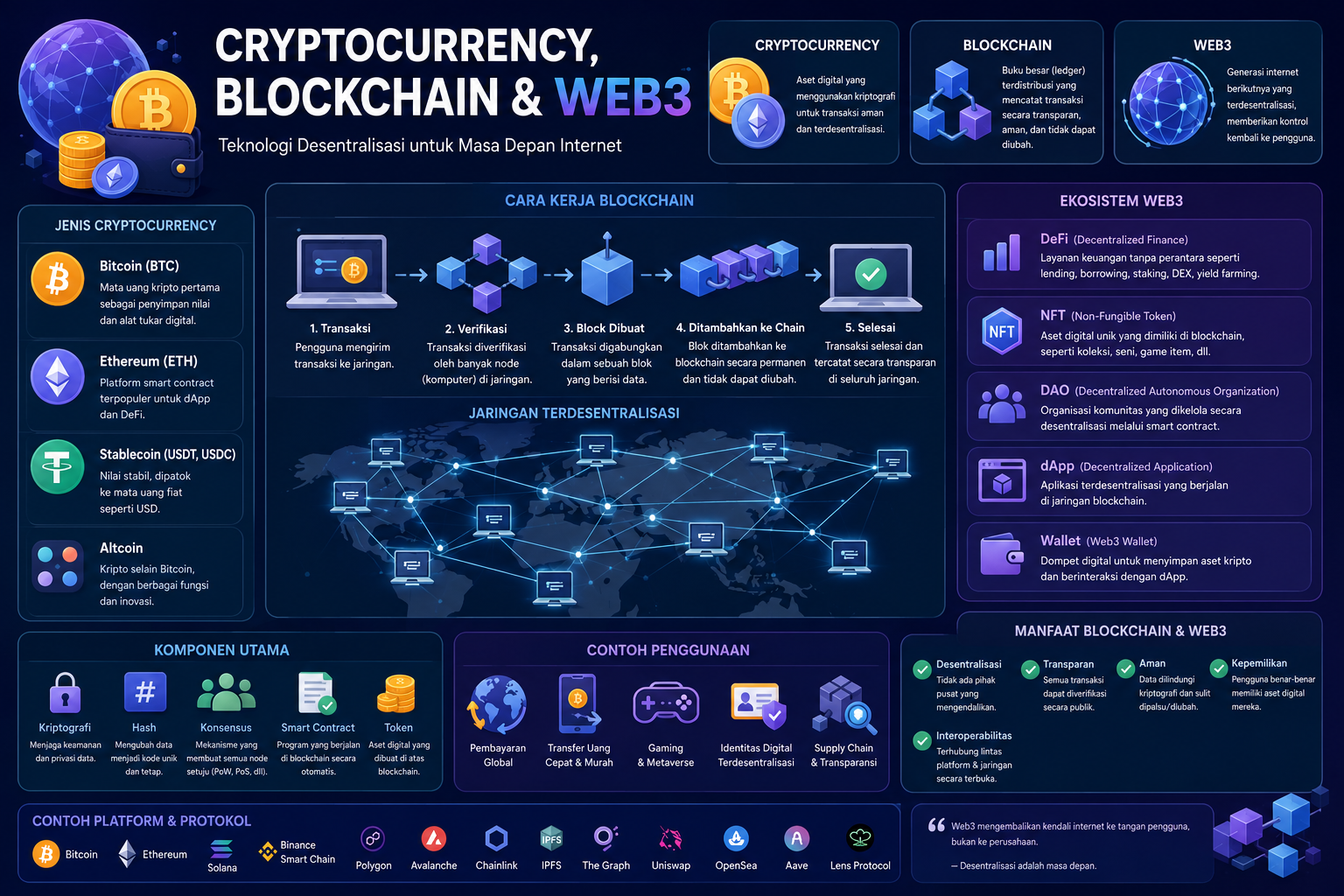
While AI focuses on intelligence, Web3 and blockchain technologies are redefining ownership, trust, and the very architecture of the internet. Beyond the speculative frenzy of cryptocurrencies, the underlying blockchain technology offers an immutable, transparent, and decentralized ledger. This fundamental shift is giving rise to a new "ownership economy" where individuals have greater control over their data, digital assets, and online identities. Non-fungible tokens (NFTs), while often associated with digital art, represent a much broader concept of verifiable digital ownership applicable to everything from event tickets and academic credentials to real estate and supply chain provenance.
Web3 envisions an internet where power shifts from centralized corporations to individual users and decentralized autonomous organizations (DAOs). This movement promises greater data privacy, reduced censorship, and new economic models based on direct participation and value creation. The integration of blockchain with AI is particularly fascinating. AI can analyze blockchain data to detect patterns, enhance security, or even create decentralized AI agents. Conversely, blockchain can provide a trustworthy and transparent audit trail for AI's decision-making processes, addressing critical concerns around AI ethics and bias. This convergence is paramount in building truly responsible and accountable AI systems.
The Ubiquitous Intelligence: IoT, Edge Computing, and Hyper-connectivity
The Internet of Things (IoT) has moved past its novelty phase to become an essential layer of our digital infrastructure. Billions of interconnected devices, from wearable health monitors to industrial sensors, are continuously generating data. This pervasive network is not just about convenience; it’s about creating intelligent environments that react to and anticipate human needs and operational demands. With the advent of 5G and soon 6G networks, the speed and bandwidth required to support this massive data exchange are becoming a reality, enabling truly real-time interaction between devices and systems.
Complementing IoT is edge computing, a paradigm shift that processes data closer to its source, rather than sending everything to a centralized cloud. This reduces latency, conserves bandwidth, and enhances data privacy and security. Edge AI, where AI algorithms run directly on IoT devices or local servers, is a powerful combination, enabling smart cameras to identify anomalies instantly or autonomous vehicles to make split-second decisions without relying on distant servers. This symbiotic relationship between IoT, edge computing, and AI is creating a hyper-connected world where intelligence is distributed, responsive, and deeply embedded in our physical surroundings.
The Human-Technology Interface: AR/VR, Brain-Computer Interfaces (BCI), and Experiential Computing
Our interaction with technology is also undergoing a profound transformation. Augmented Reality (AR) and Virtual Reality (VR), often grouped under the umbrella of "immersive technologies" or the "metaverse," are moving beyond gaming and entertainment into practical applications. In healthcare, surgeons use AR for intricate procedures; in manufacturing, AR guides technicians through complex assembly; and in education, VR offers immersive learning experiences. These technologies promise to make digital information blend seamlessly with our physical world or transport us to entirely new ones, fundamentally changing how we work, learn, and socialize.
Further down the horizon, Brain-Computer Interfaces (BCI) hold the potential to redefine human-technology interaction by allowing direct communication between the brain and external devices. While still in early stages, BCIs could offer revolutionary solutions for individuals with disabilities, restore lost senses, or even enable entirely new forms of communication and control. The integration of AI is critical here, as AI algorithms are needed to interpret complex brain signals and translate them into actionable commands. As these interfaces become more sophisticated, the line between human and machine will increasingly blur, paving the way for truly experiential and intuitive computing.
Sustainable Innovation: Green Tech and Ethical Development
Amidst this technological fervor, a critical and growing trend is the focus on sustainable innovation and ethical development. The environmental footprint of data centers, cryptocurrency mining, and manufacturing of electronic devices is significant. Consequently, there's a strong push for "green tech" – energy-efficient hardware, renewable energy sources for data centers, and circular economy principles for electronics. Companies are investing in carbon capture technologies, sustainable materials, and AI-driven optimization for resource management.
Beyond environmental concerns, ethical considerations for AI, data privacy in Web3, and the societal impact of immersive technologies are paramount. Frameworks for responsible AI, regulations for data governance, and discussions around digital well-being are shaping how these technologies are developed and deployed. This trend emphasizes that innovation must not only be powerful but also purposeful and responsible, ensuring that technological progress serves humanity and the planet. This focus on ethics and sustainability isn't an afterthought; it's becoming an integral part of the design and deployment of current and future technologies.
The Symbiosis of Trends: Where the Threads Meet
The true magic of current technology trends lies not in their individual strengths, but in their powerful synergy. Consider the potential: AI provides the intelligence, IoT gathers the data, edge computing processes it locally, blockchain secures and validates interactions, and AR/VR creates immersive interfaces. Imagine an AI-powered smart city (IoT + AI + Edge) where public services are managed by transparent DAOs (Web3), and citizens interact with their environment through augmented reality overlays (AR) that show real-time, verified information (Blockchain). Or picture a personalized healthcare system where AI analyzes data from wearable IoT devices, secured by blockchain, and then presents insights via a virtual avatar in an immersive VR environment, while deciphering the future's intricate design for preventative care.
This interconnectedness is creating systems far more powerful and versatile than any single technology could achieve. It's a shift from siloed innovation to integrated ecosystems, where each advancement amplifies the capabilities of others. This "grand tapestry" isn't a static image; it's dynamically weaving itself, presenting both immense opportunities and complex challenges.
Conclusion: Navigating the Interconnected Future
The current landscape of technology is characterized by a profound convergence of trends. From the pervasive intelligence of AI to the decentralized foundations of Web3, the ubiquitous connectivity of IoT, and the immersive experiences of AR/VR, these technologies are not just coexisting; they are co-evolving. Understanding this symbiotic relationship is crucial for anyone hoping to navigate, innovate, or simply comprehend the rapid changes around us. The future isn't built by a single groundbreaking invention but by the intricate and powerful interconnections between them. As we move forward, the most impactful innovations will likely emerge from the spaces where these threads intertwine, demanding a holistic perspective to truly grasp their transformative potential and to shape a future that is intelligent, equitable, and sustainable.