The Invisible Architects: How Converging Technologies Are Reshaping Our Reality
In an era defined by rapid innovation, the term "technology trends" often conjures images of singular, groundbreaking advancements—a new AI model, a faster processor, or an immersive virtual reality experience. Yet, to truly grasp the profound transformation unfolding around us, we must look beyond isolated breakthroughs and instead perceive the intricate web of technologies that are not merely evolving in parallel, but actively converging. These converging technological trends act as invisible architects, silently but relentlessly reshaping the very fabric of our reality, influencing everything from our daily routines to global geopolitical landscapes.
This article delves into the latest technology news and trends, not as a mere enumeration of facts, but through the unique lens of convergence. We will explore how disparate technological advancements are intertwining, creating synergistic effects that far exceed the sum of their individual parts, and acting as the foundational layers of our future world. Understanding this 'hidden architecture' is crucial for anyone seeking to navigate, innovate, or simply comprehend the accelerated pace of change in the 21st century.
The Pillars of Convergence: Key Technological Trends
To appreciate the convergence, we first identify its primary components. Several major technological trends are currently at the forefront, each powerful in its own right, but exponentially more so when combined.
1. Artificial Intelligence (AI) and Machine Learning (ML)
AI remains arguably the most impactful and pervasive trend. From generative AI models creating text and images to sophisticated algorithms powering autonomous vehicles and personalized medicine, AI is no longer a futuristic concept but a present-day utility. Its continuous evolution in deep learning, neural networks, and reinforcement learning enables machines to perceive, reason, and learn with increasing sophistication. The news is replete with stories of AI breakthroughs, from drug discovery to climate modeling, demonstrating its vast potential across every sector.
2. Web3, Blockchain, and Decentralization
Beyond the hype cycles of cryptocurrency, the underlying principles of Web3 and blockchain technology promise a fundamental shift in how we own, interact with, and trust digital assets and information. Decentralized autonomous organizations (DAOs), non-fungible tokens (NFTs), and decentralized finance (DeFi) are laying the groundwork for an internet where users, not centralized entities, control their data and digital identities. This trend challenges existing power structures and opens new avenues for economic participation and digital sovereignty.
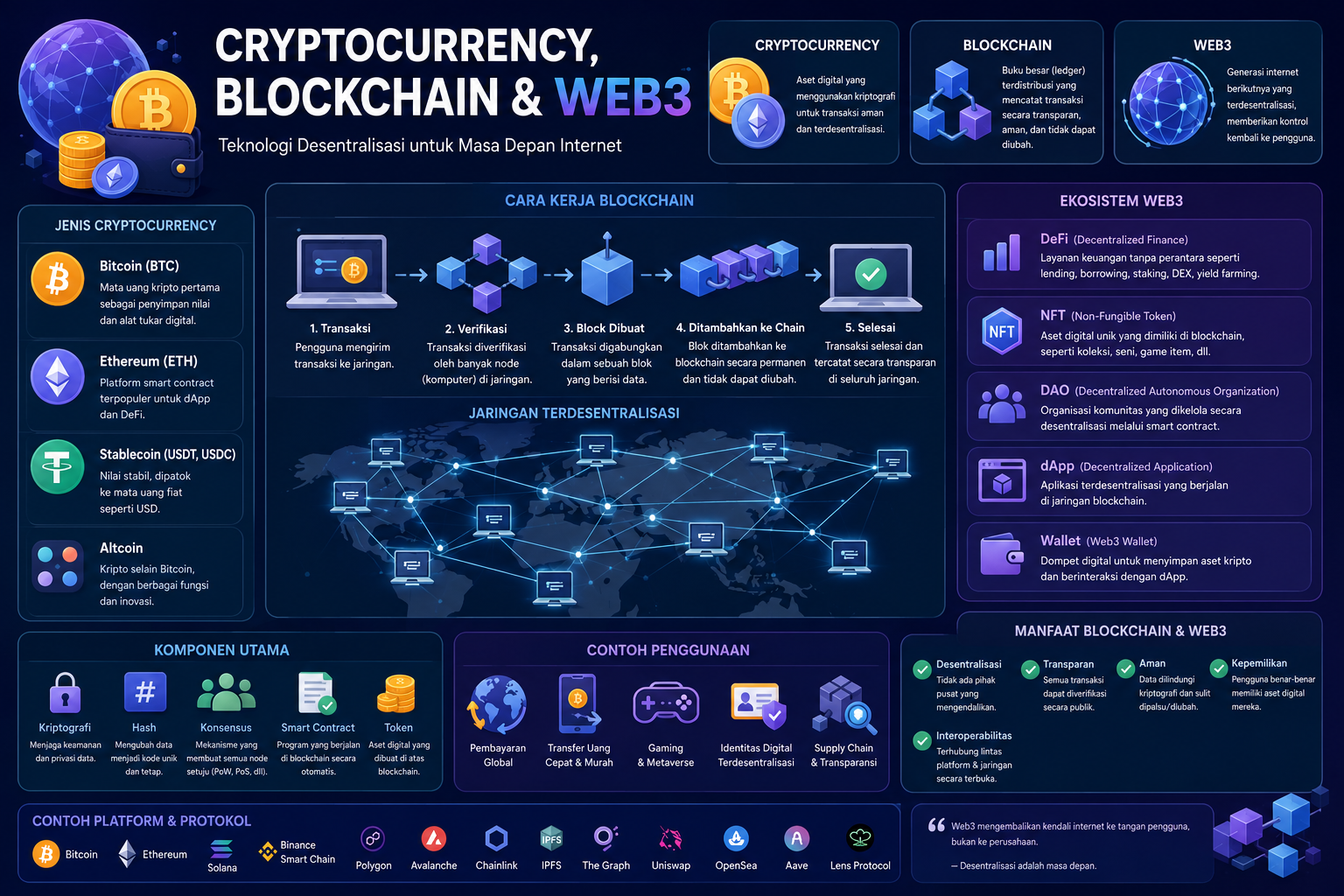
3. The Metaverse and Spatial Computing
While still in its nascent stages, the vision of the metaverse—a persistent, interconnected virtual world—is gaining traction. This isn't just about virtual reality (VR) or augmented reality (AR) headsets; it's about the convergence of these technologies with AI, blockchain, and high-speed networks to create immersive digital experiences. Spatial computing, which allows computers to understand and interact with the physical world in 3D, is a critical enabler, blurring the lines between physical and digital realities for work, entertainment, and social interaction.
4. Quantum Computing
Often perceived as a distant future technology, quantum computing is steadily progressing from theoretical physics to practical application. While not yet mainstream, advancements in qubit stability and error correction are bringing us closer to machines capable of solving problems intractable for even the most powerful classical supercomputers. This has profound implications for cryptography, materials science, drug development, and complex optimization tasks, potentially unlocking solutions to some of humanity's greatest challenges.
5. Biotechnology and Health Tech Innovation
The intersection of biology and technology is yielding unprecedented advancements. Gene editing tools like CRISPR, personalized medicine driven by genomic data, and AI-powered drug discovery platforms are revolutionizing healthcare. Wearable sensors and implantable devices are continuously monitoring our health, offering predictive insights and enabling proactive interventions. This trend is not just about treating illness but enhancing human capabilities and extending healthy lifespans.
6. Sustainable Technology and Green Innovation
With increasing global awareness of climate change, technology is being leveraged to build a more sustainable future. Innovations in renewable energy, carbon capture technologies, smart grids, sustainable agriculture (Agroteknologi), and circular economy models are rapidly evolving. AI is optimizing energy consumption, blockchain is being used for transparent supply chains, and new materials science is leading to greener products and processes. This trend is driven by necessity and presents significant opportunities for innovation and economic growth.
The Symbiotic Dance: Where Trends Intertwine
The true power and transformative potential of these individual trends emerge when they begin to interact and integrate. This is where the invisible architects truly begin to build. Consider these examples of convergence:
- AI + Biotechnology: AI algorithms accelerate drug discovery by analyzing vast datasets of genetic information and molecular structures. Machine learning models predict protein folding, leading to new therapies and personalized treatments tailored to individual genetic profiles.
- Web3 + Metaverse: Blockchain technology provides the essential infrastructure for ownership, identity, and commerce within the metaverse. NFTs enable true digital ownership of virtual assets, while decentralized identity solutions give users control over their persona across different virtual worlds.
- Quantum Computing + AI: Quantum machine learning promises to supercharge AI, allowing for the processing of exponentially more complex datasets and the development of far more powerful algorithms, potentially leading to breakthroughs in fields like materials science and cryptography.
- Sustainable Tech + AI + IoT: AI-powered IoT (Internet of Things) devices in smart cities optimize energy usage, manage waste, and monitor environmental conditions. AI can predict energy demand, smart grids balance supply and demand from renewable sources, and sensors detect pollution, all contributing to a greener urban landscape.
- Metaverse + Health Tech: Immersive VR/AR experiences can be used for surgical training, pain management, mental health therapy, and remote consultations, making healthcare more accessible and effective. Digital twins of patients, powered by AI and real-time biological data, could revolutionize personalized diagnostics and treatment.
These interconnections are not merely additive; they are exponential. Each advancement in one area amplifies the potential of others, creating a positive feedback loop that accelerates the overall pace of technological progress. This intricate dance of innovation is quietly laying the foundations for entirely new industries, economies, and modes of living.
Societal Implications: The Reshaping of Reality
The convergence of these technologies isn't just about technical feats; it's about their profound impact on human society. This unseen architecture is fundamentally altering how we work, learn, socialize, and govern.
1. Economic Transformation and Job Markets
New industries are emerging, centered around AI, blockchain, and spatial computing, creating unprecedented economic opportunities. However, this also brings challenges to existing job markets, with automation and AI potentially displacing certain roles while simultaneously creating new ones that require different skill sets. The demand for digital literacy, adaptability, and critical thinking will become paramount.
2. Ethical Dilemmas and Governance
As AI becomes more autonomous and integrated into critical systems, questions of ethics, bias, and accountability intensify. Who is responsible when an AI makes a harmful decision? How do we ensure fairness in algorithms? Similarly, Web3's decentralization challenges traditional regulatory frameworks, while biotechnology raises profound ethical considerations regarding human enhancement and data privacy. Robust ethical guidelines and adaptable governance structures are urgently needed.
3. Daily Life and Human Experience
Our daily lives are already intertwined with technology, but convergence promises a deeper integration. From personalized health companions anticipating our needs to immersive digital workplaces and entertainment, the boundaries between the digital and physical will continue to blur. This can lead to greater convenience and richer experiences, but also raises concerns about digital addiction, data privacy, and the nature of human connection.
4. Geopolitical Landscape and Digital Sovereignty
Technological prowess is increasingly a determinant of global power. Nations are vying for leadership in AI, quantum computing, and semiconductor manufacturing. The development and control of these converging technologies will shape geopolitical alliances, economic dominance, and national security. Digital sovereignty—a nation's ability to control its own digital infrastructure and data—will become a critical aspect of international relations.
Navigating the Future: A Call to Action
The "invisible architects" are not passive forces; they are a direct result of human ingenuity and choice. Understanding these converging trends is the first step toward actively shaping the future they build. Here are key considerations for individuals, businesses, and governments:
- Embrace Lifelong Learning: The pace of change necessitates continuous skill development and a willingness to adapt. Understanding the fundamentals of these technologies will be crucial across all professions.
- Foster Ethical Innovation: As we develop powerful new tools, it is imperative to embed ethical considerations from the outset. Transparency, fairness, and human-centric design must guide technological progress.
- Promote Collaboration: The complexity of these converging trends demands interdisciplinary collaboration—between scientists, ethicists, policymakers, and business leaders—to address challenges and unlock potential.
- Build Resilient Infrastructure: Governments and corporations must invest in robust digital infrastructure, cybersecurity, and regulatory frameworks that can keep pace with technological advancements.
- Prioritize Digital Literacy: Educating the public about the benefits, risks, and implications of these technologies is vital for informed decision-making and democratic participation in shaping our digital future.
Conclusion
The latest technology news and trends reveal a landscape far more intricate and interconnected than simple headlines often suggest. We are witnessing the emergence of a hidden architecture of the future, where AI, Web3, quantum computing, the metaverse, biotech, and sustainable tech are not isolated entities, but a symphony of innovations playing in concert. This convergence is not just changing what we do, but fundamentally altering who we are and how we perceive the world. By understanding these invisible architects and their symbiotic relationships, we can move beyond simply reacting to technological shifts and instead, consciously participate in shaping a future that is equitable, prosperous, and sustainable for all.