PPOB System Architecture and Logic: A Strategic Perspective on Digital Financial Ecosystems
Introduction to PPOB System Architecture
PPOB (Payment Point Online Bank) systems represent a critical innovation in modern financial infrastructure, enabling seamless payment processing across diverse sectors. At its core, the arsitektur PPOB combines modular design principles with dynamic transaction logic to support scalability, security, and interoperability. This article explores the architectural frameworks and logical workflows that define PPOB systems, emphasizing their role in shaping resilient digital ecosystems.
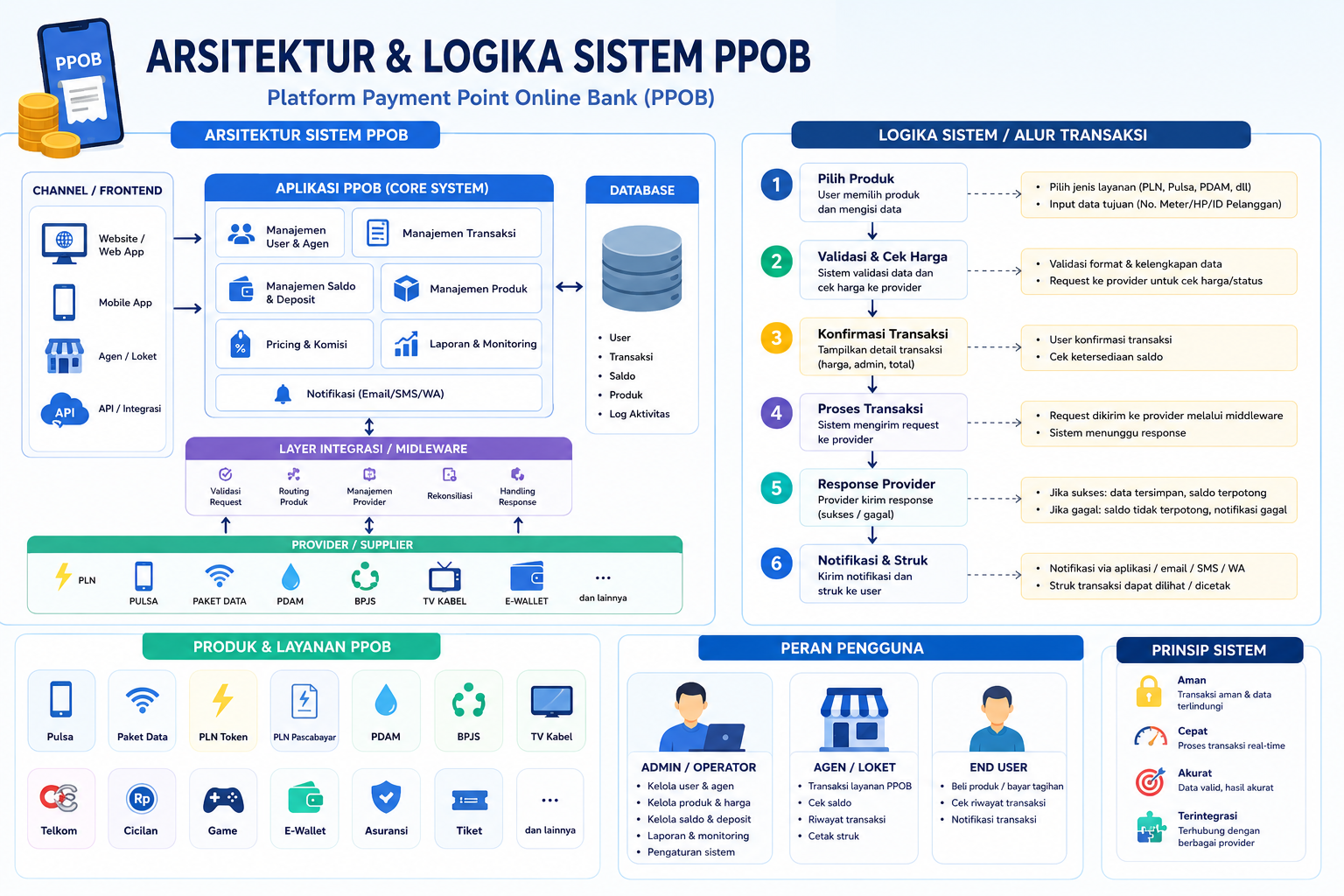
Layered Architecture of PPOB Systems
The PPOB architecture is typically divided into three core layers: the user interface layer, transaction processing layer, and integration layer. Each layer operates independently yet collaboratively to ensure efficient transaction execution.
- User Interface Layer: This front-end component provides accessible payment portals for consumers, merchants, and financial institutions. It supports multi-channel access via mobile apps, web portals, and kiosks.
- Transaction Processing Layer: The backbone of the system, this layer manages payment authentication, fraud detection, and real-time settlement. Advanced algorithms ensure compliance with regulatory standards.
- Integration Layer: Facilitates connectivity with banking APIs, e-wallet platforms, and third-party service providers. This layer ensures interoperability across fragmented financial ecosystems.
For a deeper dive into how these layers interact within digital financial innovation, refer to this analysis of PPOB’s structural evolution.
Logical Workflow in PPOB Systems
The logika sistem PPOB is governed by a sequence of automated processes that prioritize speed, accuracy, and transparency. Key stages include:
- Request Validation: User payment requests are authenticated using encryption protocols and multi-factor verification.
- Routing & Settlement: Transactions are routed to the appropriate banking partner for settlement, leveraging real-time data analytics.
- Reconciliation: Daily reconciliation processes ensure consistency between transaction records and financial ledgers.
- Feedback Loop: System performance is continuously monitored, with machine learning models optimizing future transactions.
This logical framework aligns with the broader transformation toward intelligent digital ecosystems, where adaptability is paramount.
Security and Scalability Challenges
PPOB systems must balance scalability with robust security measures. Common strategies include:
- Implementing blockchain-based audit trails for immutable transaction records.
- Deploying AI-driven fraud detection to identify anomalies in payment patterns.
- Cloud-based infrastructure to support high-volume transaction processing.
These strategies ensure that PPOB systems remain secure while accommodating growing demands for digital transactions, as highlighted in the role of underlying technologies.
Future Directions for PPOB Systems
As digital economies evolve, PPOB systems are poised to integrate with emerging technologies such as decentralized finance (DeFi) and IoT-enabled payment solutions. Future developments may include:
- Seamless cross-border payment capabilities using stablecoins.
- AI-powered personalization for user-specific payment experiences.
- Partnerships with telecom operators to expand financial inclusion in underserved regions.
By embracing these innovations, PPOB systems will continue to redefine the boundaries of financial accessibility and efficiency.
Conclusion
The architecture and logic of PPOB systems embody the intersection of technological innovation and financial pragmatism. Through layered designs, automated workflows, and adaptive security frameworks, PPOB enables the seamless flow of value in the digital age. Understanding its strategic design principles offers insights into the future of global payment ecosystems.