The Architecture and Logic of the PPOB System: A Structural Analysis for the Digital Economy
Understanding the PPOB System: A Technical Overview
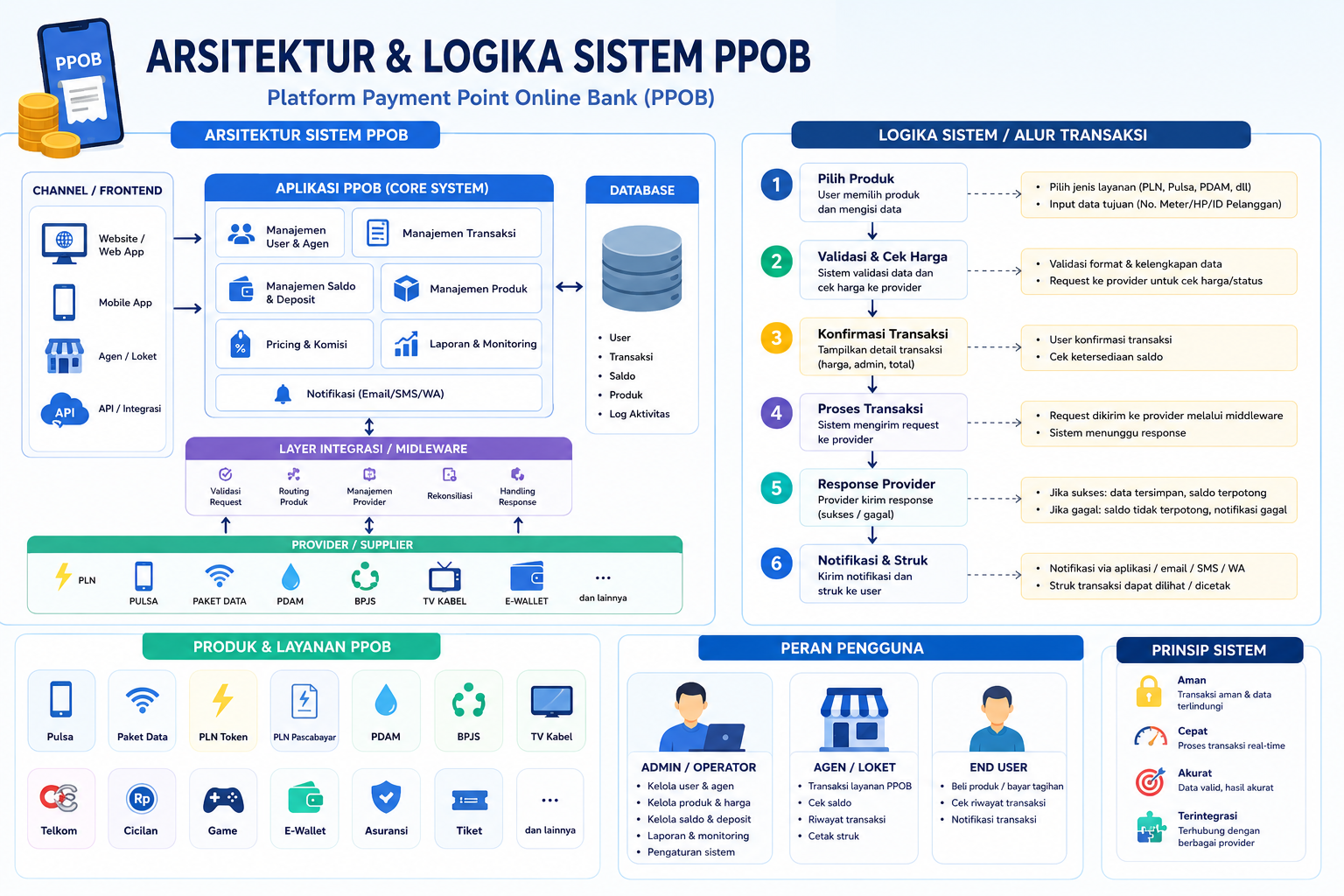
The Payment Point Online Bank (PPOB) system is a critical infrastructure enabling seamless digital transactions in modern economies. At its core, the PPOB system integrates multi-layered architecture to process billions of transactions daily while maintaining security and scalability. This system is particularly vital in regions like China, where digital payments dominate retail and financial services.
Key Components of the PPOB System Architecture
- User Interface Layer: Facilitates user interaction through mobile apps, web portals, or kiosks. For example, platforms like WeChat Pay and Alipay utilize this layer to connect consumers with payment services.
- Payment Gateway: Acts as a bridge between the user interface and banking systems. It validates transactions and ensures compliance with regulatory standards.
- Banking Integration Module: Interfaces with multiple banks to execute fund transfers. This module employs protocols like ISO 20022 to standardize data exchange.
- Backend Processing Engine: Handles transaction reconciliation, fraud detection, and error resolution. Advanced machine learning models monitor anomalies in real time.
- Database Layer: Stores transaction logs, user profiles, and encryption keys securely. Blockchain technology is sometimes integrated for immutable record-keeping.
Transaction Logic: From Initiation to Completion
The transaction logic of the PPOB system follows a precise sequence to ensure accuracy and reliability:
- User Authentication: Validates user identity through biometrics, OTP (One-Time Password), or two-factor authentication.
- Transaction Request: The user initiates a payment, specifying the amount and recipient. The system checks account balances and transaction limits.
- Payment Verification: The payment gateway communicates with banks to confirm fund availability. If approved, a unique transaction ID is generated.
- Settlement Processing: Funds are transferred via ACH (Automated Clearing House) or direct bank-to-bank transfers. Settlement times vary from near-instant to 24 hours, depending on the network.
- Post-Transaction Reporting: Both the sender and recipient receive confirmation. Audit trails are updated for compliance and reconciliation.
Security and Risk Management in PPOB Systems
Given the high-value nature of financial transactions, the PPOB system employs robust security measures:
- End-to-End Encryption: Sensitive data, such as PINs and credit card numbers, are encrypted using AES-256 protocols.
- Real-Time Fraud Detection: AI-driven algorithms analyze transaction patterns to flag suspicious activities, such as unusually large transactions or repeated failed attempts.
- Redundant Infrastructure: Distributed servers across multiple geographic zones ensure continuity during outages. For instance, China’s UnionPay employs a hybrid cloud architecture for resilience.
- Regulatory Compliance: Adherence to standards like PCI DSS (Payment Card Industry Data Security Standard) and GDPR (General Data Protection Regulation) is mandatory for global operations.
Case Study: PPOB in China’s Digital Economy
China’s digital payment ecosystem, dominated by platforms like Alipay and WeChat Pay, showcases the PPOB system’s scalability. These platforms process over 2 trillion transactions annually, leveraging the PPOB architecture to integrate e-commerce, social media, and financial services. For deeper insights into the technical design of such systems, see PPOB System Architecture & Transaction Logic: Innovating Digital Payments in Modern China.
Challenges and Innovations in PPOB Systems
Despite its efficiency, the PPOB system faces challenges such as cross-border transaction latency and interoperability issues. Innovations like blockchain-based settlement and decentralized identity verification are emerging to address these gaps. For example, the integration of smart contracts could automate complex transactions, reducing the need for intermediaries.
Conclusion
The PPOB system’s architecture and logic are foundational to the digital economy, enabling secure, efficient, and scalable financial transactions. As technology evolves, continuous innovation in AI, blockchain, and quantum computing will further enhance its capabilities. For a detailed exploration of PPOB’s role in China’s digital transformation, refer to PPOB Systems Architecture and Logic: Supporting Decentralized Financial Ecosystems in China.