The Architecture and Logic of PPOB Systems: A Gateway to Digital Financial Inclusion
Understanding PPOB Systems: Bridging Traditional and Digital Finance
The Payment Point Online Banking (PPOB) system has emerged as a critical infrastructure in the digital economy, enabling seamless transactions between consumers, service providers, and financial institutions. At its core, a PPOB system combines architecture and transaction logic to facilitate secure, efficient, and scalable payment processing. By integrating analog financial practices with digital technologies, PPOB systems address gaps in accessibility, particularly in regions with underdeveloped banking ecosystems. This article explores the intricate design of PPOB systems and their role in modernizing financial transactions.
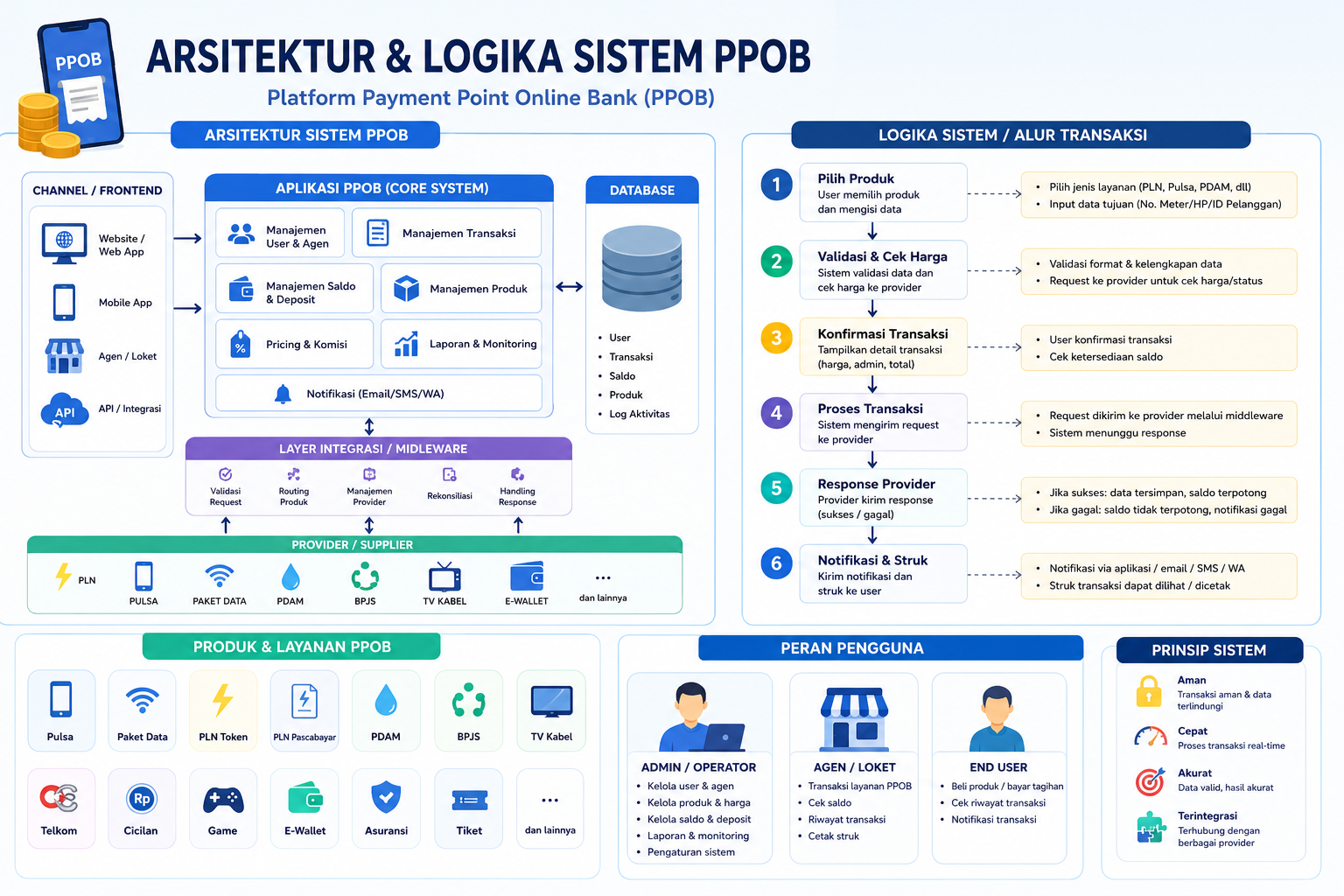
Architectural Framework of PPOB Systems
The architecture of a PPOB system typically consists of four key layers:
- User Interface (UI) Layer: Provides an intuitive platform for consumers to initiate payments, view transaction history, and manage accounts. This layer often includes mobile apps, web portals, or kiosks.
- Payment Gateway Layer: Acts as a bridge between the user and the payment processor, encrypting data and facilitating secure fund transfers. This layer supports multiple payment methods, including credit/debit cards, e-wallets, and bank transfers.
- Merchant Integration Layer: Connects the PPOB system to service providers (e.g., utility companies, telecoms, or e-commerce platforms), enabling real-time transaction validation and settlement.
- Backend Infrastructure: Manages data storage, analytics, fraud detection, and compliance with regulatory standards. This layer ensures scalability and reliability, even during high transaction volumes.
For a deeper dive into how these layers interact, refer to this detailed exploration of PPOB architecture.
Transaction Logic: The Workflow Behind PPOB
The logic governing PPOB transactions follows a structured sequence:
- User Initiation: A consumer selects a service (e.g., electricity bill payment) and inputs their account details.
- Transaction Authorization: The system verifies the user’s identity through multi-factor authentication and checks the availability of funds.
- Merchant Validation: The payment gateway communicates with the service provider to confirm the transaction amount and account validity.
- Fund Transfer: Funds are deducted from the user’s account and credited to the merchant’s account, with real-time updates to both parties.
- Settlement and Reporting: Transaction records are reconciled, and compliance reports are generated for audit purposes.
This workflow is reinforced by advanced encryption protocols and AI-driven fraud detection systems, ensuring security and transparency. For insights into the technical nuances of digital transactions, see this analysis of transaction dynamics.
Unique Perspectives: PPOB as a Catalyst for Financial Inclusion
One of the most transformative applications of PPOB systems lies in their ability to democratize access to financial services. In rural or economically disadvantaged areas, where traditional banking infrastructure is lacking, PPOB systems enable users to:
- Pay bills and taxes remotely, reducing dependency on physical branches.
- Access microloans or savings accounts through mobile platforms.
- Receive government subsidies or social welfare payments directly into e-wallets.
For example, in Indonesia, PPOB agents stationed in remote villages act as intermediaries, allowing villagers to pay for utilities or school fees without traveling to urban banks. This decentralized model mirrors the digital wallet infrastructure discussed in bridging traditional and digital finance, highlighting how technology can bridge socioeconomic divides.
Challenges and Innovations in PPOB Systems
Despite their potential, PPOB systems face challenges such as interoperability between banks, cybersecurity threats, and regulatory compliance. Innovations in blockchain technology and AI are addressing these issues:
- Blockchain Integration: Enhances transparency by creating immutable transaction records, reducing fraud risks.
- AI Analytics: Predicts transaction patterns to detect anomalies, such as sudden spikes in fraudulent activity.
- Open Banking Standards: Facilitates seamless data sharing between financial institutions, improving user experience.
The Future of PPOB Systems: Towards a Borderless Economy
As global commerce becomes increasingly digital, PPOB systems are evolving to support cross-border transactions, cryptocurrency integrations, and peer-to-peer lending. In China, for instance, PPOB platforms are being integrated with QR code payment systems like WeChat Pay and Alipay, enabling users to settle transactions instantly. This convergence of technologies underscores the importance of robust architectural frameworks and adaptive transaction logics.
For businesses and policymakers, investing in PPOB infrastructure is not just about financial efficiency—it’s about fostering economic resilience. By addressing gaps in digital literacy and ensuring interoperability, PPOB systems can unlock opportunities for millions of unbanked individuals worldwide.
Conclusion
The architecture and logic of PPOB systems represent a harmonious blend of tradition and innovation. By understanding their design principles and transaction workflows, stakeholders can harness these systems to drive financial inclusion, reduce operational costs, and enhance user trust. As the digital economy continues to expand, PPOB systems will remain pivotal in shaping the future of global finance.