Decoding PPOB System Architecture: The Invisible Backbone of Digital Transactions
Introduction to PPOB System Architecture
The Payment Point Online Banking (PPOB) system represents a critical component of modern digital economies, enabling seamless and secure financial transactions. At its core, the architecture of PPOB combines layered digital infrastructure with robust logical frameworks to facilitate real-time payments. Unlike traditional banking systems, PPOB integrates front-end user interfaces, back-end processing engines, and security protocols into a unified ecosystem. This architecture not only ensures efficiency but also addresses the complexities of cross-platform interoperability and compliance with global financial standards.
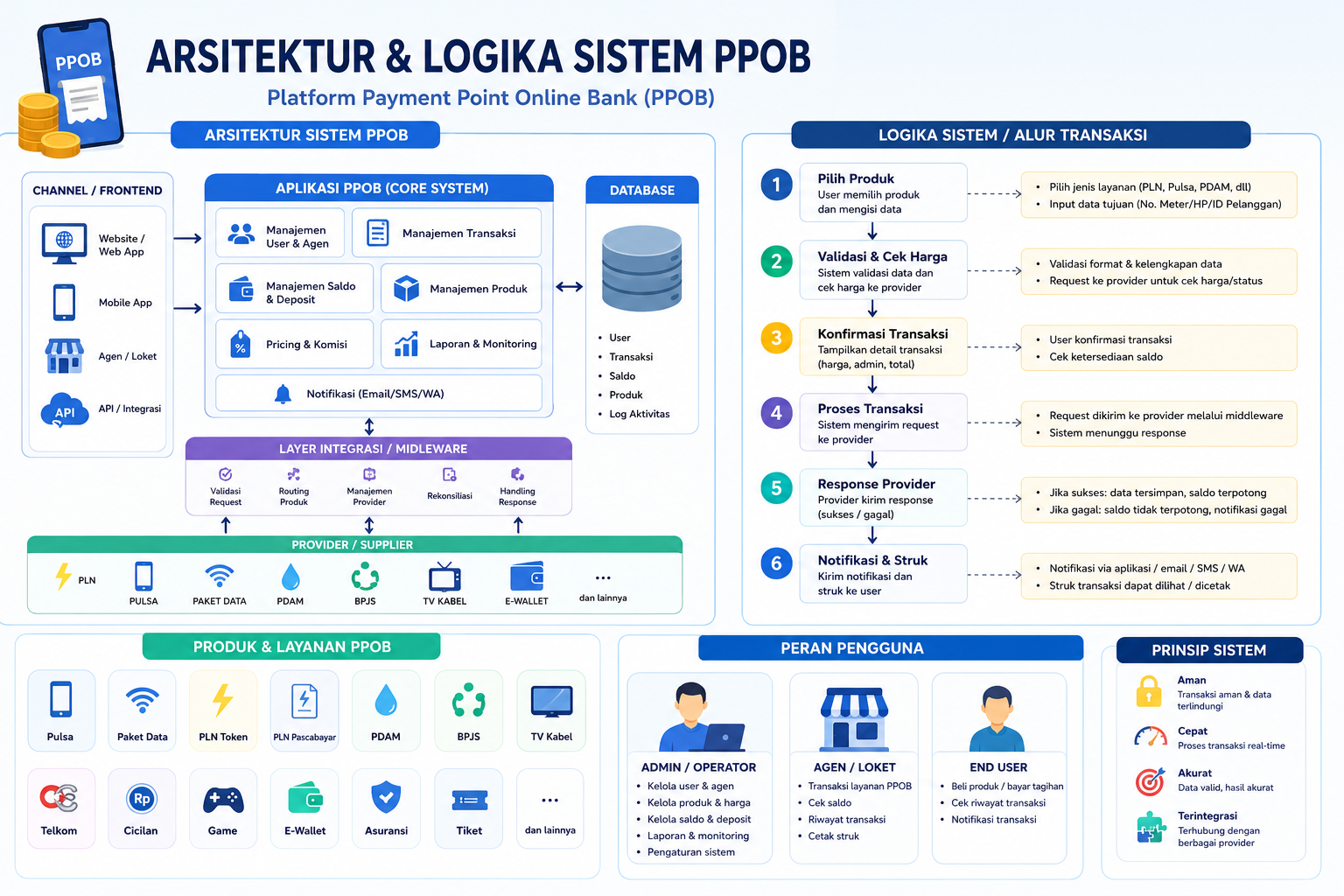
Core Components of PPOB Architecture
The architecture of a PPOB system is typically divided into three layers: the user interface layer, the processing layer, and the data management layer. The user interface (UI) allows customers to initiate transactions via mobile apps, web portals, or physical kiosks. Below this, the processing layer handles transaction validation, fraud detection, and settlement. Advanced machine learning algorithms are often embedded here to predict and mitigate risks. Finally, the data management layer ensures secure storage and retrieval of transaction records, leveraging blockchain or encrypted databases to maintain transparency and auditability.
- User Interface Layer: Designed for accessibility, this layer prioritizes user experience (UX) with multi-language support and adaptive design.
- Processing Layer: Executes real-time transaction validation using APIs and microservices to connect with banking partners.
- Data Management Layer: Ensures compliance with regulations like GDPR and PCI-DSS through encrypted data storage and access controls.
Transaction Logic and Flow
The logical framework of PPOB systems operates on a stateless, event-driven model. When a user initiates a payment, the system first authenticates the request using multi-factor authentication (MFA). It then routes the transaction through a distributed network of nodes to validate the sender’s account and verify the recipient’s details. If successful, the transaction is settled within seconds, with real-time notifications sent to both parties. In case of errors, such as insufficient funds or mismatched account details, the system triggers automated alerts and offers resolution pathways like partial payments or retries.
This logic is underpinned by a combination of rule-based engines and AI-driven anomaly detection. For example, machine learning models analyze historical transaction patterns to flag suspicious activities, reducing fraudulent transactions by up to 90% in some implementations. The system also supports batch processing for bulk transactions, ensuring scalability during high-volume events like holiday sales or promotions.
Security and Compliance in PPOB Systems
Security is paramount in PPOB architecture, given the sensitivity of financial data. The system employs end-to-end encryption (E2EE) to protect data in