Unveiling the Pulse: A Deep Dive into 2026's Tech News & Trends
In the fast‑moving landscape of 2026, technology is no longer a backdrop to human progress—it is the engine driving it. From quantum‑accelerated cloud computing to AI‑powered sustainability solutions, the current wave of innovations is reshaping industries, economies, and everyday life. This article takes a close look at the most influential tech trends of 2026, examines their real‑world implications, and offers a unique perspective on how these developments will redefine our future.
1. The Quantum Leap: Quantum Computing in the Cloud
Quantum computing has transitioned from theoretical laboratory experiments to commercially viable cloud services. Major providers—IBM, Google, and emerging startups—now offer “Quantum as a Service” (QaaS) platforms that allow enterprises to run complex simulations on quantum processors without owning hardware. This democratization is accelerating breakthroughs in drug discovery, materials science, and cryptography.
One standout application is the real‑time optimization of global supply chains. By leveraging quantum annealing, logistics firms can evaluate millions of routing permutations in seconds, reducing carbon emissions and delivery times. In finance, quantum algorithms are enabling risk modeling with unprecedented precision, potentially reshaping portfolio management.
Why It Matters
- Speed & Scale: Quantum processors can solve specific problems exponentially faster than classical computers.
- Accessibility: Cloud‑based QaaS removes the barrier of entry for small and medium enterprises.
- Security: Quantum cryptography promises unbreakable encryption, but also challenges legacy security protocols.
2. AI Goes Mainstream: Generative Models and Ethical Governance
Generative AI has matured beyond image and text creation. 2026 sees the rise of multimodal models that can produce realistic videos, synthesize music, and even design functional hardware components. These models are integrated into everyday tools—from creative software suites to autonomous vehicle design platforms.
With great power comes responsibility. Governments worldwide have enacted AI governance frameworks that require transparency, bias audits, and accountability for algorithmic decisions. The European Union’s AI Act, for instance, now mandates a “human‑in‑the‑loop” for high‑stakes applications, ensuring that human oversight remains central.
Case Study: AI‑Driven Urban Planning
In Singapore, a multimodal AI system analyzes satellite imagery, traffic patterns, and demographic data to propose optimized city layouts. The model recommends green corridors, adaptive traffic signals, and energy‑efficient building placements. The result is a city that balances growth with sustainability.
3. FinTech Revolution: The Rise of Digital Wallets and Decentralized Finance (DeFi)
Digital wallets have become ubiquitous, and DeFi platforms are eroding the traditional banking model. The integration of blockchain with AI creates “smart wallets” that automatically manage investments, tax liabilities, and risk exposure.

The image above encapsulates the convergence of physical and digital finance: a bustling metropolis illuminated by neon cables, where families transact seamlessly with a single touch. This visual metaphor underscores how far we have come from paper checks to instant, cross‑border digital settlements.
Central banks are also exploring Central Bank Digital Currencies (CBDCs), which could provide a stable, government‑backed digital alternative to volatile cryptocurrencies. While adoption varies by region, the trend suggests a future where digital money is as commonplace as cash today.
4. Sustainable Tech: AI‑Powered Climate Solutions
Climate change remains the defining challenge of our era. AI is at the forefront of mitigation strategies, from predictive modeling of extreme weather events to optimizing energy grids for renewable sources. In 2026, a new class of “green AI” has emerged—algorithms designed to minimize computational energy consumption while delivering high performance.
Example: Smart Grid Management
Utility companies employ AI to forecast solar and wind output, adjusting grid loads in real time. This reduces reliance on fossil‑fuel backup plants and lowers overall emissions. Moreover, AI-driven microgrids empower remote communities to achieve energy independence.
5. The Metaverse and Beyond: Immersive Experiences in Everyday Life
While the Metaverse initially sparked hype, 2026 has seen it mature into practical applications. Augmented Reality (AR) overlays are now standard in manufacturing for real‑time maintenance guidance, in healthcare for surgical planning, and in education for interactive learning.
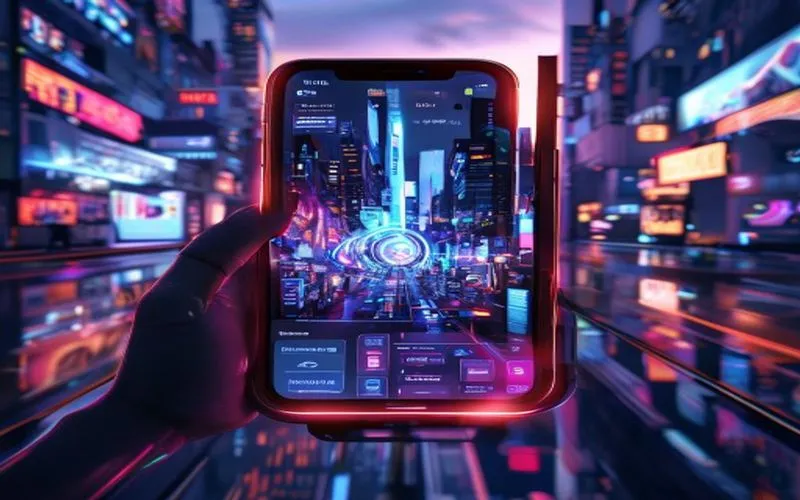
The futuristic interface showcased above illustrates how AR can blend digital information with the physical world. From holographic dashboards to virtual collaborative workspaces, the boundary between real and virtual continues to blur.
6. Edge Computing: Bringing Intelligence to the Periphery
Edge computing has matured into a critical component of 5G and IoT ecosystems. By processing data closer to the source—whether on a smart camera or a wearable sensor—edge devices reduce latency, enhance privacy, and lower bandwidth costs.
- Industrial IoT: Edge nodes analyze sensor data to predict equipment failures before they happen.
- Smart Cities: Edge servers process traffic and environmental data for real‑time city management.
- Consumer Devices: Voice assistants now run core functions locally, ensuring faster responses and reduced data exposure.
7. Cybersecurity in the Age of Quantum and AI
With quantum computing and AI capabilities, cyber threats evolve at a rapid pace. Quantum‑resistant cryptography is becoming standard, while AI‑driven threat detection systems can identify anomalies across vast networks. However, adversaries also use AI to craft sophisticated phishing attacks and deepfakes.
Organizations must adopt a layered security approach: combining traditional firewalls, AI threat intelligence, and employee training. Regulatory bodies are pushing for mandatory compliance with “Zero Trust” architectures, ensuring that every access request is authenticated and verified.
8. The Human Factor: Workforce Transformation and Reskilling
Automation, AI, and quantum technologies are reshaping job roles. While some routine tasks become redundant, new opportunities arise in data science, quantum programming, and AI ethics. Companies invest heavily in reskilling programs, offering micro‑credentials and on‑the‑job learning platforms.
Remote work has become the norm, supported by high‑bandwidth connectivity and collaborative AR tools. The global talent pool expands, but so does the need for cultural competency and digital literacy.
9. Regulatory Landscape: Balancing Innovation and Public Interest
Governments worldwide are grappling with how to regulate emerging technologies. Key focus areas include:
- Data Privacy: Strengthened GDPR‑style regulations for AI data usage.
- AI Ethics: Mandatory bias audits and transparency reports.
- Digital Currency: Clear guidelines for CBDCs and DeFi platforms.
- Quantum Security: Standards for post‑quantum cryptography.
These frameworks aim to protect consumers while fostering a competitive, innovative environment.
10. Looking Ahead: What’s Next Beyond 2026?
While 2026 has already reshaped the tech landscape, future breakthroughs loom:
- Neuromorphic Computing: Brain‑inspired chips that could power real‑time AI with minimal energy.
- Biotech Integration: Gene editing tools combined with AI for personalized medicine.
- Space‑Based Internet: Low Earth Orbit constellations delivering global broadband.
- Quantum Networking: Secure, ultra‑fast communication channels across continents.
These advancements promise to deepen the integration of technology into every facet of society, but they also raise ethical and governance questions that must be addressed proactively.
For a broader exploration of how these trends intersect with global economic shifts, see Navigating the Pulse of 2026: Unveiling the Latest Tech News and Trends. To understand the historical context and future trajectory of these innovations, read The Pulse of 2026: A Deep Dive into Current Technology News & Trends.
In conclusion, the technology landscape of 2026 is a tapestry of rapid advancements, regulatory evolution, and societal adaptation. By staying informed and embracing responsible innovation, individuals and organizations can harness these trends to build a more efficient, sustainable, and equitable future.