The Symbiotic Evolution of Tech: Unpacking the Interconnected Forces Shaping Our Digital Tomorrow
In an era defined by relentless innovation, the landscape of technology is less a series of isolated advancements and more a vibrant, interconnected ecosystem. To truly grasp the essence of today's and tomorrow's latest technology news and trends, we must look beyond the surface-level announcements and delve into the symbiotic relationships that empower these breakthroughs. It's not merely about what new gadgets or software emerge, but how these disparate threads weave together to form a transformative tapestry, redefining our societies, economies, and very understanding of human potential.
This article aims to deconstruct these intricate connections, offering a unique perspective on how various technological streams – from artificial intelligence to sustainable computing – are not just advancing in parallel, but are profoundly influencing and accelerating one another. We'll explore the 'why' behind the 'what,' understanding the foundational shifts that are propelling us into an increasingly digital and integrated future.
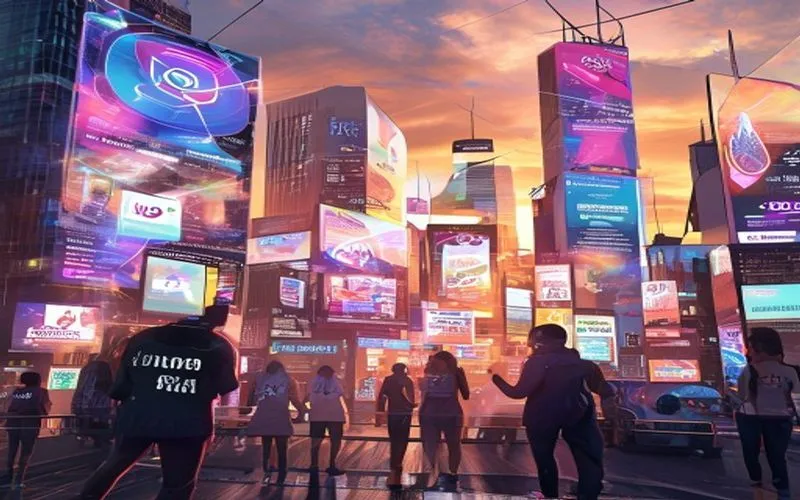
The AI Renaissance: Beyond Generative Models to Pervasive Intelligence
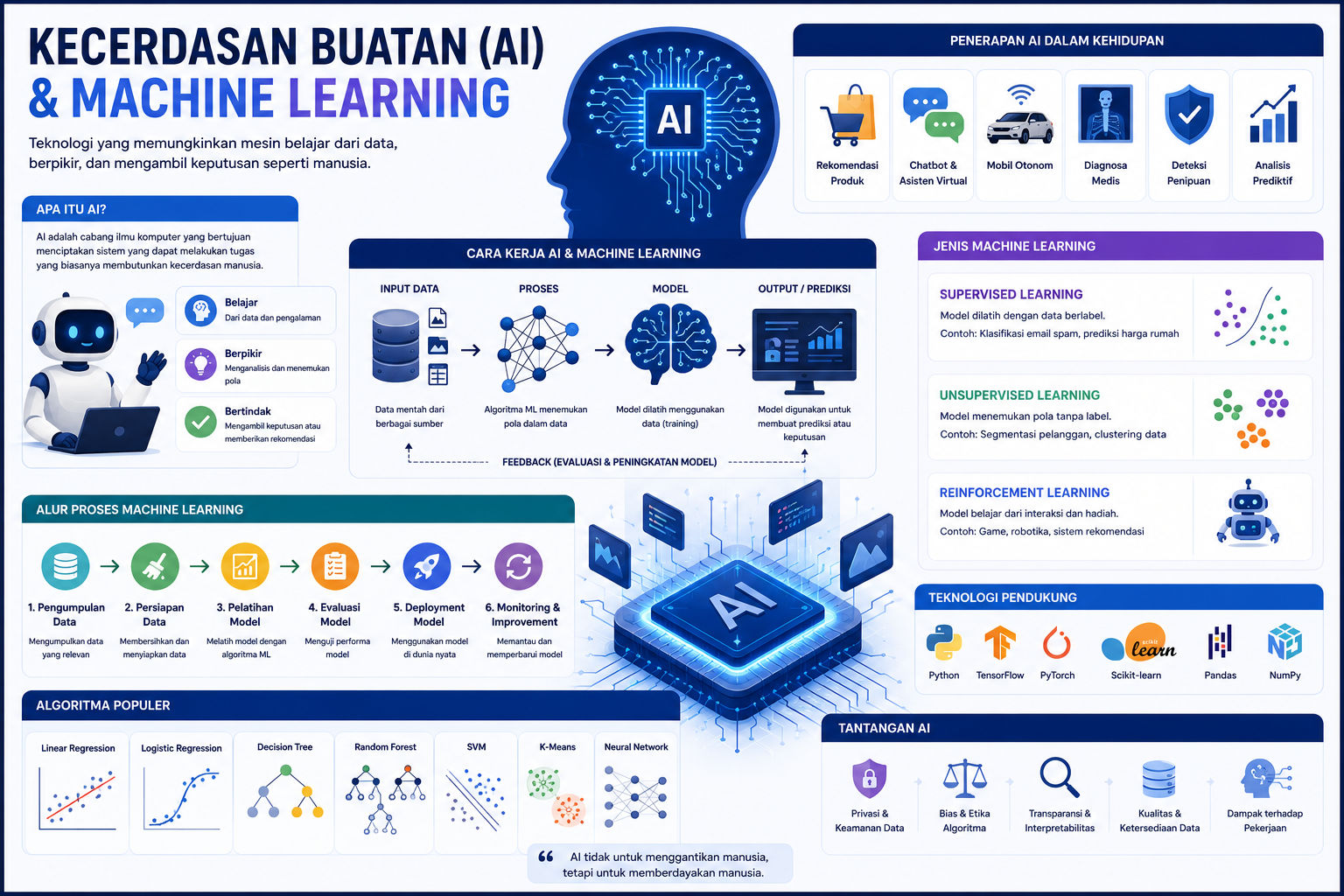
While generative AI models like Large Language Models (LLMs) and image generators have captured public imagination, the true revolution of artificial intelligence extends far beyond creating text or art. AI is undergoing a renaissance, transitioning from specialized tools to a pervasive layer embedded in virtually every technological stack. It's the unseen architect optimizing supply chains, predicting financial markets, personalizing healthcare, and even managing vast energy grids. The trend isn't just about 'smart' systems, but about 'intelligent' infrastructure capable of learning, adapting, and making autonomous decisions.
This pervasive intelligence is fundamentally reshaping how we interact with technology and with each other. Consider the convergence of AI with IoT (Internet of Things): smart devices are no longer just collecting data; they're actively processing it at the edge, leveraging embedded AI to make real-time decisions without constant cloud interaction. This paradigm shift reduces latency, enhances privacy, and creates a hyper-responsive environment where our physical and digital worlds blur seamlessly. Furthermore, AI is now crucial for cybersecurity, with AI-driven threat detection systems becoming indispensable against increasingly sophisticated cyberattacks. Its analytical prowess can identify patterns and anomalies far beyond human capabilities, turning the digital defense into an ever-evolving, AI-powered arms race.
Quantum Computing: The Dawn of a New Computational Epoch
While still in its nascent stages, quantum computing continues to make steady, albeit complex, strides. It represents not an incremental improvement over classical computing but a fundamentally different way of processing information. The ability of quantum bits (qubits) to exist in multiple states simultaneously (superposition) and become entangled means quantum computers can tackle problems currently intractable for even the most powerful supercomputers. This isn't just about faster calculations; it's about solving entirely new classes of problems.
The implications are staggering for fields like drug discovery, material science, financial modeling, and cryptography. Imagine simulating molecular interactions with unprecedented accuracy to design revolutionary new medicines or understanding complex climate models with variables that currently overwhelm classical systems. While practical, fault-tolerant quantum computers are likely still years away, the ongoing investment and research are building the foundational knowledge that will eventually unlock these capabilities. The trend here is the patient, strategic pursuit of a technology that promises to redefine the very limits of what's computationally possible, setting the stage for future breakthroughs in AI and data analysis that we can barely conceive of today.
Spatial Computing & The Evolving Metaverse: Beyond Goggles
The initial hype around the metaverse, often conflated with clunky VR headsets, is evolving into a more nuanced understanding of spatial computing. This trend focuses on integrating digital information and experiences seamlessly into our physical environments, creating augmented realities that enhance, rather than replace, our perception of the world. Think less about escaping into a virtual world and more about persistent, interactive digital layers overlaid onto our real one, accessible through various devices—from advanced smart glasses to even our smartphones.
Key to this evolution is the emphasis on interoperability and user-generated content. Rather than walled-garden virtual platforms, the future of spatial computing envisions a vast network of interconnected digital spaces where assets, identities, and experiences can fluidly move across different applications and devices. This requires robust backend infrastructure, advanced rendering capabilities, and sophisticated AI to understand and adapt content to individual users and their physical surroundings. Moreover, the blending of the physical and digital (phygital experiences) is becoming increasingly important, impacting retail, education, and entertainment. This isn't just about graphics; it's about creating intuitive, immersive interfaces that feel natural and extend human capabilities, laying groundwork for deconstructing the hidden architecture behind our digital revolution.

Web3 and Decentralization: Reshaping Digital Ownership and Trust
The concept of Web3, powered by blockchain technology, continues its slow but steady march towards redefining digital ownership, identity, and trust. While often associated with cryptocurrencies, the underlying principles of decentralization, transparency, and immutability have far broader implications. We're seeing a shift from centralized platforms owning our data and digital assets to models where individuals have greater control and verifiable ownership.
This trend is manifesting in various forms: Decentralized Autonomous Organizations (DAOs) are exploring new governance structures, Non-Fungible Tokens (NFTs) are evolving beyond digital art to represent real-world assets and digital identity components, and decentralized finance (DeFi) is challenging traditional financial intermediaries. The core value proposition of Web3 is the promise of a more equitable and secure internet, one where value and control are distributed rather than concentrated. Its integration with other trends, such as spatial computing, could enable truly user-owned metaverse economies, where digital scarcity and interoperable assets become the norm, fostering new forms of digital entrepreneurship and creativity.
The Edge Computing Revolution: Pushing Intelligence to the Periphery
As the number of connected devices explodes and the demand for real-time data processing intensifies, edge computing is moving from a niche concept to a critical infrastructure pillar. Edge computing involves processing data closer to its source – whether that's an IoT sensor, a smartphone, or an autonomous vehicle – rather than sending everything to a centralized cloud server. This distributed approach significantly reduces latency, conserves bandwidth, and enhances data privacy and security.
The symbiotic relationship between edge computing and AI is particularly compelling. By deploying AI models directly on edge devices, decisions can be made instantaneously, which is crucial for applications like autonomous driving, smart manufacturing, and remote surgery. This distributed intelligence also makes systems more resilient and less reliant on constant internet connectivity. The trend towards hyper-localized data processing is fundamental to supporting the next generation of smart cities, industrial IoT, and truly intelligent environments, where responsiveness and efficiency are paramount.
Sustainable Tech & Green Innovation: The Environmental Imperative
In an increasingly climate-conscious world, the demand for sustainable technology and green innovation is no longer optional but a critical imperative. The environmental footprint of the tech industry, from energy-intensive data centers to electronic waste, is under scrutiny. This trend sees companies and researchers actively pursuing solutions that minimize environmental impact while maximizing efficiency.
Key areas include the development of energy-efficient hardware, particularly in processors and cooling systems for data centers. Renewable energy sources are becoming the norm for powering tech infrastructure, and companies are investing in circular economy principles—designing products for longevity, repairability, and recyclability. Furthermore, technology itself is being leveraged to combat climate change, with AI optimizing energy grids, IoT sensors monitoring environmental conditions, and blockchain tracing sustainable supply chains. The drive for sustainability is not just about compliance; it's a profound shift in how technology is designed, developed, and deployed, ensuring its long-term viability and positive contribution to the planet.
Cybersecurity in a Hyper-Connected World: The Ever-Evolving Battlefield
As technology becomes more integrated into every aspect of our lives, the importance of robust cybersecurity cannot be overstated. The digital landscape is an ever-evolving battlefield, with threats becoming more sophisticated and pervasive. From nation-state attacks and ransomware gangs to data breaches affecting millions, the stakes are incredibly high.
Current trends in cybersecurity emphasize a proactive, adaptive, and AI-driven approach. Zero-trust architectures, where no user or device is inherently trusted regardless of their location, are gaining traction. Extended Detection and Response (XDR) platforms are integrating security data across multiple layers (endpoints, networks, cloud) to provide a more holistic view of threats. Crucially, AI and machine learning are at the forefront of defense, analyzing vast amounts of data to detect anomalies, predict attacks, and automate responses faster than human capabilities allow. The focus is shifting from simply preventing breaches to rapidly detecting, containing, and recovering from them, acknowledging that in a hyper-connected world, perfect prevention is an increasingly difficult goal.
Human-Computer Interaction (HCI) Evolution: Intuitive and Immersive Interfaces
The way we interact with technology is constantly evolving, moving beyond traditional screens and keyboards to more intuitive, natural, and immersive interfaces. This evolution in Human-Computer Interaction (HCI) is driven by the desire to make technology disappear into the background, seamlessly integrating into our daily lives.
Voice interfaces, haptic feedback, gesture recognition, and even nascent brain-computer interfaces (BCIs) are pushing the boundaries. Adaptive UIs that learn user preferences and contextually adjust are becoming standard. The goal is to reduce cognitive load and enhance user experience, allowing for more natural and efficient interaction. This is particularly vital for spatial computing, where physical movements and real-world context become inputs. The future of HCI promises a world where technology responds to our intentions and natural behaviors, making digital tools feel like extensions of ourselves rather than separate entities.
The Societal Tapestry: Ethical Considerations and Policy Frameworks
Underlying all these technological advancements is a crucial and often overlooked trend: the growing emphasis on ethical considerations, responsible innovation, and the development of robust policy frameworks. As AI becomes more autonomous, as data privacy becomes more challenging to maintain, and as digital disparities widen, societies globally are grappling with the profound ethical implications of these technologies.
Discussions around AI ethics, algorithmic bias, data governance, digital sovereignty, and the impact of technology on labor and societal structures are becoming mainstream. Governments, international organizations, and tech companies are increasingly collaborating to develop regulations, standards, and best practices. The trend is towards establishing frameworks that promote beneficial innovation while mitigating potential harms, ensuring inclusivity, and upholding human values in an increasingly automated and data-driven world. This isn't just a technical challenge; it's a societal one that requires interdisciplinary collaboration and a deep understanding of humanistic principles alongside technological prowess.
Conclusion: The Future is Intertwined
The panorama of latest technology news and trends reveals a future that is deeply intertwined, where each innovation does not stand alone but amplifies and influences others. From AI’s pervasive intelligence to the foundational shifts promised by quantum computing, from the immersive realms of spatial computing to the decentralized ethos of Web3, these forces are converging. They are redefining our relationship with information, power, and reality itself. The edge computing revolution supports a responsive physical-digital blend, while sustainable tech and robust cybersecurity provide the essential groundwork for a resilient future. Simultaneously, evolving HCI ensures these technologies remain human-centric, and the vital discussions around ethics and policy aim to steer this powerful current towards a more equitable and prosperous future for all.
Understanding these symbiotic relationships is key to navigating the complexities of our digital tomorrow. It's about recognizing that the next big leap won't come from a single breakthrough, but from the intelligent fusion of many, creating a reality far richer and more dynamic than we can currently imagine. As we stand on the cusp of this new era, the most exciting innovations lie not just in individual technologies, but in the profound ways they will collectively reshape our world.