Navigating the Pulse of 2026: The Most Impactful Tech News & Trends You Can't Miss
In the rapidly evolving landscape of 2026, staying abreast of the latest tech news and trends is not just a luxury—it’s a necessity for businesses, developers, and everyday users alike. From AI breakthroughs that redefine human-computer interaction to the proliferation of edge computing that promises ultra‑low latency, the current year is a crucible of innovation. This article dives deep into the most significant developments shaping our digital world, offering a unique perspective that blends technical insight with real‑world implications.
1. Artificial Intelligence: From Narrow Tasks to Contextual Consciousness
Artificial Intelligence continues to be the headline‑grabber of 2026. While the early days of AI were dominated by narrow models—image recognition, chatbots, and recommendation engines—2026 sees the rise of contextual consciousness models. These systems can not only process data but also understand nuanced human intent, emotions, and cultural subtleties.
- Multimodal Fusion: AI models now combine text, audio, visual, and sensor data in real time, enabling applications such as autonomous vehicles that can interpret not just road signs but also pedestrian gestures and ambient sound.
- Explainable AI (XAI): Regulatory pressure from the European Union’s AI Act has spurred the development of transparent models. Companies are deploying AI that can articulate its decision pathways, which is critical for sectors like finance, healthcare, and legal services.
- AI‑Driven Cybersecurity: With the rise of sophisticated ransomware, AI is being leveraged to predict attack vectors, detect anomalies, and autonomously patch vulnerabilities.
These advances are not happening in isolation. They are part of a broader shift toward Symbiotic Architectures of Innovation, where AI acts as a catalyst for integrating disparate technologies into cohesive ecosystems.
2. The Internet of Things (IoT) 3.0: From Peripherals to Autonomous Systems
IoT has matured from a network of connected devices to a sprawling, autonomous system that governs everything from smart homes to industrial plants. The latest trend—IoT 3.0—focuses on edge intelligence and decentralized control.
- Edge AI Chips: Low‑power, high‑throughput chips enable devices to process data locally, reducing latency and preserving privacy.
- Mesh Networking: 5G and Wi‑Fi 7 support robust mesh networks, allowing devices to communicate directly without central hubs, which is crucial for disaster‑resilient infrastructure.
- Standardization Efforts: Organizations like the Industrial Internet Consortium (IIC) are pushing for universal protocols to ensure interoperability across vendors and industries.
In the context of sustainability, IoT 3.0 is instrumental in smart grid management, precision agriculture, and real‑time environmental monitoring—areas that are becoming increasingly critical as the world grapples with climate change.
3. 5G and Beyond: The Hyper‑Connected Future
While 5G has been a buzzword for a few years, 2026 marks its full integration into everyday life. The network’s ultra‑low latency and high bandwidth are unlocking new possibilities.
- Extended Reality (XR): 5G’s bandwidth supports real‑time AR/VR experiences, driving innovation in remote work, gaming, and education.
- Industrial IoT (IIoT): Factory floors now leverage 5G for real‑time monitoring and predictive maintenance, significantly reducing downtime.
- Network Slicing: Providers can allocate dedicated network slices for critical services such as autonomous vehicles and emergency response systems, ensuring reliability.
Looking ahead, 6G research is already underway, promising even higher speeds and new use cases like holographic communication. However, the immediate focus remains on maximizing 5G’s potential across sectors.
4. Quantum Computing: From Lab to Business Applications
Quantum computing, once a theoretical concept, is moving into the commercial sphere. Companies like IBM, Google, and emerging startups are delivering cloud‑based quantum services that are now accessible to developers and researchers.
- Hybrid Quantum‑Classical Algorithms: These algorithms combine the strengths of both paradigms, enabling faster optimization for logistics, drug discovery, and cryptography.
- Quantum‑Safe Encryption: With the threat of quantum‑powered attacks looming, the industry is adopting post‑quantum cryptographic standards to safeguard data.
- Education & Workforce Development: Universities and online platforms are offering quantum computing courses, preparing a new generation of engineers.
While still in its infancy, the commercial viability of quantum processors is accelerating, making it a pivotal trend to watch.
5. Edge Computing: The New Cloud Paradigm
Edge computing is redefining where and how data is processed. By moving computation closer to the data source, it addresses latency, bandwidth, and privacy concerns.
- Edge AI Platforms: Companies like NVIDIA and Intel provide edge AI solutions that run on GPUs and specialized ASICs.
- Fog-to-Cloud Continuum: The seamless integration between edge, fog, and cloud layers allows for dynamic resource allocation based on workload and network conditions.
- Use Cases: Autonomous drones, smart retail, and real‑time analytics in manufacturing are just a few areas benefiting from edge computing.
Edge computing’s growth is intertwined with the expansion of 5G and IoT, forming a virtuous cycle that powers the next generation of digital services.
6. Sustainable Tech: Green Computing and Circular Design
With the global push toward sustainability, technology companies are adopting green computing practices.
- Carbon‑Neutral Data Centers: Innovations such as liquid cooling, renewable energy sourcing, and AI‑optimized energy management are reducing the carbon footprint.
- Recyclable Hardware: Designers are incorporating modularity to extend device lifespans and facilitate easy recycling.
- AI for Climate Modeling: AI models are becoming indispensable tools for predicting climate patterns and optimizing resource allocation.
These efforts are not merely altruistic; they are driven by regulatory mandates and consumer demand for responsible tech.
7. The Rise of Decentralized Finance (DeFi) and Digital Assets
Decentralized finance is reshaping how we perceive money, contracts, and trust. The convergence of blockchain, AI, and cloud computing is enabling more secure, transparent, and efficient financial services.
- Layer 2 Scaling Solutions: Projects like Optimism and Arbitrum reduce transaction costs and improve scalability, making DeFi more accessible.
- Regulatory Clarity: Governments are beginning to draft frameworks that balance innovation with consumer protection.
- Interoperability: Cross‑chain bridges and standard protocols allow seamless asset transfer between different blockchain ecosystems.
As DeFi matures, its integration with traditional banking systems is becoming a reality, opening new avenues for financial inclusion.
8. Cybersecurity: The New Frontier of Defense
With digital transformation accelerating, cyber threats have become more sophisticated. The latest trends in cybersecurity focus on AI‑driven defense, zero trust architecture, and quantum‑resilient encryption.
- AI‑Based Threat Hunting: Systems that can autonomously detect anomalies and predict potential breaches.
- Zero Trust Networks: Continuous verification of identities and devices, regardless of network location.
- Supply Chain Security: Increased focus on securing the entire software supply chain to mitigate risks like the SolarWinds incident.
Organizations are investing heavily in cyber resilience, recognizing that a single breach can cripple operations and erode trust.
9. The Human‑Tech Interface: AR, VR, and Holo‑Interaction
Augmented reality (AR), virtual reality (VR), and holographic interfaces are moving from niche entertainment to mainstream productivity tools.
- AR in Manufacturing: Workers use AR overlays for real‑time maintenance instructions and quality checks.
- Holographic Collaboration: Remote teams can interact with 3D holograms, reducing the need for physical meetings.
- Health Applications: VR therapy is being used for pain management, PTSD treatment, and rehabilitation.
These technologies are reshaping the way we work, learn, and communicate, making the human‑tech interface more immersive than ever.
10. Cloud Computing: Hybrid and Multi‑Cloud Strategies
Hybrid and multi‑cloud environments are becoming the norm, allowing organizations to balance cost, compliance, and performance.
- Serverless Architectures: Pay-per-use models reduce overhead and accelerate deployment cycles.
- Data Sovereignty: Companies are strategically placing data centers in regions that comply with local regulations.
- Interoperability Standards: OpenAPI, Kubernetes, and Terraform are enabling smoother cross‑cloud operations.
These strategies empower businesses to innovate rapidly while maintaining control over critical workloads.
11. Emerging Technologies: Bio‑Tech, Space Tech, and Beyond
While the mainstream tech stack dominates headlines, emerging fields like biotechnology, space technology, and neuro‑interfaces are quietly gaining traction.
- CRISPR‑Coded AI: Combining gene editing with AI to accelerate drug discovery.
- Space‑Based Internet: Starlink and other constellations are expanding broadband access to remote areas.
- Brain‑Computer Interfaces (BCI): Early prototypes are enabling new forms of communication and control for individuals with disabilities.
These frontiers may appear speculative, but they hold the promise of transformative societal impact.
12. The Role of Policy and Ethics in Tech Evolution
As technology permeates every facet of life, policy and ethics become increasingly pivotal. Key areas include:
- AI Ethics Boards: Companies are establishing independent boards to oversee algorithmic fairness and bias.
- Digital Rights Management: New frameworks aim to protect user data while fostering innovation.
- Global Standards: International bodies like ISO and IEEE are working to harmonize tech standards, ensuring interoperability and safety.
Balancing innovation with societal responsibility is a delicate dance that will shape the trajectory of future tech.
13. What This Means for You: Practical Takeaways
Whether you’re a developer, a business leader, or a tech enthusiast, here’s how to stay ahead:
- Invest in Continuous Learning: Enroll in courses on AI, quantum computing, or cybersecurity to remain relevant.
- Adopt Modular Architectures: Design systems that can easily integrate new technologies like edge AI or 5G.
- Prioritize Data Privacy: Implement zero trust and privacy‑by‑design principles from the outset.
- Leverage Cloud Flexibility: Use hybrid or multi‑cloud setups to optimize performance and compliance.
- Engage with Policy: Stay informed about emerging regulations and participate in industry groups to shape future standards.
By aligning your strategies with these trends, you position yourself at the forefront of the digital revolution.
14. Looking Forward: A Glimpse into 2027 and Beyond
While 2026 has already been a watershed year, the trajectory points toward even more profound changes:
- Quantum‑Enhanced AI: Leveraging quantum processors for faster model training.
- Fully Autonomous Supply Chains: IoT, AI, and blockchain will create self‑optimizing logistics.
- Human‑Centric AI Ethics: Development of AI that respects cultural norms and individual rights.
- Global Digital Infrastructure: Collaborative initiatives to provide universal broadband access.
Staying informed, adaptable, and ethically grounded will be the keys to thriving in this evolving landscape.
15. Conclusion: Embrace the Future, One Trend at a Time
The convergence of AI, IoT, 5G, quantum computing, and sustainability is creating a digital ecosystem that is more interconnected, intelligent, and responsible than ever before. By understanding these trends and integrating them thoughtfully, you can not only keep pace with the future but also shape it.
For a deeper dive into how these architectures interrelate and how they can be leveraged to build tomorrow’s tech landscape, check out Beyond the Code, which explores the invisible forces driving the digital revolution.
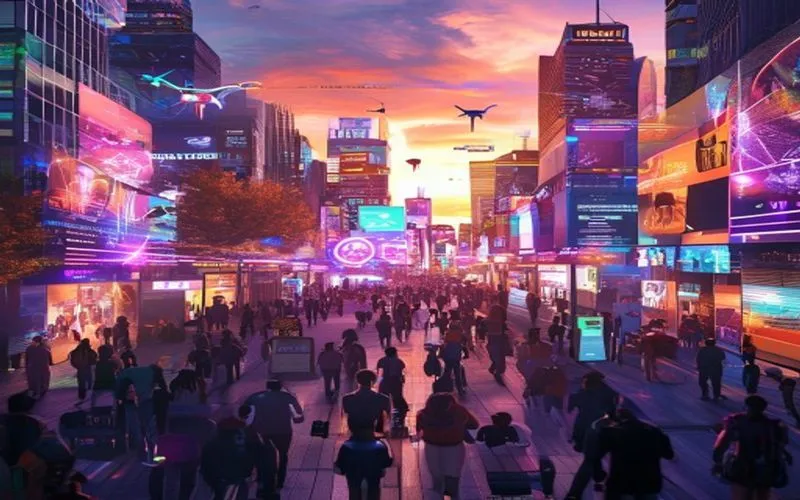
As we navigate this dynamic era, one truth remains: technology is no longer a peripheral convenience—it is the very fabric of modern society. Stay curious, stay informed, and let the pulse of 2026 guide your next innovation.