Beyond the Hype: Deconstructing the Invisible Architectures and Societal Repercussions of Today's Technology Trends
In an era defined by relentless innovation, the phrase "latest technology trends" often conjures images of sleek gadgets, groundbreaking software, or revolutionary scientific discoveries. However, beneath the gleaming surface of these advancements lies a complex web of invisible architectures, unspoken algorithms, and profound societal repercussions that truly dictate their long-term impact. This article delves beyond the superficial excitement to explore the underlying currents and subsurface forces shaping technology, offering a unique perspective on how these trends are not merely changing what we do, but fundamentally altering who we are and how we interact with the world.
The Algorithmic Undercurrent: AI's Pervasive Reach
Artificial Intelligence (AI) is undoubtedly the titan among today's technological trends. From generative AI creating art and text to sophisticated predictive analytics driving financial markets, AI's capabilities are expanding at an exponential rate. Yet, its true revolutionary power isn't just in its ability to automate tasks or generate content; it lies in its insidious integration into the very fabric of our digital and, increasingly, physical infrastructure. This invisible thread of technological progress is redefining decision-making processes, from credit approvals to medical diagnoses, often without explicit human intervention or even full comprehension.
The unique perspective here is to acknowledge AI as an emergent architecture—a set of constantly evolving, interconnected systems that learn and adapt. It's not just a tool; it's becoming an environment. This shift raises critical questions about transparency, bias, and accountability. As AI models become more complex and opaque, understanding their internal logic—the "black box" problem—becomes paramount. The data sets they are trained on, often reflecting historical human biases, can perpetuate and even amplify inequalities, leading to discriminatory outcomes in hiring, policing, and social services. Addressing these ethical dimensions, rather than merely celebrating technical feats, is crucial for steering AI's development towards a more equitable future.
Furthermore, AI's role in creative industries, particularly with generative AI, challenges our traditional notions of authorship and originality. What does it mean for art when a machine can produce a masterpiece? How do we define intellectual property in a world where AI can mimic any style or synthesize new ideas from vast corpora of existing works? These aren't just legal or economic questions; they are philosophical inquiries into the essence of human creativity and the value we place on it.
The Metaverse: Constructing New Realities and Economies
The concept of the metaverse, once largely confined to science fiction, is rapidly transitioning into a tangible, albeit nascent, digital frontier. Beyond virtual reality headsets and augmented reality apps, the metaverse represents a convergence of virtual worlds, augmented realities, and the internet, promising persistent, shared, and interactive digital experiences. The unique perspective on this trend isn't just about immersive gaming or virtual meetings; it's about the construction of entirely new economies, social norms, and even identities within these digital spaces.
The metaverse is an architectural marvel in progress, built on principles of decentralization (often leveraging blockchain), interoperability, and user-generated content. Companies are investing billions in creating digital real estate, fashion, and experiences, transforming virtual assets into real-world value. This parallel economy challenges traditional notions of ownership and scarcity. What happens when digital items hold more perceived value than their physical counterparts? How will legal frameworks adapt to crimes committed in virtual worlds?
More profoundly, the metaverse offers an escape, a canvas for self-expression, and a new arena for social interaction. It can empower individuals to transcend physical limitations, explore diverse identities, and connect with communities globally. However, it also brings concerns about digital addiction, the potential for increased social isolation in the physical world, and the ethical implications of corporate control over these nascent digital ecosystems. The metaverse's success will not merely be measured by its technological sophistication but by its ability to foster genuinely enriching and inclusive human experiences, rather than replicating the inequalities of the physical world or creating new forms of digital colonization.
Quantum Computing: The Silent Revolution Brewing
While still largely confined to research labs, quantum computing represents a foundational shift in computational power with the potential to disrupt every industry imaginable. Unlike classical computers that store information as bits (0s or 1s), quantum computers use qubits, which can exist in multiple states simultaneously due due to superposition and entanglement. This allows them to perform complex calculations at speeds impossible for even the most powerful supercomputers.
The unique perspective on quantum computing is to view it as the ultimate "invisible architecture." It's not a consumer-facing technology; you won't be browsing the web on a quantum laptop anytime soon. Yet, its advancements are quietly laying the groundwork for unprecedented breakthroughs in medicine (drug discovery), materials science (designing new compounds), financial modeling (optimizing portfolios), and cryptography (breaking current encryption standards). The race for quantum supremacy is a geopolitical one, as the nation or entity that masters quantum computing first could gain a significant advantage in intelligence, defense, and economic power.
The societal repercussions, though distant, are profound. The ability of quantum computers to break current encryption schemes poses a massive threat to data security and privacy globally. This has spurred the development of "post-quantum cryptography" – new encryption methods designed to withstand quantum attacks. Furthermore, the sheer computational power could accelerate AI development, creating even more sophisticated and autonomous systems. Understanding quantum computing means appreciating its potential to reshape the very bedrock of our digital society, long before it ever touches a consumer's hand.

Sustainable Technology and Green Innovation: Re-architecting Our Planet
As the urgency of climate change grows, the focus on sustainable technology has intensified, marking a critical shift in the broader technological landscape. This trend is not merely about developing eco-friendly gadgets; it's about fundamentally re-architecting our approach to resource consumption, energy production, and waste management. The unique perspective here acknowledges that technology, long a contributor to environmental challenges, is now being positioned as a primary solution, leading to innovative approaches that integrate environmental stewardship into core design and operational principles.
From smart grids optimizing energy distribution to AI-driven systems improving agricultural efficiency and reducing waste, green innovation spans numerous sectors. Renewable energy technologies, such as advanced solar panels and wind turbines, are becoming more efficient and cost-effective, challenging traditional fossil fuel dominance. Carbon capture technologies, though still nascent, offer the potential to mitigate historical emissions, while sustainable materials science aims to replace environmentally harmful components in manufacturing. Electric vehicles, increasingly powered by cleaner energy sources, are transforming transportation, especially in urban environments.
However, the ethical considerations are also significant. The production of green technologies often relies on rare earth minerals, leading to new geopolitical challenges and environmental concerns related to mining practices. The "e-waste" problem persists, as new technologies constantly replace old ones. A truly sustainable technological future requires a circular economy approach, where products are designed for longevity, repairability, and recyclability. It also demands a global commitment to equitable access to these technologies, ensuring that the benefits of green innovation are shared across all nations, not just the wealthiest. The challenge is not just to build more sustainable tech, but to build a sustainable technological *culture*.
Neurotechnology and Brain-Computer Interfaces (BCIs): The Ultimate Frontier
Perhaps the most intimate and profound technological trend on the horizon is the advancement in neurotechnology and Brain-Computer Interfaces (BCIs). This field seeks to create direct communication pathways between the brain and external devices, bypassing the peripheral nervous system. While still in its early stages, the unique perspective lies in understanding BCIs not just as assistive devices for paralysis or prosthetics, but as a potential pathway to augment human cognition, communication, and even emotional experience, fundamentally altering the definition of human capability.
Current applications focus on restoring function: allowing paralyzed individuals to control robotic limbs with their thoughts, or enabling communication for those with severe speech impairments. However, research is rapidly progressing towards bidirectional interfaces that can not only read brain signals but also write information into the brain. This opens up possibilities for enhanced memory, direct brain-to-brain communication, or even downloading skills. Companies like Neuralink are pushing the boundaries, aiming for future interfaces that could integrate humans with AI, creating a symbiotic relationship.
The ethical and societal implications are staggering. What are the consequences for identity and autonomy when our thoughts can be accessed or influenced by external systems? How will mental privacy be protected? Will BCIs create a new form of digital divide, where cognitive augmentation becomes a luxury accessible only to a privileged few? The potential for therapeutic breakthroughs is immense, but the path forward demands careful consideration of human rights, personal agency, and the very essence of what it means to be human in an increasingly integrated human-machine world.
The Interconnectedness of Disruption: A Holistic View
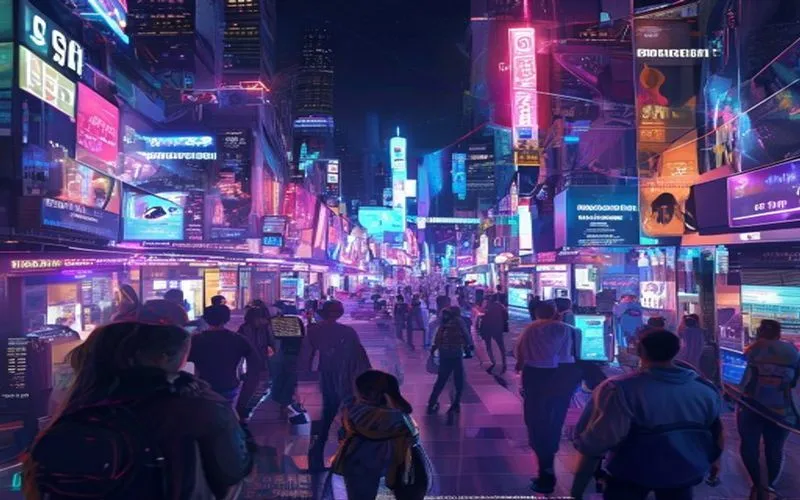
The unique perspective on the latest technology trends isn't found in dissecting each one in isolation, but in recognizing their profound interconnectedness. AI fuels the intelligence of the metaverse, powers quantum research simulations, optimizes green technologies, and interprets neurodata for BCIs. The pervasive connectivity infrastructure (5G/6G, satellite internet) serves as the nervous system for all these advancements, enabling the seamless flow of data that is their lifeblood.
This interconnectedness means that innovation in one area often cascades into others, creating unforeseen synergies and challenges. The digital economy, underpinned by these converging technologies, is transforming global commerce, labor markets, and wealth distribution. Automation driven by AI and robotics is reshaping the nature of work, demanding new skills and social safety nets. The ability to communicate and collaborate across vast distances, facilitated by increasingly sophisticated digital tools, can foster unprecedented global unity but also amplify existing cultural divides if not managed thoughtfully.
Challenges and Ethical Imperatives
As we navigate this rapidly evolving technological landscape, several overarching challenges demand our attention:
- Digital Divide: The acceleration of advanced technologies risks widening the gap between those with access and skills and those without, exacerbating existing inequalities.
- Privacy and Security: With more data being generated, processed, and interconnected, safeguarding individual privacy and protecting against cyber threats becomes increasingly complex.
- Ethical Governance: The speed of technological advancement often outpaces the development of ethical guidelines and regulatory frameworks, necessitating proactive and adaptive governance.
- Disinformation and Bias: AI-powered content generation and targeted algorithms can amplify misinformation and societal biases, impacting democratic processes and social cohesion.
- Energy Consumption: The massive computational power required for AI, blockchain, and other advanced technologies demands immense energy, posing environmental challenges despite efforts in green tech.
Addressing these challenges requires a multi-stakeholder approach involving technologists, policymakers, ethicists, and the public. It's about designing technology not just for profit or power, but for purpose and people. It requires critical thinking, a willingness to question the status quo, and a commitment to ensuring that technological progress genuinely serves humanity's long-term well-being.
Conclusion: Charting a Conscious Future
The latest technology trends are more than just a parade of new inventions; they are the manifest symptoms of deeper, transformative forces at play. By looking beyond the hype to deconstruct the invisible architectures and understand the societal repercussions, we gain a more nuanced and critical perspective. From AI's pervasive algorithmic undercurrent to the metaverse's emergent digital economies, quantum computing's silent revolution, sustainable tech's planetary re-architecture, and neurotechnology's ultimate frontier, each trend is a facet of a larger, interconnected narrative.
The future is not a predetermined destination but a landscape we are actively shaping with every line of code, every algorithm, and every ethical choice. The true measure of our technological progress will not be in the sophistication of our machines, but in the wisdom with which we wield them, ensuring a future that is not only technologically advanced but also just, sustainable, and profoundly human. Our challenge is to chart this conscious future, building not just smarter technologies, but a smarter, more empathetic world.