The Invisible Threads: Unpacking the Interconnected Architectures Shaping Tomorrow's Tech Landscape
In an era defined by rapid innovation, merely observing the latest technology trends is akin to watching waves without understanding the ocean's currents. To truly grasp the future, we must delve deeper, past the gleaming surface of new gadgets and viral apps, into the intricate, often invisible architectures that connect and propel these advancements. The true revolution lies not in isolated breakthroughs, but in the symbiotic evolution of technologies, forming complex ecosystems that redefine our world. This article aims to pull back the curtain, exploring the unseen forces and interconnected systems that are orchestrating the digital transformation before our eyes.
The Symphony of Convergence: Where Technologies Intertwine
The defining characteristic of today's technological landscape is convergence. Individual technologies are no longer siloed; instead, they are merging, creating powerful synergistic effects that accelerate innovation. Artificial Intelligence (AI) isn't just a standalone algorithm; it's the intelligent core powering the Internet of Things (IoT), enhancing 5G networks, and laying the groundwork for quantum computing applications. This interwoven tapestry is more than the sum of its parts.
AI's Ubiquitous Integration: The Brain of the Digital World
Artificial Intelligence continues its relentless march towards ubiquity, evolving from a specialized field into the fundamental intelligence layer across virtually all digital domains. From predictive analytics that optimize supply chains to generative AI models that create art and code, its applications are boundless. The shift now is towards smaller, more efficient AI models that can run on edge devices, pushing intelligence closer to the data source and enabling real-time decision-making without constant reliance on cloud connectivity. This edge AI is crucial for autonomous systems, smart cities, and personalized healthcare, where immediate responses are paramount.
Beyond processing power, ethical AI development is taking center stage. As AI becomes more deeply embedded in critical infrastructure and decision-making processes, concerns around bias, transparency, and accountability are driving new research and regulatory frameworks. The focus is increasingly on explainable AI (XAI) and robust AI systems that can operate reliably and fairly, even in unpredictable environments.
The Hyper-Connected World: IoT, 5G, and Beyond
The Internet of Things (IoT) provides the sensory nervous system for our digital world, collecting vast amounts of data from countless connected devices. But it's the advanced connectivity – particularly 5G, and the nascent discussions around 6G – that transforms this raw data into actionable intelligence. 5G's low latency, high bandwidth, and massive connectivity capabilities are unlocking new possibilities for IoT deployments, from remote surgery to fully autonomous factories. This is not merely faster internet; it's a fundamental shift in how data moves and interacts, enabling real-time feedback loops that were previously unimaginable.
Looking ahead, 6G promises even greater speeds, ultra-low latency, and integrated sensing and communication capabilities. It envisions a world where digital and physical realities seamlessly merge, facilitated by holographic communication, AI-driven ubiquitous computing, and advanced digital twins. These networks are the invisible backbone, the nervous system allowing the digital brain of AI to perceive and act upon the physical world.
Quantum Computing's Nascent Power: A Glimpse into the Unimaginable
While still in its early stages, quantum computing represents a paradigm shift with the potential to solve problems currently intractable for even the most powerful classical supercomputers. Its ability to process vast numbers of calculations simultaneously holds immense promise for drug discovery, material science, complex financial modeling, and breaking current encryption standards. Although practical, scalable quantum computers are still some years away, the theoretical groundwork and early experimental systems are already forcing industries to consider their "quantum readiness."
The intersection of AI and quantum computing is particularly exciting. Quantum machine learning, for instance, could accelerate AI training and enable new forms of AI that leverage quantum phenomena. This synergy highlights how seemingly disparate fields are converging to unlock unprecedented capabilities.
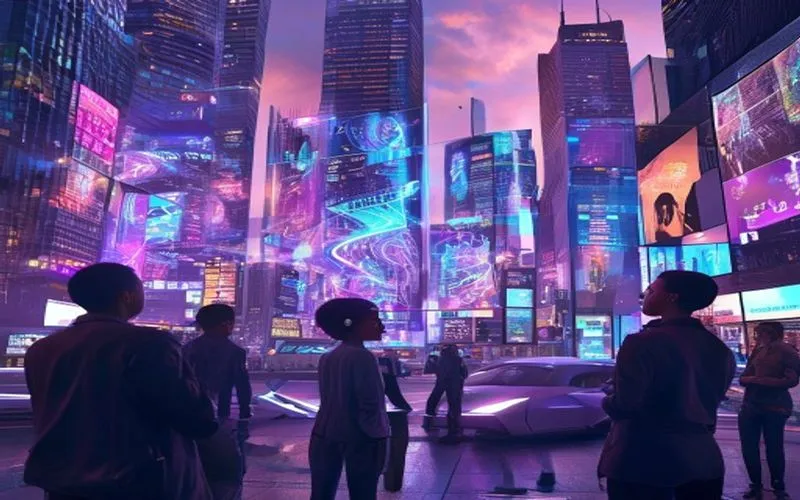
The Subterranean Currents: Invisible Architectures Driving Innovation
Beneath the visible applications and user interfaces lies a complex, invisible infrastructure that processes, stores, and secures the deluge of digital information. These foundational architectures – data management, cloud and edge computing, and cybersecurity – are the bedrock upon which all other technological advancements are built. Understanding these deeper currents is essential to comprehending the full scope of modern tech trends.
Data as the New Oil (and Its Infrastructure)
Data remains the lifeblood of the digital economy. Every interaction, transaction, and sensor reading contributes to an ever-growing ocean of information. The challenge, and the opportunity, lies in effectively collecting, storing, processing, and deriving insights from this data. Big data analytics, powered by sophisticated AI and machine learning algorithms, transforms raw information into strategic intelligence, driving everything from personalized marketing to scientific discovery. Data lakes, data warehouses, and advanced data governance frameworks are the engineering marvels that manage this deluge.
The move towards real-time data processing, often facilitated by streaming analytics and event-driven architectures, is becoming critical. Businesses no longer just want to know what happened yesterday; they need to know what's happening now to make immediate, informed decisions. This real-time imperative drives demand for faster networks, more powerful processing at the edge, and intelligent automation across the data lifecycle.
Cloud-to-Edge Continuum: Decentralizing Intelligence
Cloud computing has revolutionized how businesses store and process data, offering unparalleled scalability and flexibility. However, as the volume of data generated at the "edge" (e.g., IoT devices, autonomous vehicles, smart factories) continues to explode, traditional cloud models face limitations regarding latency, bandwidth costs, and data privacy. This has given rise to the "The Unseen Architects: Deeper Currents Driving Latest Technology Trends in 2026" – a distributed computing model that extends cloud capabilities closer to the source of data generation. Edge computing processes data locally, reducing latency and bandwidth usage, while still leveraging the scalability and management capabilities of centralized cloud platforms.
This cloud-to-edge continuum is vital for applications requiring immediate response times, such as self-driving cars, industrial automation, and augmented reality. It creates a seamless fabric of computation, allowing workloads to shift intelligently between edge devices, local servers, and centralized clouds based on specific requirements for speed, security, and cost.
Fortifying the Digital Frontier: Cybersecurity in a Complex World
As our reliance on digital systems grows, so does the sophistication and frequency of cyber threats. Cybersecurity is no longer an afterthought but a foundational pillar that must be integrated into every layer of technology architecture, from design to deployment. The rise of hybrid workforces, widespread IoT adoption, and increasingly complex supply chains have broadened the attack surface, making traditional perimeter-based security inadequate.
Current trends in cybersecurity focus on AI-driven threat detection, zero-trust architectures, and proactive threat intelligence. AI can analyze vast amounts of network traffic to identify anomalous behavior indicative of attacks, often faster than human analysts. Zero-trust models, which verify every user and device regardless of their location, are becoming the standard for securing distributed environments. Furthermore, quantum computing's potential to break existing encryption algorithms is pushing research into quantum-resistant cryptography, preparing our digital defenses for a post-quantum world.
Redefining Human-Technology Interaction
The interface between humans and technology is undergoing a profound transformation. Beyond screens and keyboards, new modes of interaction are emerging that promise more immersive, intuitive, and even biological connections with the digital realm.
Immersive Experiences: Beyond the Screen
Augmented Reality (AR) and Virtual Reality (VR) are moving beyond niche entertainment into practical applications across various industries. AR enhances our perception of the real world by overlaying digital information, proving invaluable for maintenance, training, and design. Imagine a field technician repairing complex machinery with holographic instructions projected directly onto the equipment, or a surgeon performing a delicate operation with real-time patient data visualized in their field of view. VR, on the other hand, creates fully immersive digital environments, revolutionizing training simulations, remote collaboration, and therapeutic interventions.
The development of more lightweight, powerful, and affordable AR/VR hardware, coupled with advancements in haptic feedback and spatial computing, is paving the way for a more integrated "metaverse" experience – a persistent, interconnected virtual world that blends physical and digital realities. This isn't just about gaming; it's about fundamentally changing how we work, learn, and socialize.
Bridging the Biological and Digital: Brain-Computer Interfaces (BCI)
Perhaps the most profound shift in human-technology interaction is the emergence of Brain-Computer Interfaces (BCI). BCIs allow direct communication between the brain and external devices, bypassing traditional input methods. While still largely experimental, early applications are incredibly promising, such as enabling individuals with paralysis to control prosthetic limbs or communicate through thought. Beyond medical applications, BCI holds the potential to revolutionize how we interact with computers, offering new modes of input and even enhancing cognitive functions.
Ethical considerations surrounding privacy, autonomy, and potential misuse are paramount as BCI technology advances. However, the foundational research promises a future where our thoughts could directly influence our digital environment, creating a level of integration that blurs the lines between mind and machine.
Technology's Ethical Compass and Societal Impact
As technology becomes more powerful and pervasive, its societal and ethical implications grow in significance. Understanding these broader impacts is crucial for responsible innovation and ensuring that technology serves humanity's best interests.
The Ethics of AI and Data: Navigating the Moral Maze
The widespread deployment of AI and the massive collection of personal data raise critical ethical questions. Bias in AI algorithms, often stemming from biased training data, can perpetuate and even amplify societal inequalities. Concerns about privacy persist as companies and governments collect ever more granular data on individuals. The potential for deepfakes and misinformation generated by advanced AI also poses serious threats to trust and democracy.
To address these challenges, there's a growing global movement towards ethical AI principles, responsible data governance, and robust regulatory frameworks. Organizations and policymakers are working to ensure that AI development is transparent, fair, secure, and accountable, aiming to build public trust and prevent unintended negative consequences. This includes focusing on explainability, privacy-preserving AI techniques, and human oversight in critical AI decision-making.
Reshaping the Workforce: Automation and the Future of Work
Automation, driven by AI and robotics, continues to reshape the global workforce. While some jobs are being automated, new roles requiring different skill sets are emerging. The future of work is likely to be characterized by a symbiotic relationship between humans and machines, where AI augments human capabilities rather than simply replacing them. "Beyond the Surface: Unveiling the Invisible Architectures Driving Modern Tech Trends", we see that continuous learning, adaptability, and uniquely human skills like creativity, critical thinking, and emotional intelligence will become increasingly valuable.
Governments and educational institutions are recognizing the need for reskilling and upskilling initiatives to prepare the workforce for these changes. The emphasis is shifting from rote tasks to complex problem-solving and collaboration with intelligent systems. The goal is to leverage technology to enhance human potential and create more meaningful work.
Tech for a Sustainable Future: Addressing Global Challenges
Technology is not only a driver of economic growth but also a powerful tool for addressing some of the world's most pressing challenges, particularly in sustainability and environmental protection. AI is being used to optimize energy grids, predict climate patterns, and develop more efficient resource management strategies. IoT sensors monitor environmental conditions, track pollution, and aid in conservation efforts. Renewable energy technologies, smart infrastructure, and precision agriculture are all heavily reliant on advanced digital solutions.
The focus is on developing "green tech" that minimizes its own environmental footprint while maximizing its positive impact. This includes designing energy-efficient data centers, developing sustainable materials for electronics, and leveraging digital tools to foster a circular economy. Technology offers critical pathways to achieve global sustainability goals, but its implementation must be carefully managed to avoid unintended environmental consequences.
Looking Ahead: The Horizon of Disruption and Opportunity
The journey through the invisible threads and interconnected architectures of modern technology reveals a landscape of profound transformation. The future is not a linear progression of existing technologies but a complex interplay of converging forces that will continue to reshape every aspect of human existence. The next decade will likely witness even more radical shifts as quantum computing matures, AI becomes truly autonomous, and human-computer interfaces become seamlessly integrated into our daily lives.
Navigating this future requires not just technological prowess but also a deep understanding of ethical implications, societal impacts, and the courage to adapt. The emphasis will be on building resilient, secure, and human-centric systems that empower individuals and communities. The true power of technology lies not in its individual components, but in how these invisible threads weave together to create a future that is more intelligent, more connected, and hopefully, more sustainable for all.