Beyond the Hype: Unraveling the Invisible Architecture Driving Today's Technology Trends
In a world saturated with buzzwords and fleeting fads, it's easy to get lost in the superficial currents of technological advancement. Every day brings a new headline, a novel gadget, or an enhanced platform promising to revolutionize our lives. Yet, beneath this bustling surface of innovation lies a more profound, often unseen, architecture – a complex interplay of foundational shifts, philosophical debates, and infrastructural transformations that truly dictate the direction and impact of our digital future. This article ventures beyond the immediate spectacle to explore the invisible architecture driving the latest technology trends, offering a unique perspective on the forces shaping our world.
We're not merely witnessing the evolution of tools; we're observing the metamorphosis of entire systems, the recalibration of human-machine relationships, and the redefinition of societal structures. To understand where technology is truly headed, we must dig deeper than the user interface or the latest product launch. We must examine the underlying algorithms, the ethical frameworks being forged, the new economic models emerging, and the very philosophical questions these advancements provoke. It’s about discerning the structural integrity and hidden dynamics of the digital age, rather than just admiring its polished façade. This unique lens allows us to appreciate not only the "what" but crucially, the "how" and "why" behind the most impactful innovations of our time.
The AI Tsunami: Reshaping Cognition and Infrastructure
Artificial Intelligence (AI) is undoubtedly at the forefront of contemporary technological discourse. However, its true impact extends far beyond sophisticated chatbots or impressive image generators. The invisible architecture of AI lies in its fundamental reshaping of data processing, algorithmic design, and, increasingly, human cognition itself. Generative AI, for instance, isn't just about creating content; it represents a paradigm shift in how machines learn, reason, and interact with human language and creativity. This evolution demands new computational infrastructures, from specialized AI chips (GPUs, TPUs, NPUs) to distributed computing networks capable of handling immense datasets and complex model training. The shift isn't just in what AI can do, but in the entire ecosystem supporting its development and deployment.
Moreover, the invisible architecture of AI delves into the ethical and philosophical implications. Bias in algorithms, data privacy, intellectual property rights for AI-generated content, and the potential impact on labor markets are not peripheral concerns; they are integral architectural challenges that must be addressed as AI becomes more pervasive. Companies and governments are grappling with designing regulatory frameworks and ethical guidelines that can keep pace with AI's rapid advancements, effectively building the societal guardrails for an increasingly autonomous intelligence. This foundational work, often unseen by the end-user, will determine the trustworthiness and sustainability of AI in the long run. We are building not just intelligent systems, but the very principles that will govern them.

The core of AI's architectural shift also involves its integration into existing systems. AI is no longer a standalone application but a pervasive layer, enhancing everything from cybersecurity to financial modeling, healthcare diagnostics to logistical optimization. This deep integration transforms underlying software architectures, demanding more robust APIs, real-time data pipelines, and intelligent automation frameworks. The 'intelligence' is becoming embedded, an invisible helper or decision-maker in countless processes, making its foundational design even more critical. It’s about how AI changes the very operating system of our digital world.
The Quantum Whisper: Reshaping the Foundations of Computation
While still largely in its nascent stages, quantum computing represents perhaps the most profound architectural shift on the horizon. It's not an evolution of classical computing but a revolutionary reimagining of computation itself, leveraging quantum-mechanical phenomena like superposition and entanglement. The invisible architecture here is literally at the subatomic level, dealing with qubits instead of bits, and entirely new algorithms designed to exploit these quantum properties.
The current trends in quantum technology involve not just building more stable qubits or larger quantum processors, but also developing the intricate software stacks, programming languages (like Qiskit or Cirq), and error correction mechanisms necessary to make quantum computing viable. This foundational work is challenging because it requires a complete rethinking of how problems are defined and solved. Its impact, while not yet mainstream, promises to be transformative for fields like cryptography (potentially breaking current encryption standards), material science (simulating complex molecular structures), drug discovery, and artificial intelligence (enabling far more powerful AI models).
The 'whisper' of quantum computing hints at a future where computational limits are redefined, opening doors to currently intractable problems. The architecture being built now – both hardware and software – will lay the groundwork for a new era of scientific discovery and technological capability that will feel almost magical, yet is rooted in fundamental physics. Understanding these underlying efforts is crucial to grasping the long-term trajectory of computing power and its implications for every industry. It’s a quiet revolution being built in labs, far from the public eye, but with the potential to reshape reality.
Web3 and Decentralization: Rebuilding the Internet's Economic and Governance Framework
The concept of Web3, often conflated solely with cryptocurrencies, represents a deeper architectural shift towards a decentralized internet. At its core, Web3 aims to empower users with greater control over their data, digital identity, and assets, moving away from the centralized platforms that define Web2. The invisible architecture here is blockchain technology – distributed ledgers that provide transparency, immutability, and security without reliance on a central authority.
Current trends involve more than just new coins or NFTs; they encompass the development of sophisticated decentralized applications (dApps), smart contracts, decentralized autonomous organizations (DAOs), and protocols that enable truly peer-to-peer interactions. This requires a complete overhaul of internet infrastructure, from new consensus mechanisms to more scalable and energy-efficient blockchain solutions. The architectural challenge lies in building a robust, secure, and user-friendly internet where power is distributed, and trust is established cryptographically, not through intermediaries.
The philosophical underpinnings of Web3 are about re-establishing user sovereignty and fostering new economic models where creators and users capture more value. This re-architecting of ownership and governance in the digital realm has profound implications for data privacy, censorship resistance, and the future of digital economies. While still facing significant hurdles in scalability, usability, and regulatory clarity, the foundational work in Web3 is quietly laying the groundwork for an internet that operates on fundamentally different principles. It's a complete architectural redesign of how value and governance flow online, a truly underlying current shaping the future of our digital interactions.
The Metaverse's Undercurrents: The Convergence of Digital and Physical Realities
The Metaverse, often envisioned as a collection of virtual reality (VR) worlds, is in reality a much broader architectural concept. It represents the persistent convergence of our physical and digital lives, a seamless blend achieved through advanced VR, augmented reality (AR), spatial computing, and digital twinning technologies. The invisible architecture here is the intricate network of interoperable platforms, 3D content creation pipelines, real-time rendering engines, and high-bandwidth connectivity that will enable truly immersive and persistent digital experiences.
Beyond the flashy headsets, the significant trends lie in the foundational components: the development of open standards for virtual identities and assets, the creation of robust virtual economies powered by digital currencies, and the integration of AI to populate and manage these vast digital spaces. The metaverse isn't just about a place you visit; it's about a new operating system for our reality, where digital objects and experiences are seamlessly overlaid onto the physical world, and vice versa. This requires unprecedented levels of data processing, real-time interaction, and sophisticated sensor fusion.
The architectural challenges include building scalable infrastructure that can support millions of simultaneous users in highly detailed, interactive environments, ensuring security and privacy within these expansive digital realms, and developing intuitive interfaces that bridge the digital-physical divide. The metaverse's true potential lies in its ability to redefine work, education, entertainment, and social interaction, driven by an underlying architecture that is far more complex and interconnected than simple gaming environments. It’s about building a new dimension for human experience.
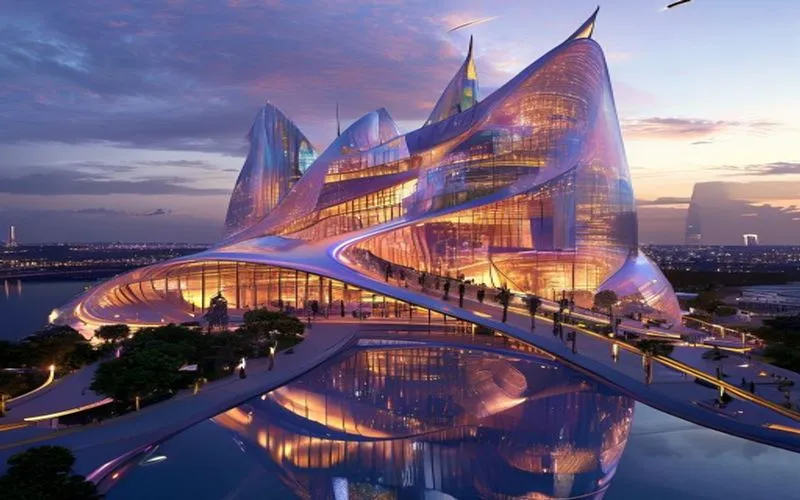
Sustainable Tech and Green Innovation: Engineering a Greener Digital Future
As technology permeates every aspect of our lives, its environmental footprint becomes an increasingly critical architectural consideration. The trend towards sustainable technology, or "green tech," isn't just about eco-friendly products; it's about fundamentally re-engineering the digital infrastructure to minimize energy consumption, reduce waste, and promote circular economy principles. This is an invisible architecture of efficiency and responsibility.
Key trends in this area include:
- Energy-Efficient Hardware: Developing processors, memory, and data storage solutions that consume less power, from low-power chips to more efficient cooling systems for data centers.
- Renewable Energy for Data Centers: Shifting data centers, the literal backbone of the digital world, to run entirely on renewable energy sources like solar, wind, and geothermal power. This requires significant investment in green energy infrastructure and smart grid integration.
- Circular Economy Principles: Designing electronics for longevity, reparability, and recyclability, moving away from planned obsolescence. This involves architectural considerations at the manufacturing and supply chain level, promoting modular designs and responsible material sourcing.
- AI for Sustainability: Utilizing AI and machine learning to optimize energy grids, manage waste, predict climate patterns, and improve agricultural efficiency, essentially deploying intelligent systems to manage environmental challenges.
The invisible architecture of sustainable tech involves a commitment to environmental stewardship woven into the very fabric of technological development. It's about designing systems not just for performance, but for planetary health. This often-overlooked architectural layer is becoming non-negotiable as the digital economy expands, representing a crucial shift in values and design principles that will impact future generations. It’s about building a digital world that can last.
The Human Element and Ethical Considerations: The Architecture of Trust and Responsibility
Perhaps the most crucial, yet most abstract, invisible architecture driving technology trends is the human element itself—the ethical frameworks, societal norms, and regulatory structures being built to govern our increasingly powerful tools. This architecture isn't made of silicon or code, but of laws, principles, and collective human conscience. As AI advances, as digital worlds expand, and as data collection becomes ubiquitous, the need for robust ethical architecture becomes paramount.
Current trends highlight a growing emphasis on:
- Privacy by Design: Integrating privacy considerations into the core design of new technologies, rather than as an afterthought. This involves encryption, anonymization techniques, and user-centric data control mechanisms.
- Algorithmic Transparency and Accountability: Developing methods to understand how AI algorithms make decisions, to identify and mitigate biases, and to hold developers accountable for their creations. This is a complex technical and legal challenge.
- Digital Wellbeing: Designing technologies that promote healthy human interaction and mental wellbeing, countering issues like addiction, misinformation, and cyberbullying. This influences user interface design, content moderation policies, and platform features.
- Inclusivity and Accessibility: Ensuring that new technologies are accessible to all, regardless of ability, socioeconomic status, or geographical location. This requires an architectural commitment to universal design principles and equitable distribution.
This invisible architecture of trust and responsibility is a continuous work in progress, shaped by public debate, academic research, regulatory bodies, and industry best practices. It's the societal operating system that will determine whether our technological advancements lead to a more equitable and prosperous future or exacerbate existing inequalities and ethical dilemmas. This foundational work, though abstract, is arguably the most important architectural endeavor of our digital age. It’s about building a future that serves humanity, not just technology.
Conclusion: Decoding the Unseen Blueprint of Tomorrow
The true story of today's technology trends is not merely found in the dazzling products or the latest app updates, but in the profound, often invisible, architectural shifts occurring beneath the surface. From the fundamental reshaping of computation by AI and quantum mechanics, to the re-decentralization of the internet via Web3, the convergence of realities in the Metaverse, the imperative for sustainable design, and the critical development of ethical frameworks—these are the foundational elements dictating our trajectory.
Understanding these underlying currents allows us to move beyond passive consumption of technology to become more informed participants in its evolution. It enables us to anticipate future challenges, advocate for responsible innovation, and recognize the true architects of our digital destiny. As we navigate the complexities of this rapidly evolving landscape, our focus must extend beyond the visible interface to appreciate and actively shape the invisible architecture that truly defines our technological future. Only then can we truly comprehend the scope and depth of the revolution unfolding before our eyes, and intelligently contribute to building the world of tomorrow.