The Subconscious Architect: Unveiling AI and Machine Learning's Hidden Influence on Our Digital World
In an era defined by rapid technological advancement, few concepts spark as much curiosity and apprehension as Artificial Intelligence (AI) and Machine Learning (ML). Often portrayed as futuristic robots or all-knowing algorithms, their true impact extends far beyond the surface. This article delves into a unique perspective: envisioning AI and ML not merely as tools, but as the "Subconscious Architect" of our digital existence. They operate beneath the explicit commands and visible interfaces, silently constructing the frameworks, personalizing our experiences, and subtly influencing decisions in ways we often don't consciously perceive.
The term "Subconscious Architect" aptly describes how AI and ML function in our modern world. Much like the human subconscious mind, which processes information, forms biases, and drives behaviors outside of our immediate awareness, these technologies tirelessly analyze vast datasets, identify intricate patterns, and generate outcomes that shape our interactions with the digital realm. They are the unseen forces guiding recommendation engines, optimizing logistics, powering predictive analytics, and even shaping the news we consume. Understanding this 'subconscious' layer is crucial to navigating the complexities and harnessing the potential of the AI revolution responsibly.
Defining the Subconscious Architect in AI and ML
To grasp the essence of the "Subconscious Architect," we must look beyond the gleaming surfaces of AI-powered applications and delve into their operational core. This subconscious operates through several critical components:
- Data as the DNA: Every AI and ML model is built upon a colossal foundation of data. This data, ranging from historical records and user interactions to sensor readings and linguistic patterns, serves as the genetic material from which the AI learns. It carries the imprints of human behavior, societal structures, and historical biases. The 'subconscious' here lies in the sheer volume and complexity of this data, making it impossible for humans to fully comprehend every nuance it imparts to the AI.
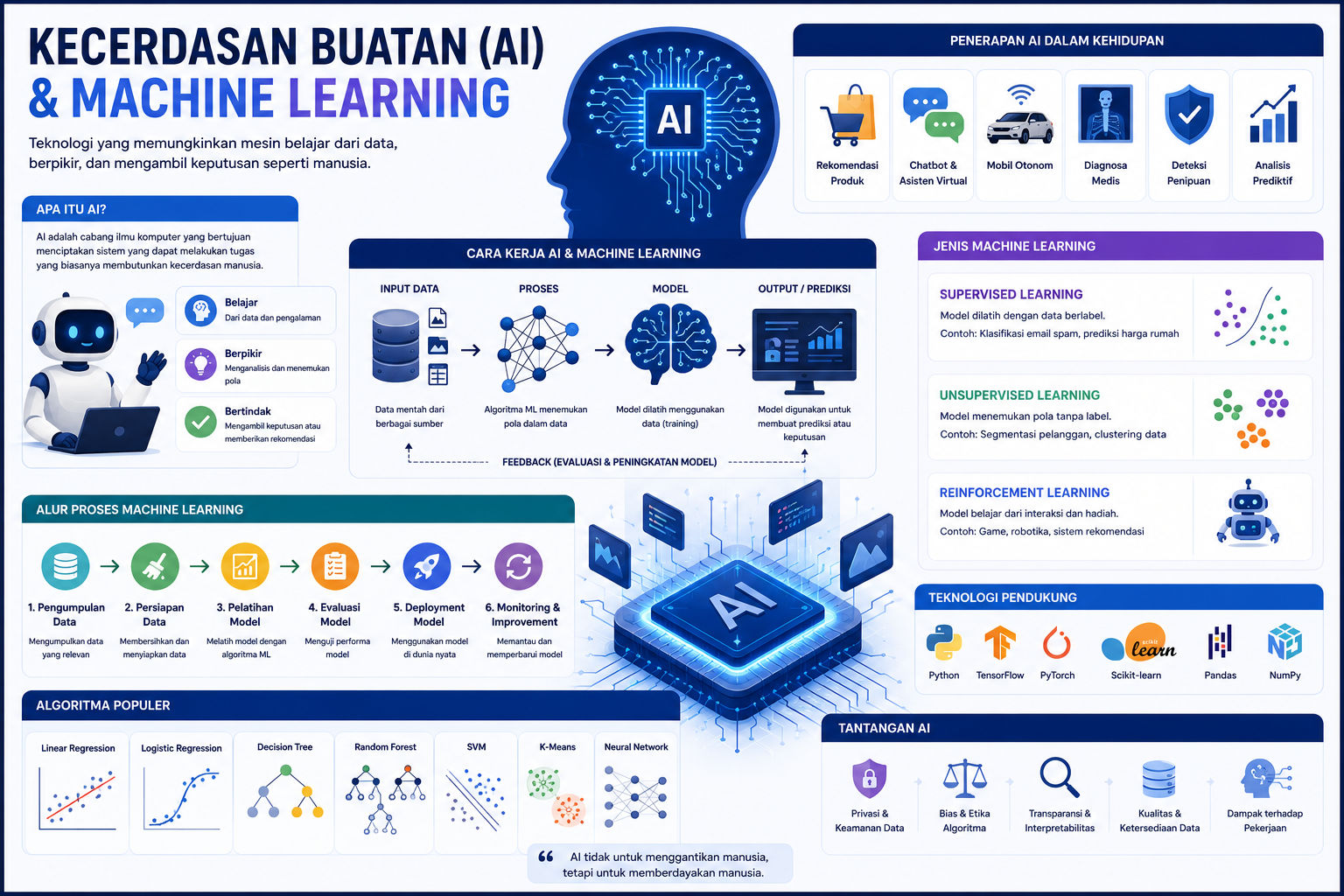
- Algorithms as the Blueprint: Algorithms are the mathematical instructions and models that allow AI to process data, identify relationships, and make predictions or decisions. From simple linear regressions to complex neural networks, these blueprints define how the AI learns and operates. The 'subconscious' aspect stems from the intricate interconnections within these algorithms, especially in deep learning, where millions of parameters adjust dynamically, creating emergent behaviors that were not explicitly programmed.
- Emergent Behavior: Perhaps the most profound manifestation of AI's subconscious is its capacity for emergent behavior. This refers to capabilities or patterns that arise from the interaction of simpler components within the system, without being directly programmed by human developers. A classic example is a neural network learning to identify complex objects in images after being exposed to millions of examples, developing internal representations that are not immediately discernible to human inspection. This emergent intelligence often operates beyond our full comprehension, making the AI's "thought process" a true black box.
The Unseen Foundations: Mathematics and Statistics
At the very heart of the "Subconscious Architect" lies an elegant, yet often invisible, framework of mathematics and statistics. These are the fundamental tools that allow machine learning models to identify patterns, make predictions, and learn from data. Without a solid grounding in these disciplines, the entire edifice of AI would collapse. It's the silent language that every algorithm speaks, translating raw data into actionable insights.
Consider the role of linear algebra. It provides the framework for representing data as vectors and matrices, enabling complex transformations and manipulations that are essential for tasks like dimensionality reduction and feature extraction. Calculus, particularly differential calculus, is indispensable for optimization algorithms such as gradient descent, which allows neural networks to learn by iteratively adjusting their internal parameters to minimize errors. Probability and statistics, on the other hand, equip AI with the ability to reason under uncertainty, quantify confidence in predictions, and understand the underlying distributions of data.
The beauty of these mathematical foundations is that they provide the logical structure for AI's "learning" process. When a machine learning model is trained, it's essentially solving a complex optimization problem, adjusting millions of weights and biases within its neural network based on the mathematical principles of gradient descent, backpropagation, and statistical inference. This intricate dance of numbers allows the AI to develop its seemingly intelligent capabilities. The significance of these foundational subjects cannot be overstated; they are the bedrock upon which the entire field is built, demonstrating how school lessons about mathematics build a foundation for the future, not just for traditional science but for cutting-edge technologies like AI.

Beyond the Obvious: How AI's Subconscious Manifests
The influence of AI and ML's "Subconscious Architect" is pervasive, manifesting in countless facets of our daily lives, often without us giving it a second thought. These are not always explicit interactions with a chatbot or a smart speaker; rather, they are the subtle orchestrations happening behind the scenes.
- Personalized Experiences: Think about your streaming service recommendations, social media feeds, or e-commerce suggestions. These are all products of AI's subconscious understanding of your preferences, history, and even implied interests. Algorithms analyze your past behavior and compare it with millions of other users to predict what you might like next, creating a uniquely tailored digital world for each individual.
- Predictive Analytics: In sectors like finance, healthcare, and urban planning, AI acts as a powerful predictive engine. Financial institutions use ML to detect fraudulent transactions before they occur, while healthcare providers leverage it to predict disease outbreaks or personalize treatment plans. City planners utilize AI to forecast traffic patterns and optimize resource allocation. These systems make highly informed predictions by identifying complex, often non-obvious, patterns in vast datasets.
- Autonomous Systems: From self-driving cars to industrial robots and drones, AI-powered autonomous systems are redefining industries. These systems rely on sophisticated ML models to perceive their environment, make real-time decisions, and execute tasks without direct human intervention. Their "subconscious" continuously processes sensor data, navigates complex scenarios, and adapts to changing conditions.
- Natural Language Processing (NLP): Voice assistants like Siri or Alexa, translation software, and even the autocomplete feature on your keyboard are all powered by NLP. These AI models "understand" and generate human language by learning the intricate statistical relationships between words, phrases, and contexts. The ability to interpret nuanced language and respond appropriately is a testament to the depth of their subconscious linguistic knowledge.
- Generative AI: The rise of generative AI tools (e.g., DALL-E, ChatGPT) showcases another dimension of the subconscious architect. These models can create entirely new content—images, text, music, even code—that is indistinguishable from human-created work. They do this by internalizing the underlying patterns and structures of existing data, then using that "subconscious" understanding to synthesize novel outputs.
The Shadows in the Subconscious: Bias and Ethics
While the "Subconscious Architect" offers immense potential, its hidden nature also gives rise to critical challenges, particularly concerning bias and ethics. Since AI learns from data, any biases present in that data can be inadvertently absorbed and even amplified by the models, leading to unfair or discriminatory outcomes.
- Data Bias: Historical and societal biases are frequently embedded in the vast datasets used to train AI. For example, if facial recognition software is predominantly trained on images of certain demographics, it may perform poorly or inaccurately for others. Similarly, hiring algorithms trained on past successful hires might perpetuate existing gender or racial imbalances if historical data favored certain groups. This often goes unnoticed until the AI is deployed and begins to produce problematic results.
- Algorithmic Bias: Beyond biased data, the algorithms themselves can sometimes introduce or amplify biases. The choices made in model design, feature selection, and evaluation metrics can inadvertently lead to skewed outcomes. The "black box" nature of complex deep learning models makes it challenging to pinpoint exactly where and why such biases emerge, hindering efforts to mitigate them.
- The "Black Box" Problem: Many advanced AI models, particularly deep neural networks, are so complex that even their creators struggle to fully understand how they arrive at specific decisions. This lack of transparency, often referred to as the "black box" problem, makes it difficult to audit AI for fairness, accountability, or even to debug errors. When an AI's subconscious reasoning is opaque, trust and adoption can be severely hampered, especially in critical applications like healthcare or criminal justice.
- Ethical Implications: The pervasive influence of AI's subconscious raises profound ethical questions. Who is accountable when an autonomous system makes a flawed decision? How do we ensure fairness when AI-driven personalization creates filter bubbles or reinforces existing inequalities? The drive for profit and efficiency must be balanced with a commitment to societal well-being, demanding a proactive approach to ethical AI development.
The "Unseen Threads" of Digital Revolution
The "Subconscious Architect" of AI and Machine Learning is not just reshaping individual applications; it is fundamentally altering the very fabric of our digital society and economy. These are the "unseen threads" weaving through the tapestry of the digital revolution, creating shifts that are often subtle yet profound.
Industries are being redefined as AI optimizes supply chains, automates customer service, and accelerates research and development. Labor markets are in flux, with some jobs being automated while new roles emerge that require collaboration with AI. Our interaction with information is changing as AI curates content, summarizes complex documents, and even generates news stories, subtly influencing our perceptions and understanding of the world.
The cumulative effect of these changes is a world where AI is not just a tool, but an integral, often invisible, partner in our cognitive processes and decision-making frameworks. It nudges us towards certain products, guides our search queries, and even helps formulate our written communications. Understanding these deeper, often unnoticed, influences is vital to responsibly navigate the ongoing digital transformation. Indeed, these "unseen threads" are a core component of the hidden currents of the Digital Revolution 2026, revealing how underlying technological architectures drive broader societal shifts.

Future of the Subconscious Architect: Towards Conscious AI and Explainable AI
As AI and Machine Learning continue to evolve, so too must our understanding and management of their "subconscious." The future direction involves several key thrusts aimed at bringing more transparency and control to these powerful systems:
- Continual Learning and Adaptation: Future AI systems will likely exhibit even greater capacities for continual, unsupervised learning. This means they will adapt and evolve in real-time based on new data and experiences, further entrenching their role as an invisible, ever-learning architect. Managing these dynamic systems will require robust monitoring and ethical frameworks.
- Towards Explainable AI (XAI): A major focus of current research is Explainable AI (XAI). The goal of XAI is to develop methods and techniques that allow humans to understand why an AI model made a particular decision or prediction. This includes making the "black box" more transparent, offering insights into the features that most influenced a decision, or visualizing the internal workings of a neural network. By bringing the AI's subconscious reasoning to a more conscious level, we can better diagnose biases, build trust, and ensure accountability.
- Aligning AI's Goals with Human Values: Ultimately, a critical challenge for the future is to ensure that the "Subconscious Architect" operates in alignment with human values and societal good. This involves embedding ethical principles into AI design from the outset, developing robust regulatory frameworks, and fostering interdisciplinary collaboration between AI researchers, ethicists, policymakers, and the public. As AI becomes more autonomous and capable of emergent behavior, ensuring its objectives serve humanity becomes paramount.
- Human-AI Collaboration: The future will increasingly see a symbiotic relationship between humans and AI. Instead of full automation, AI will augment human capabilities, acting as an intelligent assistant that handles complex data analysis, generates insights, and automates mundane tasks, freeing humans to focus on creativity, critical thinking, and empathy. This collaborative model requires humans to understand how AI's subconscious works, leveraging its strengths while being aware of its limitations and biases.
Conclusion
The "Subconscious Architect" provides a powerful lens through which to understand the profound and often unseen influence of Artificial Intelligence and Machine Learning on our digital world. From the mathematical foundations that underpin every algorithm to the emergent behaviors that shape our personalized experiences, AI and ML are tirelessly constructing the realities we inhabit, often beneath the surface of our conscious awareness.
Recognizing AI as a subconscious force is not merely an academic exercise; it is an imperative for responsible innovation. It compels us to confront the inherent biases within our data, to demand greater transparency from complex models, and to proactively address the ethical challenges that arise from these powerful technologies. As we continue to build and integrate AI into every facet of our lives, our collective responsibility is to understand its hidden mechanisms, guide its development consciously, and ensure that this silent architect builds a future that is equitable, beneficial, and truly intelligent for all.