The Unseen Architectures: Decoding the Undercurrents of Today's Tech Revolutions
In the whirlwind of digital transformation, we are constantly bombarded with headlines about the latest technological advancements: generative AI breaking new grounds, the metaverse promising immersive realities, and blockchain reshaping financial paradigms. Yet, beneath the dazzling surface of these innovations lies a deeper, often overlooked layer—the "unseen architectures" and "undercurrents" that truly define their potential and trajectory. These are the foundational shifts in design, infrastructure, and philosophy that enable the visible changes we observe. To genuinely comprehend where technology is headed, we must look beyond the hype and dissect these underlying frameworks.
This article aims to peel back the layers, exploring the less obvious but profoundly impactful architectural and philosophical transformations that are driving today's most significant tech trends. It's about understanding not just *what* is new, but *how* it's built, *why* it matters fundamentally, and *what kind of future* these undercurrents are shaping.
The AI Revolution: Beyond the Algorithms
Artificial Intelligence, particularly in its generative forms, has captured public imagination, demonstrating capabilities once confined to science fiction. From generating art and music to writing complex code and engaging in nuanced conversations, AI's prowess is undeniable. However, the true revolution isn't merely in the sophistication of its algorithms but in the architectural evolution that underpins them. We are witnessing a shift from monolithic, task-specific AI models to more modular, adaptable, and ethically conscious designs.
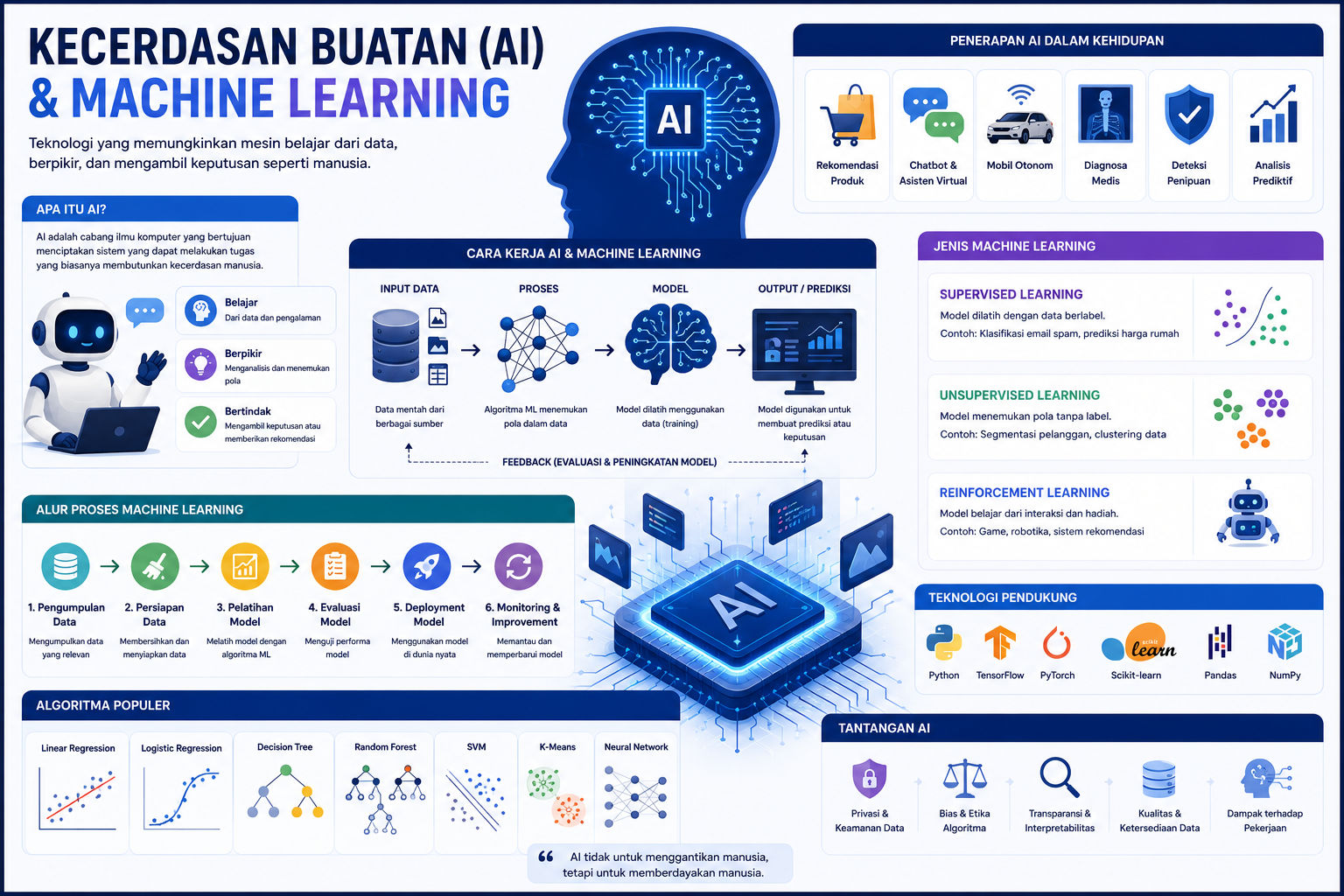
The architectural undercurrents here include the rise of distributed AI systems, where processing power and data reside closer to the source (edge AI), reducing latency and enhancing privacy. Furthermore, the development of explainable AI (XAI) and ethical AI frameworks is not just a regulatory afterthought but an integral part of AI's architectural design, aiming to embed transparency and fairness from the ground up. This involves building AI with built-in mechanisms for auditing, bias detection, and human oversight, fundamentally altering how intelligent systems are conceived and deployed. Without these robust, transparent, and distributed architectures, AI's grand promises risk faltering under the weight of scalability, privacy, and trust issues.
Decentralization's Foundational Reset: Web3, Blockchain, and Digital Finance
The concept of Web3, powered by blockchain technology, promises a decentralized internet where users have greater control over their data and digital assets. While cryptocurrencies and NFTs often dominate the headlines, the profound impact lies in the fundamental architectural reorientation it proposes. Web3 isn't just a new set of applications; it's a re-imagining of the internet's core structure, moving away from centralized servers and corporate gatekeepers towards peer-to-peer networks and consensus mechanisms.

This undercurrent of digital revolution is enabling new forms of digital identity (self-sovereign identity), data ownership (data DAOs), and financial systems (Decentralized Finance or DeFi) that operate without intermediaries. The "unseen architecture" here is the cryptographic security, distributed ledger technology, and smart contract protocols that allow for trustless transactions and verifiable ownership. This foundational shift challenges the very power dynamics of the digital economy, potentially democratizing access to services and creating entirely new economic models. In the realm of digital finance, for example, the architectural backbone of stablecoins, CBDCs, and cross-border payment systems is being redesigned to be faster, cheaper, and more inclusive, even if their visible applications are still nascent.
The Quantum Leap: Architecting the Impossible
Quantum computing remains largely in the realm of research and specialized applications, far from mainstream adoption. Yet, its architectural breakthroughs are among the most profound and future-shaping. Unlike classical computers that store information as bits (0s or 1s), quantum computers use qubits, which can exist in multiple states simultaneously (superposition) and be entangled with each other. This enables them to perform calculations that are impossible for even the most powerful supercomputers.
The "unseen architecture" here is not just in the exotic hardware (superconducting circuits, ion traps) but in the development of quantum algorithms and error correction techniques that can harness these phenomena. While still in its infancy, the foundational work in quantum architecture is laying the groundwork for future advancements in drug discovery, materials science, cryptography, and complex optimization problems. It's a testament to how architectural innovation at the most fundamental level can unlock entirely new computational paradigms, even if their practical manifestations are still years away.
Edge Computing: Bringing Intelligence Closer
As the Internet of Things (IoT) proliferates and AI applications become more resource-intensive, the traditional cloud computing model faces challenges related to latency, bandwidth, and privacy. This has given rise to edge computing—an architectural shift that moves computation and data storage closer to the source of data generation, at the "edge" of the network.
The undercurrent here is a complete re-architecture of how data is processed and managed. Instead of sending all data to a central cloud for analysis, edge devices perform computations locally, reducing network traffic and enabling real-time decision-making. This unseen architecture is critical for autonomous vehicles, smart factories, remote healthcare monitoring, and immersive AR/VR experiences, where milliseconds matter. It’s not just about speed; it’s about creating a more resilient, distributed, and efficient digital infrastructure that can handle the sheer volume and velocity of data generated by our increasingly connected world.
Sustainable Tech: Re-architecting for Green
The environmental impact of technology, from energy-intensive data centers to electronic waste, is a growing concern. This has led to an important architectural undercurrent: the design and deployment of sustainable technology. This goes beyond simply using renewable energy; it involves re-thinking the entire lifecycle of hardware and software.
From chip design that minimizes power consumption (green computing) to modular hardware that can be easily repaired and upgraded (circular economy principles), these architectural shifts aim to reduce tech's carbon footprint. Cloud providers are investing in highly efficient data center designs, using advanced cooling techniques and AI to optimize energy usage. Software, too, is becoming more "green," with developers optimizing code for efficiency and choosing programming languages that consume less power. This foundational focus on sustainability is reshaping product development, supply chains, and operational practices across the tech industry, driven by both ethical considerations and increasing regulatory pressures.
Hyper-Personalization and Data Ecosystems
The drive for hyper-personalization—delivering highly tailored experiences to individual users—is a dominant trend across e-commerce, media, and digital services. While often perceived as a marketing strategy, its effectiveness relies on complex, unseen data architectures that facilitate the collection, processing, and analysis of vast amounts of user data in real-time.
The undercurrent here involves sophisticated data pipelines, machine learning models for predictive analytics, and robust identity and access management systems. These architectures allow companies to create comprehensive user profiles, predict preferences, and deliver dynamic content. However, this also brings significant architectural challenges related to data privacy, security, and compliance. The design of these data ecosystems must balance the desire for personalization with the imperative of protecting user data, necessitating secure multi-party computation, differential privacy, and federated learning architectures that allow insights to be gained without exposing raw individual data. The true power of personalization lies not just in its output, but in the intricate, privacy-preserving data architectures that make it possible.
Cybersecurity's Proactive Evolution: Building Resilient Architectures
In an increasingly interconnected world, cybersecurity is no longer a perimeter defense but an integral part of system architecture. The traditional "castle-and-moat" approach is giving way to more proactive, resilient, and inherently secure designs. This represents a fundamental architectural shift in how digital assets are protected.
The key undercurrents include the widespread adoption of Zero Trust architectures, where every access request, regardless of origin, is rigorously verified. This moves security from implicit trust to explicit verification at every point. Additionally, the integration of AI and machine learning into security operations (SecOps) is creating self-healing and adaptive security architectures that can detect and respond to threats in real-time, often before human intervention is possible. These unseen currents driving these shifts mean that security is being woven into the fabric of applications and infrastructure from the design phase, rather than bolted on as an afterthought. This architectural reimagining is crucial for safeguarding critical infrastructure, personal data, and national security in the face of increasingly sophisticated cyber threats.
Conclusion: The Future is Built on Unseen Foundations
The world of technology is in a constant state of flux, with new innovations emerging at a dizzying pace. While it's easy to get caught up in the excitement of new products and services, a deeper understanding requires us to look beneath the surface. The "unseen architectures" and "undercurrents" discussed—from the modularity of AI systems and the decentralization of Web3 to the distributed nature of edge computing and the proactive resilience of cybersecurity—are the true drivers of change.
These foundational shifts are not just technical nuances; they represent fundamental re-thinkings of how we build, interact with, and govern our digital world. They dictate scalability, privacy, security, and ethical considerations for years to come. By appreciating these underlying forces, we gain a more holistic and predictive view of technology's trajectory, better equipping us to navigate the complexities and harness the true potential of the ongoing digital revolution. The future of technology is not just about what we see, but profoundly about the intricate, powerful, and often unseen foundations upon which it is built.