The Artisan of Tomorrow: Embracing High-Tech DIY to Forge Innovation and Personalization
In an age dominated by mass-produced goods and planned obsolescence, a quiet revolution is brewing, one soldering iron stroke and 3D printer layer at a time. This is the world of High-Tech DIY, where the spirit of traditional craftsmanship converges with the boundless possibilities of modern technology. Far from being merely a hobby, high-tech DIY represents a profound shift in how we interact with the objects that populate our lives, transforming us from passive consumers into active creators, innovators, and problem-solvers. It's about more than just "making something"; it's about understanding, customizing, and often, improving upon the existing technological landscape.
The concept of "Do It Yourself" has deep historical roots, stemming from necessities like home repairs, gardening, and crafting basic tools. It was a testament to self-reliance and resourcefulness. With the industrial revolution, much of this hands-on creation moved into factories, leading to an era of standardized products and specialized labor. However, the last few decades have witnessed a resurgence of DIY, fueled by accessible information, affordable tools, and a growing desire for authenticity and control. High-tech DIY takes this resurgence to the next level, incorporating microcontrollers, digital fabrication, advanced sensors, and sophisticated software to build custom electronics, smart home devices, robotics, and much more.
Why Embark on the High-Tech DIY Journey?
The appeal of high-tech DIY is multifaceted, drawing in individuals from diverse backgrounds with a common thread: the desire to create. Here are some compelling reasons why this domain is flourishing:
- Unleashing Unprecedented Personalization: Off-the-shelf products, while convenient, often fail to meet specific, niche needs or aesthetic preferences. High-tech DIY empowers you to create exactly what you envision – a smart sensor tailored to your unique hydroponics setup, a custom mechanical keyboard with specific key mappings, or a unique lighting fixture that responds to your mood. The limitations are primarily those of your imagination and current skill set, both of which are constantly expanding within the maker community.
- A Deep Dive into Learning and Skill Development: Engaging in high-tech DIY is an immersive educational experience. You'll grapple with electronics principles, learn to code in languages like Python or C++, understand design thinking, and master digital fabrication techniques. Each project becomes a practical lesson in engineering, software development, and problem-solving, fostering a tangible understanding that textbooks often cannot replicate. Just as science unveils the hidden architecture of reality, high-tech DIY allows us to explore the underlying systems of the devices we use daily.
- Championing Sustainability and Resourcefulness: In an era of increasing environmental consciousness, high-tech DIY offers pathways to a more sustainable lifestyle. It encourages repairing broken devices rather than replacing them, upcycling discarded electronics into new creations, and designing products that are efficient and long-lasting. By creating only what is needed and utilizing existing components, makers can significantly reduce waste and combat the throwaway culture.
- Cultivating Problem-Solving and Critical Thinking: Every high-tech DIY project inevitably presents challenges – a circuit doesn't work, code has a bug, a printed part doesn't fit. Navigating these obstacles demands logical thinking, systematic troubleshooting, and a healthy dose of persistence. The process hones your ability to break down complex problems into manageable parts, test hypotheses, and iterate towards a solution, skills invaluable in every facet of life.
- Empowerment and Self-Efficacy: There's a profound sense of accomplishment in bringing a technological concept to life with your own hands. This sense of self-efficacy – the belief in one's ability to succeed in specific situations or accomplish a task – is a powerful motivator. It shifts your perspective from being a consumer to being a producer, fostering confidence and a deeper connection to technology. In a world increasingly shaped by algorithms and mass production, engaging in high-tech DIY also offers a unique perspective on the intersections of technology, culture, and identity, allowing makers to express themselves through functional art.
The Core Toolkit of the Modern Maker
The landscape of high-tech DIY is incredibly diverse, but certain tools and technologies form the bedrock of many projects:
- Microcontrollers and Single-Board Computers (SBCs): These are the brains of most high-tech DIY projects.
- Arduino: An open-source electronics platform based on easy-to-use hardware and software. It's perfect for beginners due to its simplicity and vast community support, ideal for controlling lights, sensors, and small motors.
- Raspberry Pi: A credit-card-sized computer capable of running a full operating system. It offers more processing power than an Arduino, making it suitable for complex tasks like running web servers, media centers, or robotics applications that require more computational muscle.
- Digital Fabrication Technologies:
- 3D Printing: Allows you to create three-dimensional objects from a digital design (CAD model). Fused Deposition Modeling (FDM) printers, which melt and extrude plastic filament, are widely accessible and excellent for custom enclosures, functional prototypes, and artistic pieces.
- Laser Cutting/Engraving: Uses a focused laser beam to cut or engrave materials like wood, acrylic, and fabric with high precision. It's excellent for crafting intricate parts, custom designs, and professional-looking finishes.
- Sensors and Actuators:
- Sensors: Devices that detect and respond to events or changes in their environment. Common types include temperature, humidity, light, motion, ultrasonic distance, and gas sensors. They are the "eyes and ears" of your project.
- Actuators: Devices that convert an electrical signal into physical action. Examples include motors (servo, stepper, DC), LEDs, buzzers, and relays, which are the "muscles" that make your project move or react.
- Software and Programming: The invisible but indispensable component.
- Integrated Development Environments (IDEs): Software like Arduino IDE, VS Code, or Thonny for Python, where you write, compile, and upload your code to your microcontroller or SBC.
- Programming Languages: C++ (for Arduino), Python (for Raspberry Pi, web development, data processing), and JavaScript (for web interfaces) are common.
- CAD Software: Tools like Fusion 360, Tinkercad (beginner-friendly), or OpenSCAD (code-based) for designing parts for 3D printing or laser cutting.
- Basic Electronics Tools: A good soldering iron, multimeter, breadboard, wires, resistors, capacitors, and a safe workspace are essential for assembling circuits and prototyping.
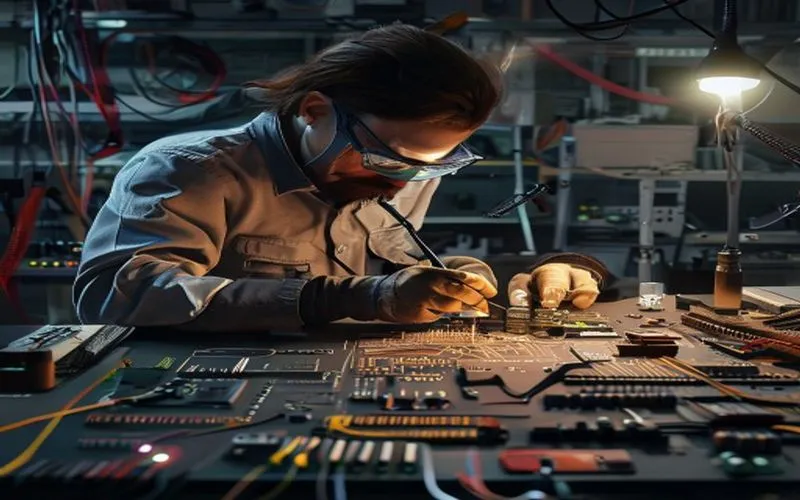
Embarking on Your High-Tech DIY Adventure: A Roadmap
The journey into high-tech DIY can seem daunting, but like any grand adventure, it's best tackled one step at a time. Here’s a suggested roadmap:
- Start Simple, Build Confidence: Don't aim to build a fully autonomous robot on your first try. Begin with foundational projects:
- Blinking an LED with an Arduino.
- Reading data from a simple sensor (e.g., a temperature sensor) and displaying it.
- Creating a basic 3D printed object like a phone stand or a small organizer.
- Cultivate Fundamental Knowledge: Invest time in understanding the basics.
- Electronics: Learn about voltage, current, resistance (Ohm's Law), and basic components like resistors, capacitors, and diodes.
- Programming Logic: Grasp concepts like variables, loops, conditionals, and functions. Many free online courses and tutorials are available for Arduino C++ and Python.
- Design Principles: Understand how to design for manufacturability – how your 3D printed or laser-cut parts will actually be assembled and function.
- Assemble Your Essential Toolkit: You don't need a professional lab to start, but a few core items are crucial:
- Arduino or Raspberry Pi starter kit.
- Breadboard and jumper wires for prototyping without soldering.
- Soldering iron and solder for permanent connections (with proper ventilation!).
- Multimeter for testing circuits and troubleshooting.
- Safety goggles and a well-lit, organized workspace.
- Immerse Yourself in the Community: The maker community is incredibly supportive.
- Online Forums & Websites: Arduino forums, Raspberry Pi forums, Instructables, Hackaday, and YouTube channels are treasure troves of tutorials, project ideas, and troubleshooting advice.
- Local Maker Spaces (Fab Labs): If available, these shared workshops provide access to expensive equipment like 3D printers, laser cutters, and advanced tools, often with experienced mentors.
- Embrace Iteration and Experimentation: Your first attempt might not be perfect, and that's perfectly normal. High-tech DIY is an iterative process. Test, identify flaws, modify, and retest. Don't be afraid to experiment, even if it means "breaking" something – often, the most profound learning comes from debugging and problem-solving.
The Future is in Your Hands
As technology continues its rapid advancement, the realm of high-tech DIY is only set to expand. The increasing accessibility of AI tools, even more affordable microcontrollers, and innovative materials will empower makers to create projects that were once the exclusive domain of large corporations. Imagine leveraging AI models on a tiny Raspberry Pi to create predictive maintenance systems for your home appliances, or designing custom biomedical sensors using flexible 3D printed circuits. The integration of sustainable practices and open-source principles will ensure that this movement not only innovates but also remains ethical and beneficial for all.
High-tech DIY is more than just a passing trend; it's a philosophy that champions curiosity, ingenuity, and self-empowerment. It's about bridging the gap between abstract technological concepts and tangible, functional creations. It challenges us to look beyond the surface of our devices and understand the intricate symphony of components that bring them to life. By embracing this blend of craftsmanship and innovation, we're not just making things; we're actively shaping our understanding of the world, fostering new skills, and contributing to a future where technology is truly in the hands of the people.
So, whether you're a seasoned engineer or a curious beginner, the world of high-tech DIY beckons. Grab a microcontroller, fire up your imagination, and start building the future, one personalized, innovative project at a time.