The Pulse of 2026: Unpacking Today’s Most Disruptive Technology Trends
Introduction: Why 2026 Is the Year of Rapid Technological Acceleration
In an era where innovation cycles have shrunk to months rather than years, staying abreast of the latest technology trends is no longer a luxury—it's a survival skill. From artificial intelligence (AI) that can draft legal contracts to quantum processors promising to solve optimization problems in seconds, 2026 is a crucible of transformative breakthroughs. This article dives deep into the most influential tech currents shaping our world today, offering a nuanced perspective that balances hype with practicality.
1. AI Goes Beyond Automation: From Generative Models to Ethical Governance
Generative AI has moved from the realm of creative assistants to critical decision‑making tools in finance, healthcare, and even national security. While models like GPT‑4 and its successors can compose code, design architecture, or draft policy briefs, the real challenge lies in ensuring these systems operate transparently and ethically.
- Explainability: Researchers are developing “glass box” techniques that allow users to trace a model’s reasoning path, essential for high‑stakes sectors.
- Regulatory Alignment: The European Union’s AI Act, which came into force in 2023, is now influencing global standards, pushing companies to adopt risk‑based frameworks.
- Human‑in‑the‑Loop: Hybrid models that combine human judgment with AI predictions are gaining traction, especially in medical diagnostics where misdiagnosis can be costly.
Case Study: AI in Drug Discovery
Pharmaceutical companies are leveraging AI to predict molecular interactions, cutting drug development timelines from years to months. This not only accelerates access to treatments but also reduces research costs by an estimated 30%.
2. Blockchain & Web3: From Cryptocurrencies to Decentralized Governance
While Bitcoin and other cryptocurrencies still dominate headlines, the underlying technology—blockchain—is now being deployed in supply chain transparency, digital identity, and even voting systems.
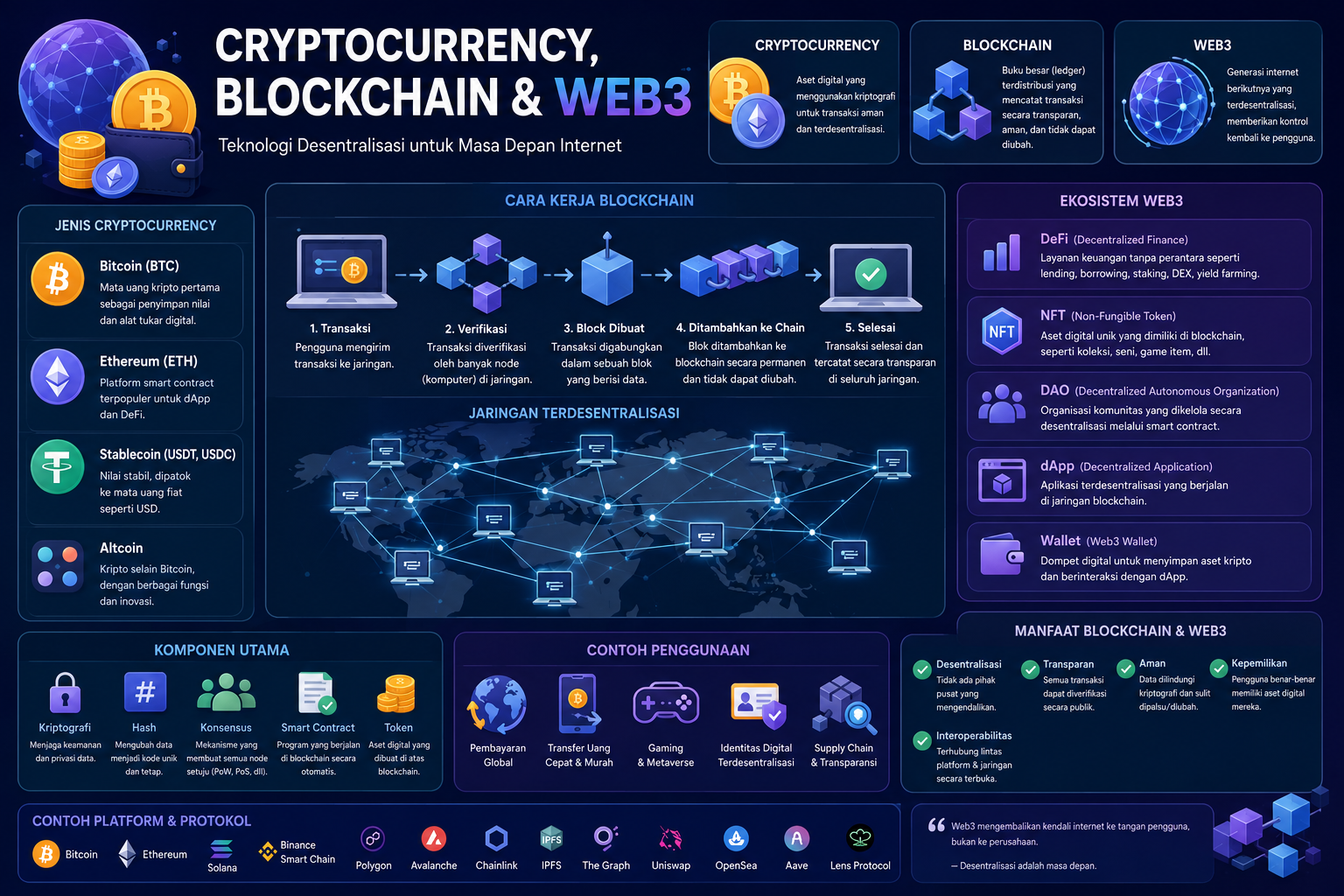
In 2026, Layer‑2 scaling solutions and zero‑knowledge proofs have made transactions faster and more private, addressing two of the biggest criticisms of early blockchain deployments: speed and scalability.
- Decentralized Finance (DeFi): DeFi platforms now offer insurance, derivatives, and asset management with minimal friction.
- Non‑fungible Tokens (NFTs) 2.0: NFTs are evolving into dynamic assets that can represent ownership rights to physical goods or intellectual property.
- Governance Tokens: Token‑based voting mechanisms are being tested in corporate boards and local governments, promoting a more democratic decision‑making process.
3. Quantum Computing: The New Frontier of Computational Power
Quantum processors are no longer confined to academic labs. Commercial providers like IBM, Google, and startups such as Rigetti are offering cloud‑based quantum services that can solve specific optimization problems faster than classical supercomputers.
- Cryptography: Quantum‑resistant algorithms are being standardized to protect data against future quantum attacks.
- Material Science: Simulations of complex molecules enable the design of next‑generation batteries and superconductors.
- Supply Chain Optimization: Quantum algorithms are being trialed to streamline logistics and reduce carbon footprints.
4. Sustainable Tech: Green Computing and Circular AI
As the tech industry’s carbon footprint grows, sustainable solutions are becoming mainstream. Data centers are now powered by renewable energy, and AI models are being optimized for lower energy consumption.
- Edge AI: Deploying AI models on edge devices reduces data transfer and saves energy.
- Carbon‑Aware Scheduling: Cloud providers are offering tools to schedule workloads during periods of low grid emissions.
- Recycled Hardware: Companies are adopting modular designs that allow easy upgrades and component reuse, extending device lifespans.
5. 5G & Beyond: The Hyper‑Connected Internet of Things (IoT)
5G networks have reached a critical mass in urban centers, enabling low‑latency applications like autonomous driving, remote surgery, and real‑time AR/VR experiences.
- Smart Cities: Integrated sensor networks manage traffic, utilities, and public safety with unprecedented efficiency.
- Industrial IoT: Predictive maintenance and real‑time analytics are reducing downtime in manufacturing by up to 25%.
- Wearable Health Tech: Continuous monitoring devices feed data to AI algorithms, providing early warnings for chronic conditions.
6. The Rise of Human‑Centric Design: Inclusive UX in a Digital World
As technology permeates every aspect of life, design has shifted from aesthetic to accessibility and inclusivity. Designers are employing AI to create adaptive interfaces that respond to users’ emotional states and physical conditions.
- Emotion AI: Facial recognition and sentiment analysis help tailor content in real time.
- Assistive Tech: Voice‑activated systems and haptic feedback provide accessibility for users with disabilities.
- Data Privacy by Design: Incorporating privacy controls from the outset has become a standard UX practice.
7. Cybersecurity in a Post‑Quantum World
With the advent of quantum computing, traditional encryption methods face obsolescence. The industry is rapidly adopting post‑quantum cryptography (PQC) to safeguard data.
- Standardization: NIST is finalizing PQC algorithms that will replace RSA and ECC in the next decade.
- Quantum Key Distribution (QKD): Secure communication channels are being tested in financial institutions and government agencies.
- Zero Trust Architecture: Organizations are moving towards a model where every request is verified, regardless of origin.
8. The Future of Work: Remote, Hybrid, and AI‑Enhanced Collaboration
The COVID‑19 pandemic accelerated the adoption of remote work, and the trend has not slowed. AI tools now facilitate seamless collaboration across time zones, with features like real‑time translation and context‑aware meeting summaries.
- Virtual Reality Workspaces: Immersive environments enable more natural interactions than traditional video calls.
- AI‑Driven Knowledge Management: Systems automatically tag and retrieve information, reducing search time by 40%.
- Well‑being Analytics: Monitoring work patterns helps prevent burnout and promotes healthier work habits.
Conclusion: Navigating the Tech Landscape with Insight and Prudence
The technology ecosystem of 2026 is a complex tapestry of interwoven innovations—from AI’s ethical frameworks to quantum computing’s promise of unprecedented speed. While the potential benefits are immense, the risks—privacy concerns, job displacement, and geopolitical tensions—must be addressed proactively. By staying informed and critically evaluating each trend’s societal impact, we can harness technology’s power responsibly and sustainably.
For a deeper dive into how these trends are reshaping industries, check out The 2026 Tech Revolution: Unveiling Hidden Drivers and Ethical Frontiers and Pembaruan Teknologi 2026: Mengupas Transformasi Digital yang Mengubah Dunia.