Beyond the Surface: Unpacking the Unseen Currents Driving Today's Tech Revolution
In a world saturated with buzzwords and fleeting headlines, discerning the true trajectory of technology can feel like navigating a storm. Every day brings a new announcement, a groundbreaking discovery, or a revolutionary product launch. Yet, beneath this visible churn, deeper, more fundamental shifts are occurring – unseen currents that are subtly but profoundly reshaping the very fabric of our digital and physical realities. These aren't just trends; they are foundational transformations in how we compute, connect, create, and coexist.
To truly understand where technology is headed, we must look beyond the immediate applications and delve into these underlying forces. It’s about recognizing the architectural changes, the philosophical reorientations, and the quiet convergences that are empowering the next wave of innovation. This article will unpack these unseen currents, offering a unique perspective on the latest technology news and trends that often goes unnoticed by the casual observer.
The Intelligent Undercurrent: Beyond AI as a Feature
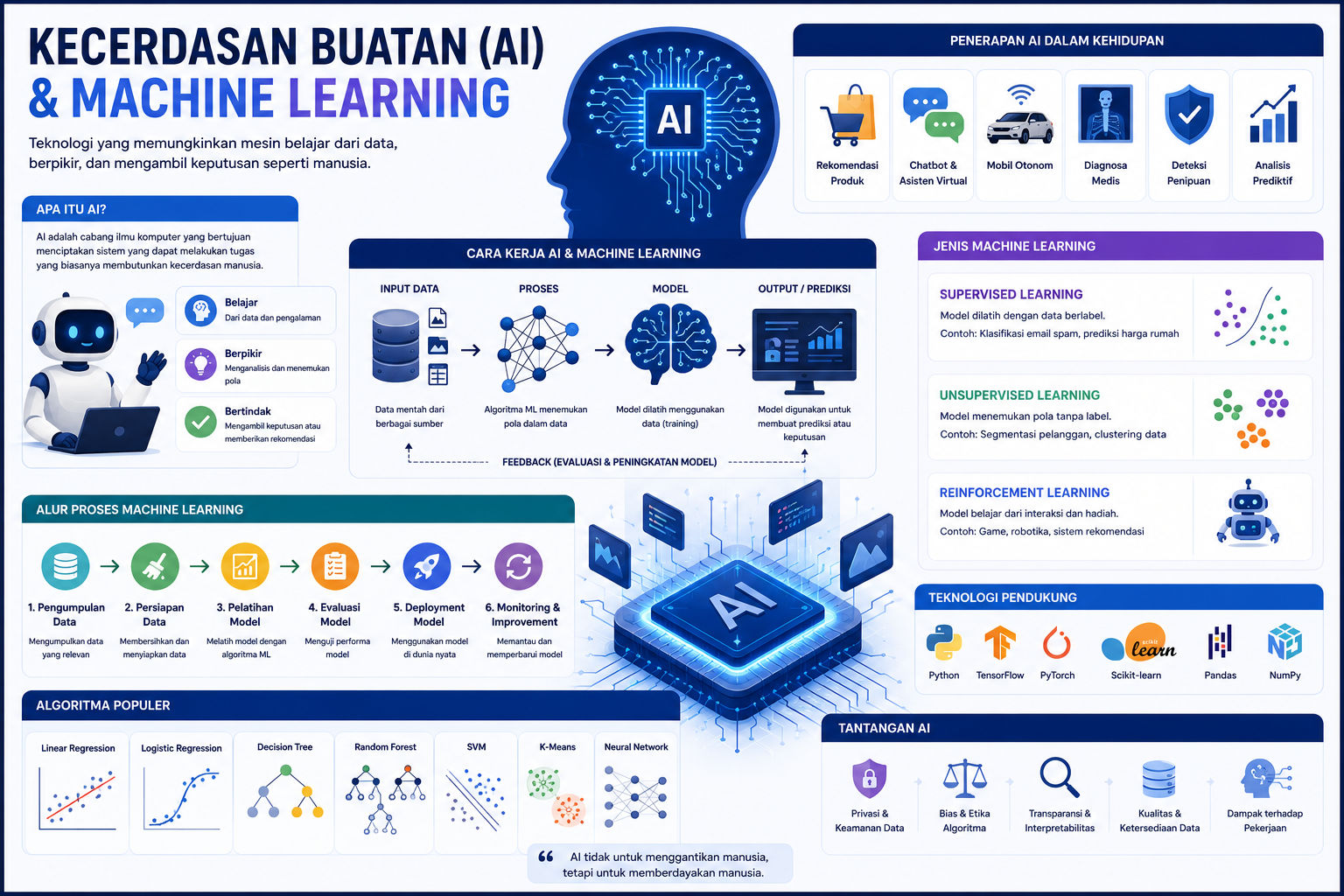
Artificial Intelligence (AI) is no longer just a feature; it's becoming an invisible substrate, a ubiquitous layer embedded across nearly every technological domain. The unseen current here isn't merely the advancement of AI models like large language models (LLMs) or generative AI, but the profound shift towards autonomous, self-optimizing systems that learn and adapt with minimal human intervention. This transformation is driven by several critical factors:
- Data Abundance and Ubiquity: The sheer volume and diversity of data generated globally – from IoT sensors to social media interactions – provide an unprecedented training ground for AI. This data isn't just big; it's increasingly real-time and context-rich, allowing AI to perceive and interact with the world in more nuanced ways.
- Algorithmic Efficiency and Innovation: Breakthroughs in neural network architectures, reinforcement learning, and federated learning are making AI more powerful and efficient. These algorithms are enabling AI to tackle complex problems that were once intractable, from discovering new materials to optimizing global supply chains.
- Edge AI and Distributed Intelligence: Moving AI processing closer to the data source (edge computing) reduces latency, enhances privacy, and enables real-time decision-making. This distributed intelligence paradigm means AI isn't confined to data centers but permeates devices, vehicles, and infrastructure, making our environment intelligently responsive.
The true impact of AI lies in its ability to automate not just tasks, but decision-making processes, leading to intelligent automation that learns from experience and continuously improves. This isn't just about robots taking jobs; it's about systems that augment human capabilities, manage complex systems with unprecedented efficiency, and unlock entirely new possibilities for scientific discovery and societal well-being. The implications span from personalized medicine to smart cities, fundamentally altering how we interact with our environment.
Decentralization's Quiet Revolution: Reimagining Trust and Ownership
While often conflated with cryptocurrencies, the unseen current of decentralization extends far beyond digital currencies. It represents a fundamental rethinking of trust, ownership, and control in digital systems. Driven by blockchain and distributed ledger technologies (DLT), this trend is fostering new architectures that are inherently more resilient, transparent, and user-centric.
- Beyond Finance: Decentralization is permeating supply chain management, identity verification, intellectual property rights, and even governance models. Imagine a world where your digital identity is self-sovereign, where the provenance of every product can be traced instantly, or where community decisions are made through transparent, immutable smart contracts.
- Web3 and the Creator Economy: The evolution of the internet into Web3 promises a shift from platform-centric control to user and creator ownership. Decentralized autonomous organizations (DAOs), NFTs, and token-gated communities are empowering individuals with more direct control over their digital assets and participation in online economies.
- Resilience and Security: By distributing data and computation across a network of nodes, decentralized systems are inherently more resistant to single points of failure, censorship, and malicious attacks. This enhanced resilience is crucial in an increasingly interconnected and vulnerable digital landscape.
This quiet revolution is about disintermediation and empowerment. It challenges traditional centralized power structures, offering a vision where trust is established through cryptography and consensus, rather than relying on a single, often fallible, entity. For a deeper dive into these transformative forces, consider reading The Unseen Currents: Unpacking the Hidden Forces Driving Today's Tech Revolution, which explores how these hidden drivers are reshaping our technological landscape.
The Quantum Loom: Weaving the Future of Computation
Quantum computing remains largely theoretical for most, yet the foundational research and development represent another powerful unseen current. While practical, large-scale quantum computers are still some years away, the progress being made in quantum mechanics, material science, and cryogenics is laying the groundwork for a future where computational problems currently considered impossible will become solvable.
- Algorithmic Breakthroughs: Researchers are actively developing quantum algorithms (like Shor's algorithm for factoring large numbers and Grover's algorithm for searching databases) that promise exponential speedups for specific types of problems. This includes cryptography, drug discovery, and complex optimization.
- Material Science and Engineering: Building stable and scalable quantum bits (qubits) is a monumental challenge, driving innovation in superconductors, trapped ions, photonic systems, and topological qubits. These advancements have spillover effects into other areas of physics and engineering.
- Hybrid Computing Architectures: The immediate future likely involves hybrid classical-quantum systems, where quantum processors accelerate specific parts of a problem, working in concert with traditional supercomputers. This integration will gradually introduce quantum capabilities into mainstream computing.
The quantum loom is weaving a future where the very nature of computation is redefined. Its long-term implications are profound, threatening to break current encryption standards, accelerate scientific discovery at an unprecedented pace, and optimize complex systems across finance, logistics, and climate modeling. This isn't just about faster computers; it's about a different kind of computation that can explore possibilities beyond classical limits.
Bio-Digital Convergence: Where Code Meets Life
One of the most exciting and ethically complex unseen currents is the accelerating convergence of biotechnology and digital technology. Advances in AI, machine learning, and automation are transforming our ability to understand, manipulate, and even design biological systems, blurring the lines between the digital and the organic.
- AI-Powered Drug Discovery: AI algorithms are dramatically accelerating the drug discovery process, from identifying potential drug candidates to simulating molecular interactions and predicting efficacy, significantly reducing the time and cost involved.
- Personalized Medicine and Genomics: Genetic sequencing is becoming faster and cheaper, allowing for highly personalized medical treatments based on an individual's unique genetic makeup. Digital tools are crucial for analyzing vast genomic datasets and tailoring therapies.
- Synthetic Biology and Bio-Manufacturing: Engineering biological systems to perform novel functions, from producing sustainable fuels to growing lab-cultured meat, is moving from sci-fi to reality. Digital design tools and robotic automation are key enablers in this burgeoning field.
- Brain-Computer Interfaces (BCIs): Though still in early stages, BCIs promise direct communication between the human brain and external devices, offering revolutionary potential for assisting individuals with disabilities and eventually enhancing human capabilities.
This convergence holds immense promise for addressing global challenges in health, food security, and environmental sustainability. However, it also raises critical ethical questions regarding data privacy, genetic engineering, and the definition of humanity, making thoughtful societal discourse and robust regulatory frameworks essential.
Sustainable Tech's Growing Pulse: Innovation for a Greener Future
As climate change and environmental concerns intensify, sustainability is no longer a niche interest but a core driver of technological innovation. The unseen current here is the integration of ecological responsibility into the very design and operation of technological systems, moving towards a circular and resource-efficient digital economy.
- Green AI and Energy-Efficient Computing: Researchers are developing more energy-efficient AI models and data center architectures, and using AI to optimize energy grids, predict resource consumption, and manage waste.
- Circular Economy Technologies: From advanced recycling processes and modular electronics design to digital platforms that facilitate repair, reuse, and upcycling, technology is enabling a shift away from linear "take-make-dispose" models.
- Precision Agriculture and Environmental Monitoring: IoT sensors, drones, and AI are transforming agriculture, optimizing water usage, minimizing pesticide application, and enhancing crop yields. Satellite imagery and AI are also providing unprecedented capabilities for environmental monitoring and conservation.
- Renewable Energy Integration: Digital twins, predictive analytics, and smart grid technologies are crucial for integrating intermittent renewable energy sources (solar, wind) into stable and efficient power grids.
This pulse of sustainable tech reflects a growing recognition that technological progress must go hand-in-hand with environmental stewardship. It's about designing technology not just for performance, but for planetary health, opening up new markets and driving innovation in resource efficiency and renewable solutions.
The Human-Centric Mandate: Redefining Design and Ethics
Finally, an increasingly powerful unseen current is the growing emphasis on human-centric design and ethical considerations in technology development. As technology becomes more pervasive and powerful, the conversation is shifting from "what can we build?" to "how should we build it?" and "what are its implications for humanity?"
- Explainable AI (XAI) and Trust: As AI makes more critical decisions, the need for transparency and explainability becomes paramount. XAI aims to make AI models understandable to humans, fostering trust and accountability.
- Digital Wellbeing and Mental Health: Concerns about screen time, social media addiction, and algorithmic biases are driving innovations in digital wellbeing features, responsible design, and tools that promote healthier tech usage.
- Data Privacy and Security: Heightened awareness of data breaches and surveillance has led to increased demand for robust privacy-enhancing technologies (PETs) and stronger data protection regulations globally.
- Inclusive Design and Accessibility: Technology is increasingly being designed with diverse user needs in mind, ensuring accessibility for individuals with disabilities and reducing digital divides.
This human-centric mandate is not just about compliance; it's about building technology that genuinely serves humanity, respects individual autonomy, and contributes positively to societal flourishing. It's a call for developers, policymakers, and users alike to collaboratively shape a future where technology is a force for good. Indeed, the very essence of progress today involves understanding how these forces converge to build the future with digital innovation, ensuring that our advancements are both powerful and principled.
Conclusion: Navigating the Deeper Currents
The latest technology news and trends are far more complex than their surface-level manifestations suggest. By understanding the unseen currents – the profound shifts in AI's ubiquity, decentralization's redefinition of trust, quantum computing's foundational promise, bio-digital convergence's transformative power, sustainable tech's ecological imperative, and the human-centric mandate – we gain a more holistic and accurate picture of where innovation is truly headed.
These deeper currents are not isolated phenomena; they frequently intersect and amplify each other, creating a dynamic and rapidly evolving landscape. Staying informed requires more than just reading headlines; it demands a critical eye, a willingness to delve into the underlying architectures, and an appreciation for the long-term implications of these silent, yet powerful, forces shaping our technological future.