Unseen Threads: Decoding the Undercurrents of Today's Tech Revolution
In a world saturated with buzzwords and rapid-fire announcements, staying abreast of the latest technology news and trends can feel like chasing a constantly receding horizon. Every day brings a new AI breakthrough, a novel blockchain application, or an advancement in immersive realities. Yet, beneath the glittering surface of these headlines lies a complex tapestry of interconnected forces, a deeper architecture that truly dictates the direction and impact of our digital future. To merely observe the trends is to miss the story; to truly understand them, we must delve into the unseen threads that weave through the technological landscape, shaping not just what’s next, but why it’s next.
This article aims to peel back the layers, moving beyond the superficial excitement to explore the fundamental drivers, the systemic dependencies, and the philosophical shifts that underpin the technology news we consume daily. We’re not just witnessing isolated innovations; we’re experiencing the continuous evolution of an intricate, global digital ecosystem where every component, seen and unseen, plays a critical role.
The Shifting Sands: Beyond the Hype Cycle
The tech industry operates on a perpetual hype cycle, where concepts soar to stratospheric popularity only to often recede into a trough of disillusionment. Think of the initial frenzy around NFTs, the metaverse, or even certain aspects of AI just a few years ago. While some of these trends mature and find lasting value, many are simply manifestations of deeper, more foundational shifts that have been brewing for decades. The real news isn't just the emergence of a new tool, but the maturation of the underlying capabilities that make such a tool possible.
For instance, the generative AI revolution, exemplified by models like ChatGPT and Stable Diffusion, didn't appear out of thin air. It's the culmination of decades of research in neural networks, vastly improved computational power (thanks to cloud computing and specialized hardware), and the availability of unprecedented datasets. These are the unsung heroes, the infrastructural advancements that pave the way for headline-grabbing applications. Understanding these foundational elements – the enhanced algorithms, the scalable cloud infrastructure, the refined data pipelines – provides a far more robust framework for predicting sustained trends rather than fleeting fads. It’s about recognizing that every visible innovation is merely a ripple on a much deeper current.
AI and the Algorithmic Backbone: The New Operating System
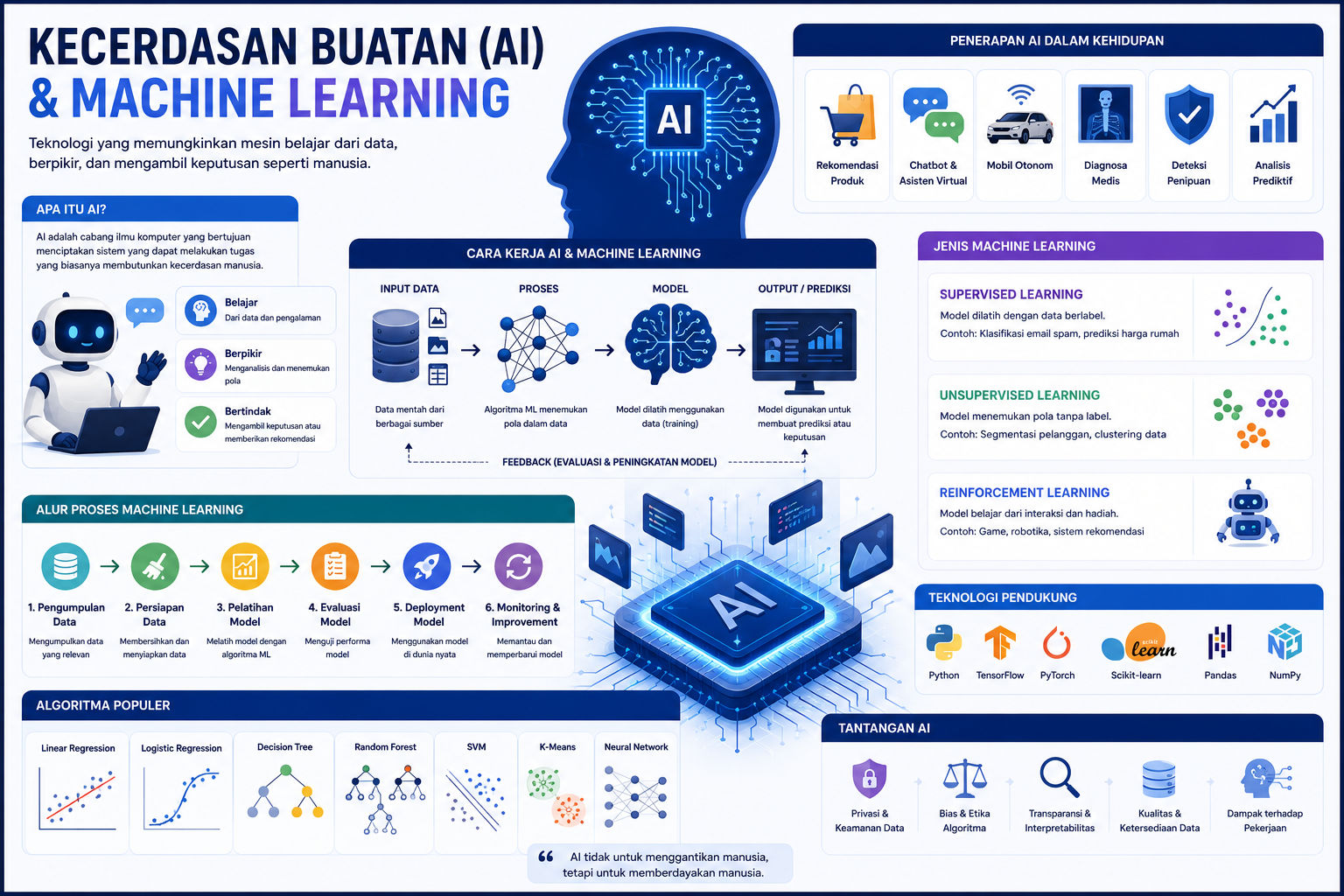
Artificial Intelligence is arguably the most dominant technological narrative of our era, and its influence extends far beyond chatbots and image generators. AI is rapidly becoming the algorithmic backbone of nearly every other technological domain, effectively acting as a new kind of operating system for the digital world. It optimizes networks, personalizes user experiences, enhances cybersecurity, and accelerates scientific discovery. The true "news" in AI isn't just new models, but its pervasive integration into the very fabric of our digital and physical infrastructure.
Consider the rise of Edge AI, where processing power moves closer to the data source – your smartphone, a smart factory sensor, or an autonomous vehicle. This trend isn't just about faster processing; it’s about reducing latency, enhancing privacy, and enabling real-time decision-making in environments where cloud connectivity might be intermittent or slow. Similarly, the drive towards Explainable AI (XAI) isn't just an academic pursuit; it's a critical component in building trust and accountability, particularly as AI permeates sensitive sectors like healthcare, finance, and justice. The ongoing developments in AI are less about individual applications and more about the ever-deepening sophistication of the underlying intelligence that powers an increasingly complex world. This is part of the unseen architecture driving global tech trends, an invisible layer of intelligence guiding countless processes.
The Intertwined Web: Connectivity as the Core Infrastructure
Without robust connectivity, most advanced technologies would grind to a halt. The ongoing evolution of network infrastructure is a foundational, albeit often overlooked, aspect of today's tech trends. The rollout of 5G, the expansion of satellite internet services like Starlink, and the development of next-generation Wi-Fi standards are not just about faster downloads; they are about enabling entirely new paradigms.
These advancements create the nervous system for the Internet of Things (IoT), allowing billions of devices to communicate seamlessly, generating vast amounts of data that feed AI algorithms. They enable remote surgery, enhance autonomous transportation, and facilitate immersive virtual experiences that demand ultra-low latency. The "news" here is the growing ubiquity and resilience of this global digital nervous system, making advanced computational power accessible almost anywhere. It’s the silent, continuous upgrade of the world’s most critical utility, underpinning everything from smart cities to precision agriculture.
Decentralization and Trust: Beyond the Blockchain Bubble
While the speculative peaks and troughs of cryptocurrency markets often dominate headlines, the underlying principles of decentralization, transparency, and immutability offered by blockchain and distributed ledger technologies (DLTs) continue to mature and find practical applications. The real news in this space isn't the price of Bitcoin, but the quiet revolution in supply chain management, digital identity, and secure data sharing.
Enterprises are increasingly leveraging DLTs to build more transparent and verifiable supply chains, tracing goods from origin to consumer, reducing fraud, and enhancing ethical sourcing. Governments and organizations are exploring decentralized identity solutions, giving individuals more control over their personal data. Furthermore, the concept of Web3, despite its nascent stage, represents a fundamental shift towards a more user-owned and permissionless internet. These are not merely technological trends but ideological ones, challenging existing power structures and proposing new models of trust and governance in the digital realm. These are among the hidden forces shaping the tech revolution, quietly redesigning the foundations of digital interaction.
The Quantum Leap: Preparing for the Unimaginable
Quantum computing remains largely in the realm of theoretical research and specialized labs, yet its nascent progress represents a critical undercurrent in future tech trends. While practical applications are still years away, the potential impact of quantum computing is so profound that it warrants close attention. Quantum machines promise to solve problems currently intractable for even the most powerful supercomputers, with implications for drug discovery, material science, cryptography, and complex optimization problems.
The "news" in quantum isn't about immediate commercial viability, but about the steady advancements in qubit stability, error correction, and the development of quantum algorithms. These breakthroughs, though incremental, are laying the groundwork for a computational paradigm shift that could redefine the limits of what's possible. Organizations are already investing in "quantum-safe" cryptography, anticipating a future where current encryption methods could be vulnerable. This foresight into a distant but impactful future is a crucial, if often invisible, part of modern technology planning.
Sustainability and Ethics: The Conscience of Innovation
As technology becomes more deeply embedded in every aspect of life, its societal and environmental footprint becomes increasingly critical. The latest tech trends are not just about what new things we can build, but how we build them, and what impact they have on the planet and humanity. Sustainability in technology, from energy-efficient data centers to ethical sourcing of rare earth minerals for devices, is moving from a niche concern to a core design principle.
Similarly, ethical considerations are no longer an afterthought. The discourse around AI bias, data privacy, algorithmic accountability, and digital well-being is shaping regulatory frameworks and influencing product development cycles. Companies are increasingly scrutinized not just for their innovations, but for their responsible deployment. The news here is the growing recognition that technology cannot operate in an ethical or environmental vacuum; its future architecture must integrate principles of sustainability, fairness, and human-centric design. This shift represents a maturation of the tech industry, acknowledging its profound responsibilities.
The Human-Centric Evolution: From UX to XR and Beyond
Ultimately, technology serves humanity. The ongoing evolution of user experience (UX) and the emergence of extended reality (XR – encompassing AR, VR, and mixed reality) signify a deeper push towards more intuitive, immersive, and personalized interactions. The "news" isn't just about new VR headsets but about the blending of digital and physical worlds, creating new interfaces for work, entertainment, and social connection.
Beyond XR, we see advancements in neurotechnology and brain-computer interfaces (BCIs), which, while still in early stages, represent the ultimate frontier of human-computer interaction. These developments challenge our understanding of what it means to interact with technology, moving beyond screens and keyboards to direct thought and intention. The underlying trend is a relentless pursuit of seamless integration, making technology feel less like a tool and more like an extension of ourselves, fundamentally altering how we perceive and engage with our digital environments.
Conclusion: Navigating the Invisible Currents
To truly comprehend the latest technology news and trends, we must cultivate a perspective that looks beyond the immediate headlines. The real story unfolds in the unseen threads: the foundational algorithms, the interconnected infrastructures, the evolving ethical frameworks, and the profound shifts in human-computer interaction that collectively form the architecture of our digital age. It's about recognizing that every apparent innovation is part of a larger, evolving system, driven by deep currents that are often invisible to the casual observer.
By understanding these underlying dynamics, we move from being passive consumers of technology news to informed participants in its evolution. This holistic view empowers us not only to anticipate future developments but also to shape them responsibly, ensuring that the relentless march of progress serves humanity and builds a more sustainable, equitable, and intelligent future for all. The true revolution lies not just in what is built, but in how deeply we understand the blueprints.