The Hidden Currents of 2026: A Deep Dive into Today’s Technology Trends
Introduction: Why 2026 Is a Turning Point in Tech
When we talk about technology trends, most headlines focus on the next big gadget or the newest software release. Yet beneath the surface of 2026’s digital landscape lie invisible forces reshaping how we live, work, and connect. From the rise of generative AI to the maturation of decentralized finance, these shifts are not just incremental improvements—they are paradigm changes that re‑define entire industries. This article examines the most compelling developments of the year, offering a unique perspective on how they interlock to form a new technological ecosystem.
1. Generative AI: From Tool to Co‑Creator
Generative AI models—particularly large language models (LLMs) and multimodal transformers—have moved from research labs into mainstream production. The latest iterations can produce code, design graphics, and even draft legal documents with minimal human guidance. This shift has turned AI from a support tool into a co‑creator, prompting a reevaluation of intellectual property, ethical boundaries, and workforce dynamics.
- Creative Industries: Artists and designers now collaborate with AI to prototype concepts in seconds, enabling rapid iteration and hyper‑personalized content.
- Software Development: Code generators reduce boilerplate and accelerate deployment, but they also raise questions about accountability and security.
- Education: Adaptive learning platforms use AI to customize curriculum in real time, increasing engagement and improving outcomes.
2. Edge Computing & 6G: The New Internet Backbone
While 5G has expanded connectivity, 6G—now in early experimental stages—promises sub‑millisecond latency and terabit‑per‑second speeds. Combined with edge computing, this will bring processing power closer to the user, reducing bandwidth strain and enabling real‑time applications such as autonomous vehicles, smart factories, and immersive AR/VR experiences.
Companies are investing heavily in distributed edge nodes, often leveraging existing infrastructure like cellular towers and data centers. This decentralization not only boosts performance but also enhances resilience against cyber‑attacks and network congestion.
3. Blockchain Beyond Cryptocurrency
While cryptocurrency remains the most visible application of blockchain, its potential extends far beyond digital money. Decentralized identity, supply‑chain traceability, and smart‑contract‑based governance are gaining traction across finance, healthcare, and public services.
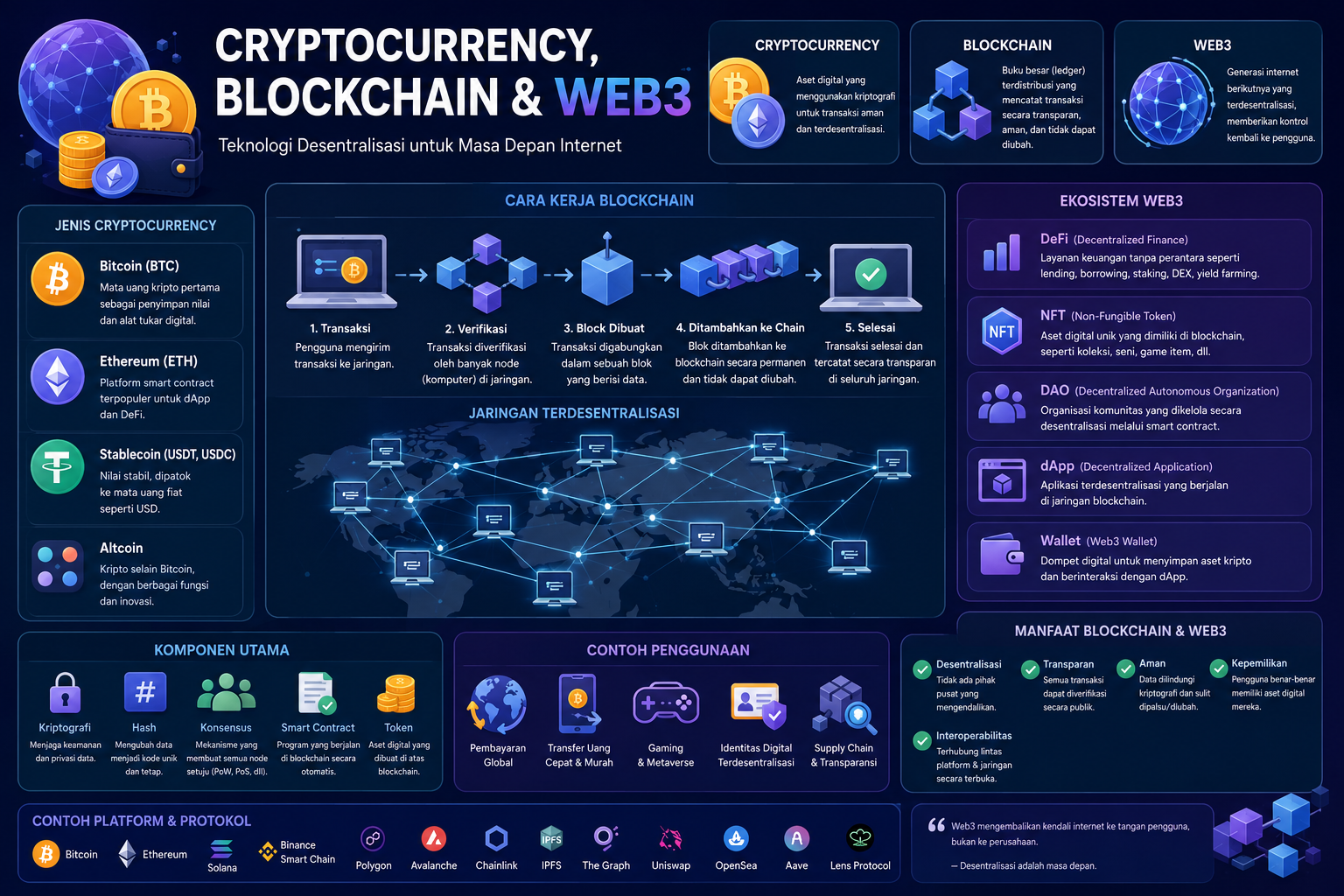
In 2026, this article highlights how blockchain’s immutable ledgers are becoming foundational for trust‑based ecosystems, especially in the era of data sovereignty and privacy regulation.
4. Digital Finance: The Rise of Embedded Banking
Traditional banking is no longer a separate entity; it is now embedded within everyday digital experiences. From in‑app payments to micro‑loans offered by e‑commerce platforms, the line between commerce and finance is blurring.

Fintech innovations such as real‑time credit scoring, AI‑driven fraud detection, and tokenized assets are democratizing access to capital, particularly in emerging markets. Moreover, central bank digital currencies (CBDCs) are moving from pilot to mainstream, promising faster cross‑border settlements and enhanced monetary policy tools.
5. Sustainable Tech: Green AI and Circular Infrastructure
With climate change at the forefront, the tech industry is under pressure to reduce its carbon footprint. “Green AI” initiatives focus on optimizing model training, reducing energy consumption, and developing more efficient hardware.
Simultaneously, circular infrastructure models—where devices are designed for longevity, repairability, and recyclability—are gaining traction. Companies are adopting modular designs and open‑source repair manuals, encouraging a shift from “buy‑once, discard” to a more sustainable lifecycle.
6. Human‑Centric Design: The New Frontline of Innovation
Technology is increasingly judged by its impact on human well‑being. Accessibility, privacy, and mental health considerations are now integral to product development cycles. Design thinking frameworks that prioritize user empathy are becoming the norm, ensuring that advances in AI, IoT, and quantum computing serve society rather than merely profit.
7. Quantum Computing: From Lab to Market
Quantum processors have moved from theoretical constructs to commercial prototypes. While still limited in qubit count and error rates, quantum solutions are already proving valuable in cryptography, drug discovery, and optimization problems.
Governments and industry consortia are investing in quantum‑ready infrastructure, preparing for a future where classical and quantum systems coexist. This transition will necessitate new programming languages, security protocols, and workforce skills.
8. The Future of Work: Hybrid Models and Digital Twins
Remote work, accelerated by the pandemic, has evolved into hybrid models that blend physical and virtual collaboration. Digital twins—real‑time virtual replicas of physical assets—enable predictive maintenance and scenario testing in industries such as manufacturing, real estate, and urban planning.
These technologies collectively reshape talent acquisition, requiring new skill sets in data analysis, AI ethics, and cross‑disciplinary collaboration.
Conclusion: Navigating the Uncharted Waters
2026’s technology trends are not isolated phenomena; they are interdependent currents that together form a complex, evolving ecosystem. From generative AI’s creative partnership to the decentralization of finance and the promise of quantum computing, each trend amplifies the others, creating both opportunities and challenges.
Staying ahead requires not only technical expertise but also a holistic understanding of societal impact. As we continue to push the boundaries of what's possible, the most successful innovators will be those who balance ambition with responsibility, ensuring that technology serves humanity’s best interests.
For deeper insights into how digital revolutions are reshaping industries, you may also explore this comprehensive analysis of digital exploration and its global impact.