Beyond the Hype: Unpacking the Invisible Architectures of Tomorrow's Tech Landscape
In a world increasingly defined by rapid technological advancements, it's easy to get lost in the flurry of buzzwords and flashy innovations. From quantum leaps to virtual realities, the landscape of technology seems to shift beneath our feet daily. Yet, to truly understand where we are headed, we must look beyond the surface. We need to explore the 'invisible architectures'—the underlying principles, convergent forces, and subtle shifts that are quietly but profoundly reshaping our digital future. This article delves into the less-obvious, yet deeply impactful, trends that are architecting tomorrow's world, emphasizing the intricate dance between human innovation and machine capability.
The Quiet Revolution of AI: From Automation to Augmentation
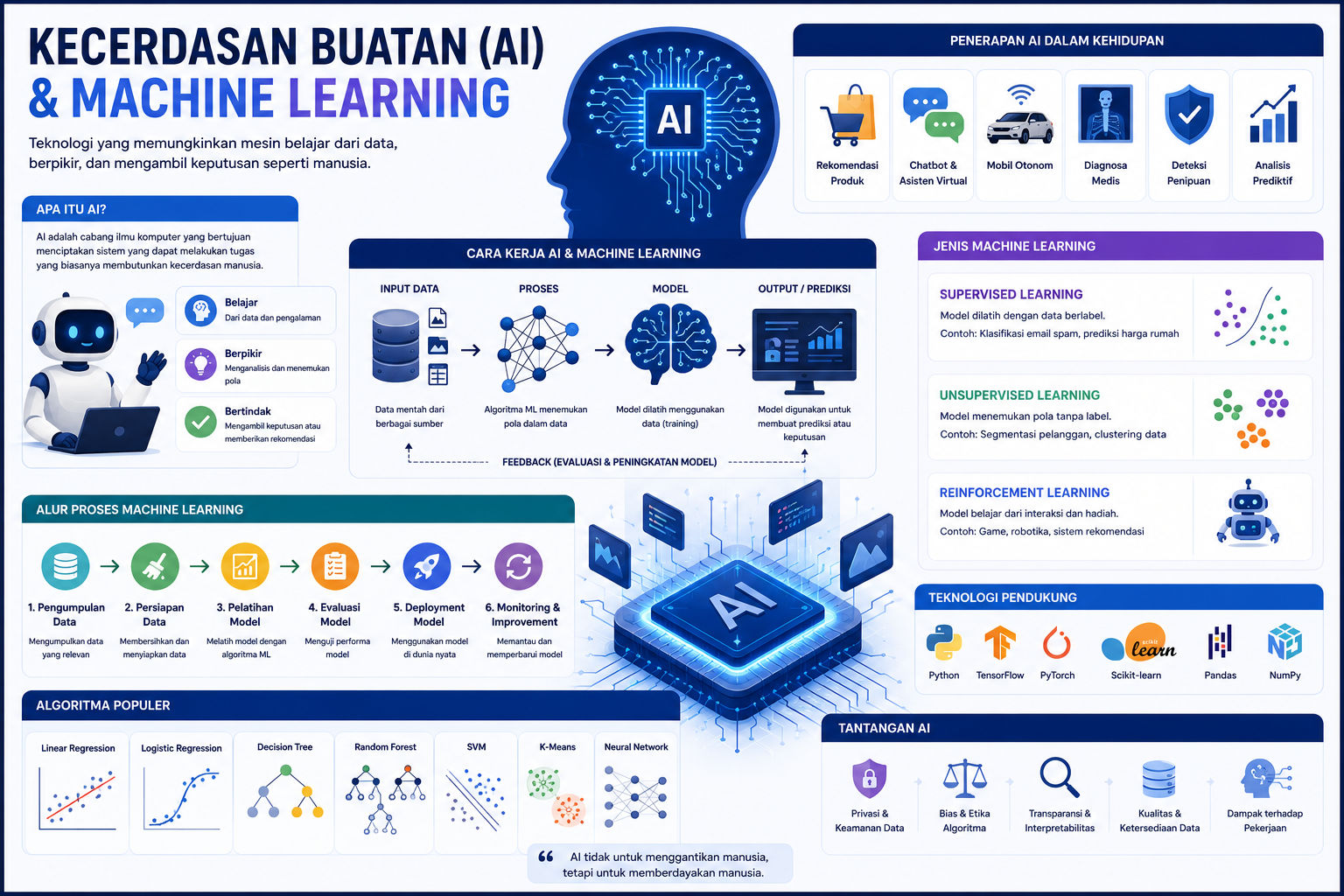
Artificial Intelligence (AI) has long moved past its initial perception as merely a tool for automation. Today, AI is evolving into a partner for human cognitive augmentation. We are witnessing a shift from AI designed to replace tasks to AI engineered to enhance human capabilities, fostering a symbiotic relationship between humans and machines. This next wave of AI isn't just about performing calculations faster; it's about predictive analytics that foresee market shifts, personalized learning algorithms that adapt to individual needs, and generative AI that assists in creative processes, from art to scientific discovery. The emphasis is increasingly on explainable AI (XAI), ensuring transparency and trust, and ethical AI, which grapples with biases and societal impacts. As AI becomes more integrated into our decision-making frameworks and creative endeavors, understanding its ethical implications and ensuring responsible development becomes paramount. Indeed, the future, as explored in "Tren Teknologi 2026: Masa Depan Diarsitektur oleh Kolaborasi Manusia dan Mesin", hinges significantly on this collaboration.
Quantum Computing: The Undercurrent of Computational Power
While still largely in its nascent stages, quantum computing represents an invisible yet monumental architectural shift in computational power. Unlike classical computers that process information using bits as 0s or 1s, quantum computers leverage the bizarre properties of quantum mechanics—superposition and entanglement—to process information in a fundamentally different way. This isn't merely about faster processing; it's about solving problems that are currently intractable for even the most powerful supercomputers. Its long-term implications are staggering, promising to revolutionize cryptography, rendering current encryption methods obsolete while simultaneously enabling new, unbreakable ones. It holds the key to breakthroughs in material science, allowing the simulation of molecular interactions with unprecedented accuracy, leading to new drugs, advanced batteries, and more efficient catalysts. While not yet a mainstream technology, the quiet progress in quantum labs worldwide is laying the groundwork for a future where computational limits are redefined, shaping the very fabric of scientific and technological advancement for decades to come.
The Symbiotic Digital Twin & Evolving Metaverse: Crafting Virtual Realities with Real-World Impact
The concept of the metaverse has often been sensationalized, particularly in its consumer-facing, gaming, and social aspects. However, its most profound architectural impact lies in the industrial and enterprise sectors, often through the less-glamorous but highly effective 'digital twin' technology. A digital twin is a virtual replica of a physical object, system, or process, updated in real-time with data from its physical counterpart. These twins are not merely simulations; they are living, breathing models that allow for predictive maintenance, process optimization, and proactive problem-solving across manufacturing, urban planning, healthcare, and beyond. This convergence of IoT data, AI analytics, and sophisticated 3D modeling creates a symbiotic relationship between the physical and digital worlds. The enterprise metaverse extends this, offering persistent, shared virtual spaces for collaborative design, remote operations, and highly immersive training. These platforms, powered by advanced rendering and haptic feedback, are moving beyond simple video conferencing, enabling geographically dispersed teams to interact with virtual objects and environments as if they were physically present, driving unprecedented levels of efficiency and innovation.
Sustainable Tech: Greening the Digital Frontier
As our digital footprint expands, so does the imperative to address its environmental impact. Sustainable technology is no longer a niche concern but a core architectural principle guiding innovation. This involves multiple facets: from designing energy-efficient AI models that consume less power during training and inference to developing sustainable hardware with reduced reliance on rare earth minerals and improved recyclability. Furthermore, technology itself is being leveraged as a powerful tool for environmental solutions. Smart grids, powered by AI, optimize energy distribution and integrate renewable sources more effectively. Precision agriculture uses IoT sensors and data analytics to minimize water and pesticide use, boosting yields sustainably. Advanced climate modeling and monitoring systems provide crucial insights for policy-making and disaster prevention. The drive towards a circular economy in tech, focusing on repair, reuse, and recycling, is reshaping product lifecycles and encouraging manufacturers to adopt more responsible practices. This green architectural layer is vital for ensuring that technological progress does not come at an unbearable cost to our planet.
Hyper-Connectivity: 6G and the Pervasive Network
While 5G is still rolling out globally, the architectural groundwork for 6G and beyond is already being laid. This next generation of connectivity isn't just about incremental speed increases; it promises to create a truly pervasive, intelligent network that is integral to nearly every other emerging technology. 6G aims for ultra-low latency, ubiquitous coverage (including remote areas and even underwater), and unprecedented energy efficiency. These characteristics are critical enablers for the fully autonomous systems, advanced AI applications, and immersive extended reality (XR) experiences of the future. Imagine tactile internet where surgeons can operate remotely with haptic precision, or ubiquitous sensing capabilities embedded into urban infrastructure for hyper-efficient smart cities. This future network architecture will be defined by its ability to seamlessly integrate diverse technologies—from satellite communication to terahertz frequencies—creating a digital nervous system for the planet. The transformative power of this digital revolution, as detailed in "Новые Технологии и Тренды 2026: Как Цифровая Революция Изменяет Наши Жизни", underscores the importance of resilient and advanced connectivity.
Democratization of Innovation: The Rise of Citizen Developers
One of the most impactful, yet often understated, architectural shifts is the democratization of advanced technology. The rise of no-code and low-code platforms is empowering a new generation of "citizen developers"—individuals without traditional programming backgrounds who can nonetheless build sophisticated applications and automate complex workflows. These platforms abstract away much of the technical complexity, providing intuitive drag-and-drop interfaces and pre-built components. This trend is significant because it shifts innovation from being solely the domain of specialized IT departments to becoming a widespread capability across an organization. It reduces the bottleneck for application development, allowing businesses to respond more rapidly to market changes and internal needs. Moreover, it fosters a culture of grassroots innovation, where those closest to a problem can directly contribute to its solution, leading to more relevant and effective digital tools. This architectural shift in software development is profoundly accelerating digital transformation across all sectors.
Cybersecurity: From Fortress to Adaptive Organism
The architectural approach to cybersecurity is undergoing a radical transformation. Traditional perimeter-based defenses, akin to building a static fortress, are proving insufficient against an increasingly sophisticated and agile threat landscape. The new paradigm emphasizes adaptive, proactive, and resilient security measures, often driven by AI and machine learning. This involves moving towards 'zero-trust' architectures, where no user or device is inherently trusted, and every access request is rigorously verified. AI-driven threat detection systems analyze vast amounts of data to identify anomalous behavior and predict potential attacks before they fully manifest. Behavioral analytics, real-time threat intelligence, and automated response mechanisms are becoming standard. Furthermore, the rise of quantum computing necessitates the development of quantum-safe cryptography. Cybersecurity is no longer a static defense but an evolving, adaptive organism that continuously learns, predicts, and responds to threats, safeguarding the digital infrastructure upon which all other technological advancements depend.
Bio-Convergence: The Fusion of Biology and Technology
A fascinating and potentially world-altering architectural trend is bio-convergence, the seamless fusion of biology, engineering, and digital technology. This interdisciplinary approach is accelerating breakthroughs in personalized medicine, genomics, and synthetic biology. Technologies like CRISPR gene editing, powered by sophisticated AI algorithms, are enabling precise modifications to DNA, opening doors to curing genetic diseases and engineering new biological functions. Wearable sensors and advanced diagnostics, combined with big data analytics, provide real-time health monitoring and predictive insights, moving healthcare from reactive treatment to proactive prevention. The integration of biotechnology with AI is also driving innovation in drug discovery, accelerating the identification of new therapeutic compounds. This convergence creates a new architectural layer where biological systems are understood, manipulated, and enhanced by technological tools, promising to fundamentally redefine human health and our understanding of life itself, while simultaneously raising complex ethical considerations that society must navigate carefully.
Conclusion: The Interconnected Future
The true pulse of cutting-edge tech trends doesn't lie in isolated breakthroughs, but in the intricate, often invisible, architectures that connect them. From AI's shift to augmentation and quantum computing's foundational rewrite of processing power, to the industrial metaverse's real-world impact and the imperative of sustainable tech, each trend is a thread in a larger, interconnected tapestry. The democratization of innovation, the adaptive nature of cybersecurity, and the profound fusion of biology and technology all underscore a future where boundaries blur and possibilities expand. Navigating this evolving landscape requires not just an appreciation for individual technologies, but a holistic understanding of their synergistic interplay and the ethical frameworks that must guide their development. As we stand on the cusp of these transformative changes, it is our collective responsibility to shape these invisible architectures into a future that is not only technologically advanced but also equitable, sustainable, and truly human-centric.