Unseen Blueprints: Decoding the Hidden Architectures of Today's Tech Trends
In a world captivated by the dazzling display of new gadgets and breakthrough applications, it's easy to overlook the silent, foundational shifts occurring beneath the surface. The "Latest Technology News & Trends" often focus on the visible outcomes – a new AI model, a groundbreaking blockchain application, or a faster network. Yet, the true revolution lies in the unseen blueprints and hidden architectures fueling these advancements. These are the underlying principles, system designs, and paradigm shifts that quietly dictate the direction and pace of our digital future. Understanding these foundational forces is not just about keeping up; it's about anticipating, innovating, and shaping the next wave of technological evolution.
This article delves into the less visible but profoundly impactful drivers shaping the current technological landscape. We'll explore the architectural evolutions, philosophical shifts, and systemic changes that are truly redefining what's possible, moving beyond the superficial headlines to grasp the deeper currents at play.
The Evolving Intelligence: Beyond Generative AI's Spectacle
Generative AI has undoubtedly stolen the spotlight, producing text, images, and even code with astonishing fidelity. However, the architectural shifts happening within AI are far more profound than just content creation. We are witnessing a move towards more:
- Contextual & Multimodal AI: Future AI architectures are designed to understand and integrate information from various modalities (text, vision, audio, sensor data) and retain context over longer interactions. This requires sophisticated neural network designs that can process and fuse diverse data streams seamlessly, moving beyond isolated task performance to more holistic understanding.
- Edge AI & Decentralized Inference: The drive for real-time responsiveness, privacy, and reduced latency is pushing AI processing closer to the data source – on devices, sensors, and local servers. This architectural pivot from centralized cloud processing to distributed edge intelligence demands lightweight, efficient models and robust distributed computing frameworks.
- Explainable AI (XAI) & Ethical AI: As AI permeates critical domains, the demand for transparency, accountability, and fairness is paramount. Architectural designs are increasingly incorporating mechanisms for introspection, allowing developers and users to understand how decisions are made. This isn't just about regulatory compliance; it's about building trust and ensuring ethical deployment.
- Energy-Efficient AI: The enormous computational demands of large AI models pose significant environmental challenges. New hardware architectures (e.g., neuromorphic computing, analog AI chips) and algorithmic optimizations are being developed to reduce the energy footprint of AI, marking a critical architectural shift towards sustainable AI.
Web3's Quiet Revolution: Rebuilding Digital Trust
While often conflated with speculative cryptocurrencies, Web3 represents a fundamental architectural reimagining of the internet – one built on decentralization, user ownership, and verifiable trust. The underlying architectural shifts here are significant:
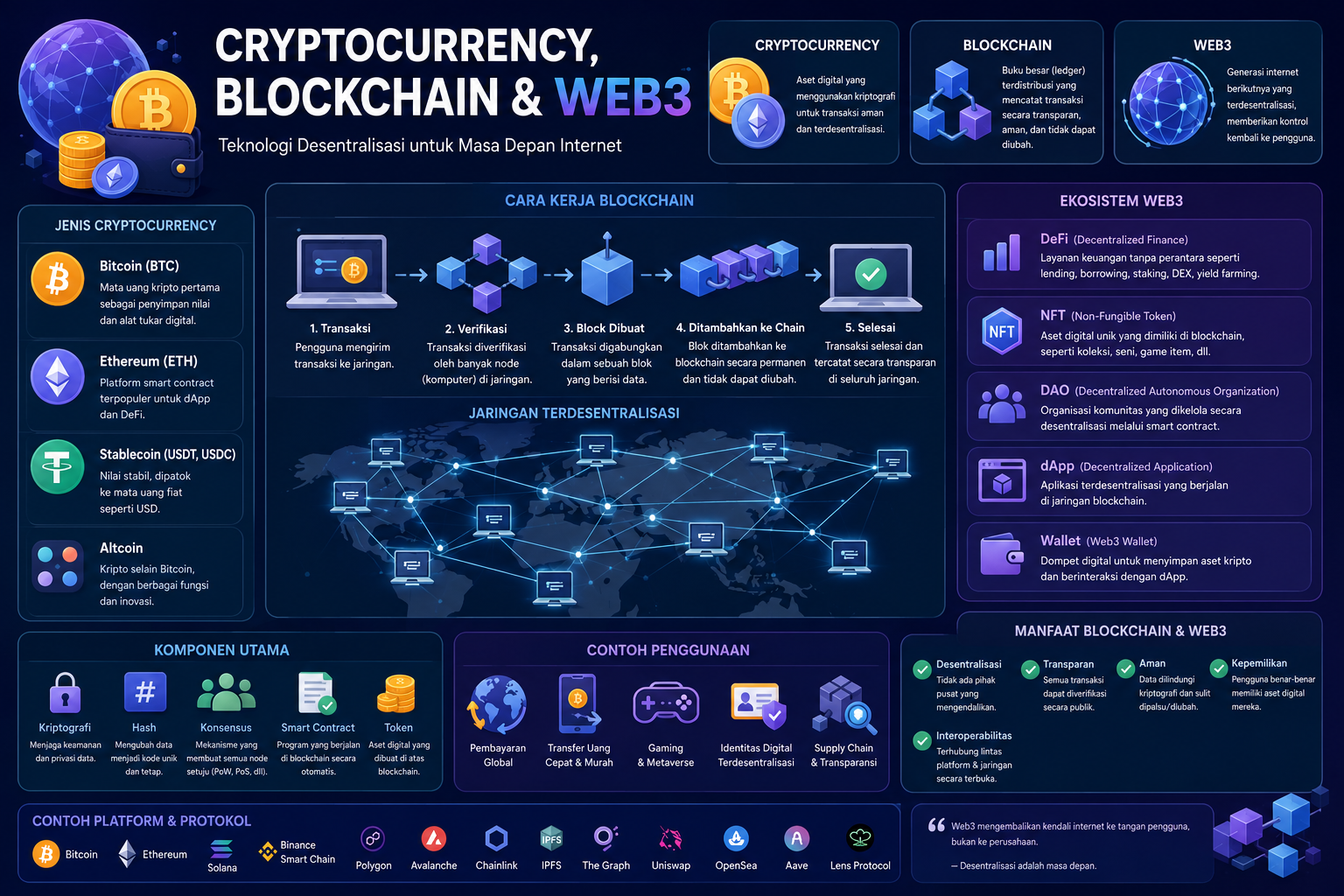
- Decentralized Identity & Data Ownership: Instead of relying on central authorities for identity verification and data storage, Web3 architectures enable users to own and control their digital identities and data directly via self-sovereign identity (SSI) solutions and decentralized storage networks. This shifts power from platforms to individuals.
- Programmable Trust & Smart Contracts: Blockchain, the foundational technology of Web3, allows for the creation of immutable, transparent, and self-executing contracts. This programmatic trust eliminates the need for intermediaries in many transactions, leading to more efficient and secure digital interactions across various sectors, from finance to supply chain.
- Tokenization of Everything: Beyond cryptocurrencies, the architectural concept of tokenization allows for representing real-world and digital assets as verifiable tokens on a blockchain. This enables fractional ownership, liquid markets for illiquid assets, and new models of digital rights management, creating entirely new economic architectures.
- Open & Interoperable Protocols: Web3 emphasizes open-source protocols and interoperability, aiming to break down the walled gardens of Web2 platforms. This architectural choice fosters a more collaborative and permissionless innovation environment, where applications can seamlessly interact across different blockchain networks.
Quantum Computing's Silent Ascent: Reshaping the Computational Paradigm
Quantum computing remains in its nascent stages, far from mainstream adoption, but its hidden architectural developments are laying the groundwork for a future computational paradigm. This isn't just about faster computers; it's about fundamentally different ways of processing information:
- Qubit Stability & Error Correction: The biggest architectural challenge in quantum computing is maintaining qubit coherence and correcting errors. Significant research is focused on developing robust quantum architectures that can handle the delicate nature of quantum states, including topological qubits and fault-tolerant quantum computing designs.
- Hybrid Quantum-Classical Architectures: For the foreseeable future, quantum computers will likely work in tandem with classical supercomputers. Architectural designs are evolving to create seamless interfaces and workflows between these two distinct computing paradigms, leveraging quantum for specific computational advantages while relying on classical for control and general processing.
- Quantum Algorithms & Software Stacks: Alongside hardware, the development of quantum algorithms and supporting software architectures is critical. This includes creating new programming languages, compilers, and operating systems tailored for quantum processors, a foundational shift in how software interacts with hardware.
- Cryogenic & Vacuum Engineering: The physical architecture required to maintain the extremely cold and isolated environments for many types of qubits is an engineering marvel. Advancements in cryogenics, vacuum technology, and shielding are crucial unseen elements enabling quantum development.
Sustainable Tech Architectures: Engineering for a Greener Future
As technology's footprint on the planet grows, the focus on sustainable tech architectures is no longer a niche concern but a critical imperative. These architectural shifts are designed to mitigate environmental impact while enhancing efficiency:
- Energy-Efficient Data Centers: Innovations in data center design, cooling systems, and power management (e.g., liquid cooling, AI-driven energy optimization, renewable energy integration) are creating greener digital infrastructures. This involves architectural choices at the physical and software levels to minimize energy consumption.
- Circular Economy Principles in Hardware: Beyond energy efficiency, there's a growing push for hardware architectures that support repairability, upgradability, and recycling. This includes modular designs, use of recycled materials, and extended product lifecycles, moving away from the linear "take-make-dispose" model.
- Green Software Engineering: The architectural choices made in software development also impact energy consumption. Optimizing algorithms, reducing unnecessary data transfers, and designing for computational efficiency are becoming key considerations in software architecture to reduce the environmental cost of digital services.
- Resource-Aware Cloud Architectures: Cloud providers are increasingly offering tools and insights for users to monitor and optimize their cloud resource consumption. This encourages architectural decisions that are not only cost-effective but also environmentally conscious, leading to more efficient allocation and utilization of shared computing resources.
Ubiquitous Connectivity & Digital Twins: The Invisible Digital Layer
The proliferation of IoT devices, advanced networking (5G, soon 6G), and sophisticated simulation tools is creating an invisible, yet profoundly impactful, digital layer that mirrors and interacts with our physical world. This represents an architectural integration on an unprecedented scale:
- Hyper-Connected Ecosystems: The sheer volume of interconnected devices, from smart sensors to autonomous vehicles, requires robust and scalable network architectures that can handle massive data flows with minimal latency. This includes advancements in mesh networking, low-power wide-area networks (LPWANs), and satellite internet.
- Digital Twin Architectures: Creating precise virtual replicas (digital twins) of physical objects, systems, or even entire cities demands sophisticated data integration, real-time simulation, and predictive modeling architectures. These twins are not just models; they are dynamic, data-fed entities that enable optimization, monitoring, and proactive intervention in the physical world.
- Spatial Computing & Augmented Reality Foundations: The foundational architectures for spatial computing, which blend digital content with the physical world, are evolving rapidly. This includes advancements in sensor fusion, real-time 3D mapping, and rendering engines that can seamlessly anchor virtual objects in physical space, moving towards a truly immersive digital layer.
- Data Orchestration & Interoperability: Managing the vast amounts of data generated by these ubiquitous systems requires new architectural approaches for data ingestion, processing, storage, and exchange. Standardized protocols and robust data pipelines are the unseen backbone enabling this hyper-connected future. These "unseen currents" of data flow and integration are the hidden architecture driving much of modern technological progress.
Cybersecurity's Foundational Battle: Securing the Digital Realm
As digital architectures become more complex and interconnected, so too do the challenges of cybersecurity. The "Latest Technology News & Trends" in this space aren't just about new threats, but about architectural paradigm shifts to build more resilient defenses:
- Zero Trust Architectures: Moving away from perimeter-based security, Zero Trust is an architectural model that assumes no user or device can be trusted by default, regardless of whether they are inside or outside the network. Every access request is verified, requiring continuous authentication and authorization, fundamentally reshaping network security.
- AI-Driven Threat Detection & Response: AI and machine learning are being integrated into security architectures to analyze vast datasets, identify anomalous behavior, and predict potential threats with greater speed and accuracy than human analysts. This includes self-healing systems and intelligent automation for incident response.
- Quantum-Resistant Cryptography: The impending threat of quantum computers breaking current encryption standards necessitates the development and deployment of new cryptographic architectures. Post-quantum cryptography (PQC) algorithms are being standardized and integrated into security systems, a critical architectural upgrade for future data protection.
- DevSecOps Integration: Security is increasingly being "shifted left" – integrated throughout the entire software development lifecycle (SDLC). This architectural approach embeds security practices, tools, and automation into every stage of development, rather than treating it as an afterthought, leading to inherently more secure applications.
Conclusion: The Architect's Gaze
The relentless march of technological progress is not merely a collection of isolated innovations but a symphony of architectural shifts playing out across various domains. From the nuanced internal workings of AI models to the decentralized foundations of Web3, the silent ascent of quantum computing, the imperative for sustainable tech, the integration of ubiquitous connectivity, and the foundational battle for cybersecurity – each trend is underpinned by profound architectural transformations.
To truly grasp the "Latest Technology News & Trends," we must cultivate an "architect's gaze" – an ability to look beyond the user interface and the immediate application, to understand the structural changes, the underlying logic, and the foundational principles that enable these marvels. It is in these unseen blueprints that the real power and potential of our digital future reside, waiting to be understood, harnessed, and shaped responsibly.