The Pulse of 2026: Unveiling the Most Influential Technology Trends of the Year
In a world where digital innovation accelerates at breakneck speed, staying ahead of the curve is no longer optional—it's essential. 2026 has already proven to be a watershed year for technology, with breakthroughs that reshape how we work, play, and interact with the environment. In this deep dive, we’ll examine the most consequential trends that are defining the tech landscape today, from AI’s relentless march to the rise of sustainable computing. By understanding these currents, businesses, developers, and consumers can position themselves to thrive in an ever‑evolving ecosystem.
1. Artificial Intelligence & Machine Learning: From Narrow to General
AI has moved from niche applications to ubiquitous presence, but 2026 marks a pivotal shift toward more generalized models. While early 2020s saw large language models that excelled in specific domains, recent architectures now incorporate multimodal reasoning—combining text, vision, and audio into a single coherent framework. This convergence is powering new use cases: autonomous customer support agents that can read facial cues, real‑time translation tools that adapt to dialect nuances, and predictive maintenance systems that anticipate component failure before it happens.
One of the most striking developments is the emergence of Self‑Supervised Learning (SSL), which drastically reduces the need for labeled data. Companies like OpenAI and DeepMind have released SSL models that can train on billions of unlabeled images and videos, achieving performance comparable to supervised counterparts. This democratizes AI, enabling small enterprises to build sophisticated models without massive annotation budgets.
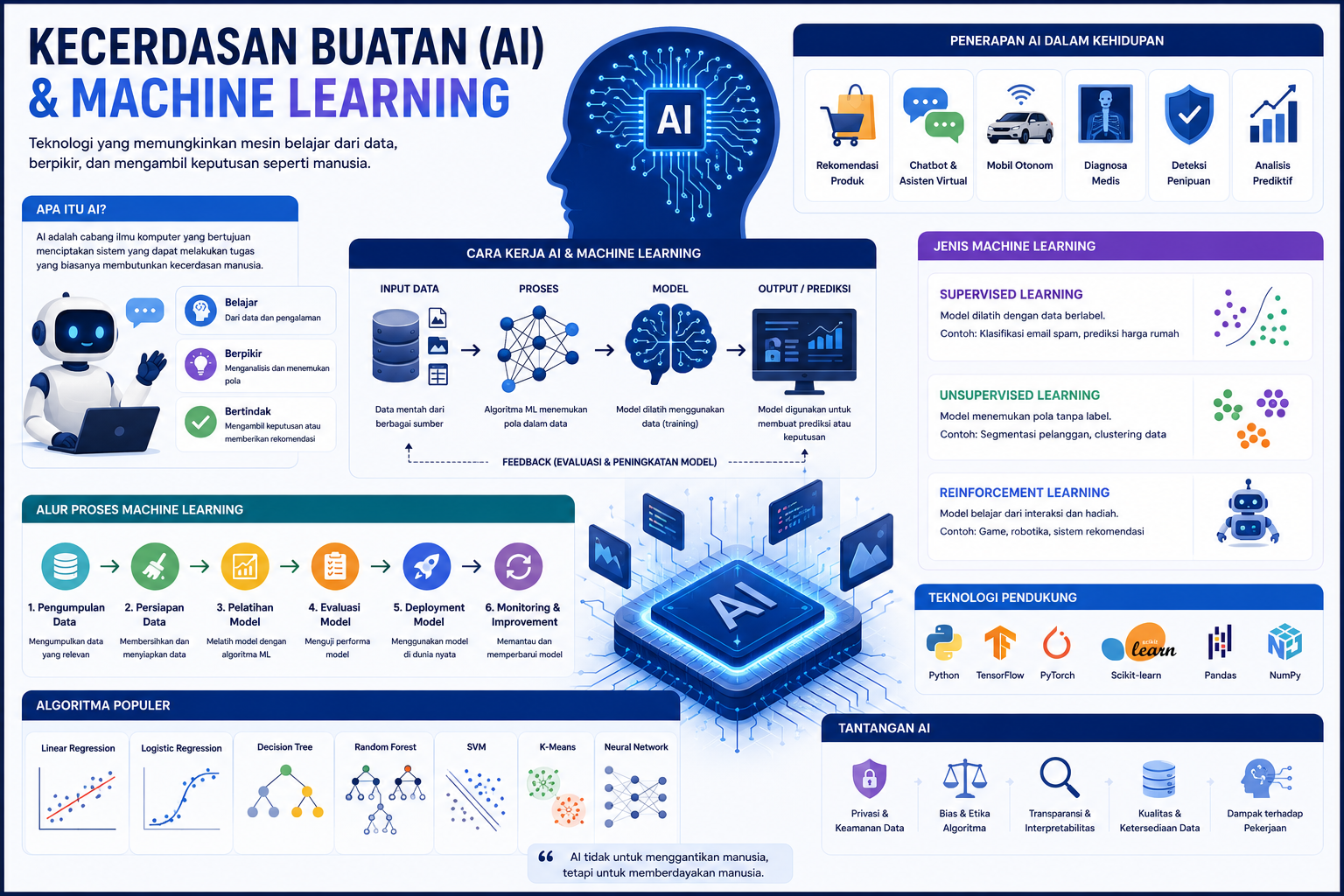
In addition to technical advances, ethical frameworks are tightening. Governments are introducing AI governance laws that mandate transparency in decision‑making algorithms, especially in high‑stakes areas like finance and healthcare. The result is a more responsible AI ecosystem where trust and accountability become as critical as performance.
2. Edge Computing & Distributed Intelligence
While cloud computing remains the backbone of data centers, the need for low‑latency, high‑bandwidth applications has propelled edge computing to the forefront. 2026 sees a proliferation of Micro‑Data Centers (MDCs)—compact, energy‑efficient facilities strategically placed near end‑users. These MDCs host AI inference engines, enabling instant processing for autonomous vehicles, smart cities, and industrial IoT.
The edge-first architecture also reduces data center loads, aligning with sustainability goals. By processing data locally, companies can cut inter‑regional bandwidth usage, lowering carbon footprints and operational costs. Notably, telecom giants are rolling out 6G‑ready edge nodes, promising sub‑millisecond latency and gigabit per second speeds.
3. Quantum Computing: From Lab to Production
Quantum computing is no longer a theoretical curiosity. 2026 marks the first commercial quantum cloud services that deliver reliable, error‑corrected qubits for specific workloads. Companies like IBM, Google, and new entrants such as Rigetti have begun offering quantum‑as‑a‑service (QaaS) platforms for optimization, cryptography, and material science simulations.
While full‑scale quantum advantage remains years away, niche applications are already yielding tangible benefits. Pharmaceutical firms use quantum algorithms to model protein folding, accelerating drug discovery. Logistics firms employ quantum optimization to solve complex routing problems in real time, cutting fuel consumption and delivery times.
4. 5G to 6G: The Next Generation of Connectivity
5G has matured into a global standard, but its limitations—such as limited spectrum and high energy consumption—are prompting the rollout of 6G prototypes. Early 2026 trials showcase Terahertz (THz) frequencies delivering multi‑terabit per second speeds, while advanced beam‑forming techniques reduce interference and improve coverage in dense urban areas.
For developers, this shift means new possibilities in immersive technologies. Virtual reality (VR) and augmented reality (AR) applications can now stream high‑definition content with minimal lag, opening doors to remote collaboration, telemedicine, and educational platforms that feel truly in‑person.
5. Sustainable Computing: Powering the Green Tech Revolution
As the world grapples with climate change, the tech industry is responding with a renewed focus on sustainability. Data centers are adopting Renewable Energy Sources (RES) and green cooling techniques such as liquid immersion and free‑air cooling. In 2026, more than 70% of major cloud providers report a net‑zero carbon footprint, thanks to a combination of renewable energy procurement and carbon offset projects.
Hardware manufacturers are also innovating. New processor designs leverage 3D‑stacked memory and low‑power architectures to reduce energy per operation. On the software side, AI‑driven power management optimizes workloads based on real‑time energy consumption metrics, ensuring that computational efficiency is not sacrificed for performance.
6. The Rise of Decentralized Finance (DeFi) and Blockchain Beyond Crypto
While cryptocurrencies have seen volatility, the underlying blockchain technology is finding robust applications in supply chain, identity verification, and smart contracts. 2026’s Interoperability Protocols allow seamless data exchange between disparate blockchains, fostering a unified ecosystem.
Financial institutions are leveraging Tokenization to digitize assets—real estate, art, and even carbon credits—making them more liquid and accessible. Regulatory clarity is improving, with frameworks such as the EU’s Digital Finance Strategy providing guidelines for secure and compliant blockchain deployments.
7. Human‑Centric Design & Inclusive Technology
Technology is increasingly being designed with inclusivity at its core. Accessibility standards now require that AI interfaces support multiple languages, sign language recognition, and adaptive UI for users with disabilities. Companies are also integrating Emotion AI to personalize user experiences while safeguarding privacy through federated learning models.
Moreover, the rise of Digital Twins allows stakeholders to simulate real‑world scenarios, enabling better decision making in urban planning, healthcare, and manufacturing. These digital replicas can be accessed by diverse teams, democratizing expertise and fostering collaboration across borders.
8. Cybersecurity: From Reactive to Proactive AI‑Driven Defense
The sophistication of cyber threats has escalated, but so has the defensive arsenal. AI is now employed to detect anomalies in real time, predicting and mitigating attacks before they materialize. Zero‑Trust Architecture (ZTA) has become the industry standard, ensuring that every access request is authenticated and verified.
Quantum‑resistant cryptography is also gaining traction. With the looming threat of quantum decryption, new protocols like Post‑Quantum Key Exchange (PQKE) are being integrated into mainstream security stacks, safeguarding data for the next decade.
9. The Future of Work: Hybrid and Remote Paradigms
2026 sees a continued shift toward hybrid work models, supported by robust collaboration tools that integrate AI, AR, and real‑time translation. Companies are adopting Digital Workspaces that blend physical offices with virtual environments, enabling seamless interaction regardless of location.
Remote work also fuels the demand for edge computing and low‑latency connectivity, as teams rely on instant data sharing and real‑time analytics. The convergence of AI, 6G, and edge nodes ensures that remote professionals experience performance parity with their on‑site counterparts.
10. The Role of Governments and Policy in Shaping Tech
Governments worldwide are playing a pivotal role in steering technology adoption. Policies around AI ethics, data sovereignty, and digital infrastructure are becoming more nuanced. For instance, the European Union’s AI Act establishes a risk‑based framework, while the United States is exploring federal investment in quantum research.
In addition, public‑private partnerships are accelerating the deployment of green technologies and digital education initiatives, ensuring that the benefits of innovation reach a broad spectrum of society.
Conclusion
From AI’s leap toward general intelligence to the sustainable evolution of data centers, 2026 is a year of convergence—where technology, policy, and human needs intersect. Understanding these trends equips stakeholders to not only adapt but to lead in a future where digital innovation is both a catalyst for progress and a responsibility toward the planet.
For a broader perspective on how these trends are shaping our future, you might also find the following articles insightful: