Unseen Threads: Decoding the Invisible Architectures Weaving Today's Technology Landscape
In a world captivated by the dazzling displays of technological innovation – from generative AI creating breathtaking art to virtual realities blurring the lines of perception – it's easy to overlook the silent, subterranean forces at play. These are the "invisible architectures," the complex, often abstract, frameworks and underlying systems that don't just support but actively sculpt the technological marvels we interact with daily. Far from being mere back-end components, these architectures represent profound shifts in how we process information, establish trust, and even define reality itself. Understanding them is key to truly grasping the latest technology news and trends.
The latest technological trends are not simply a parade of new gadgets or software updates. They are the visible manifestations of a deeper, more fundamental revolution happening at the architectural level – a re-engineering of the very fabric of our digital world. From the distributed ledgers underpinning digital finance to the neural network frameworks powering intelligent systems, these unseen threads dictate what is possible, how quickly it evolves, and its ultimate impact on society. This article delves into these hidden infrastructures, illuminating the foundational shifts that are defining our technological present and shaping our future.
The AI Paradigm Shift: Beyond Algorithms to Cognitive Architectures
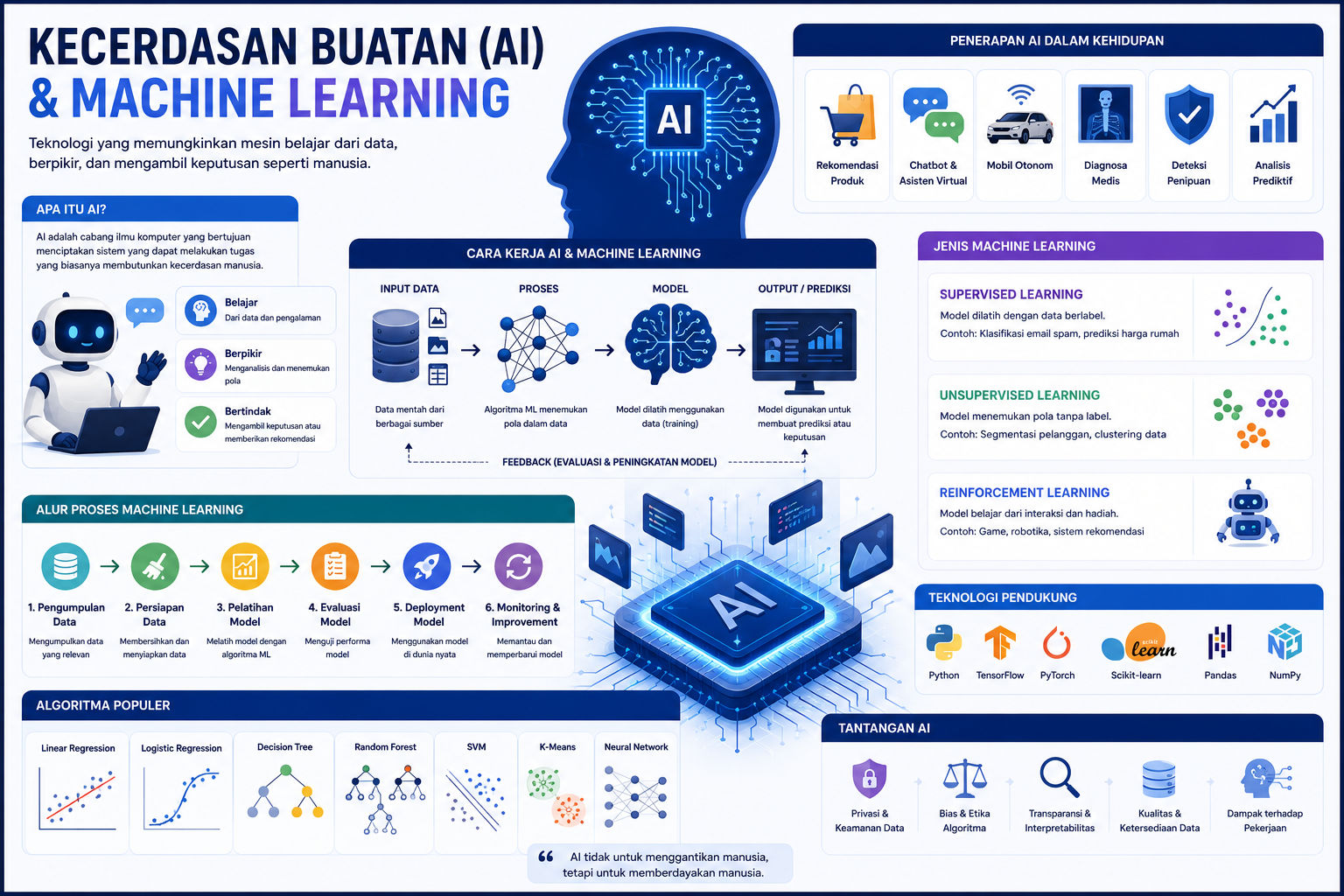
Artificial Intelligence, particularly the rise of Large Language Models (LLMs) and generative AI, is undoubtedly the most talked-about tech trend. Yet, the magic isn't solely in the algorithms themselves, but in the sophisticated cognitive architectures that enable them. These include:
- Transformer Networks: The groundbreaking architecture that revolutionized sequence-to-sequence tasks, allowing AI models to understand context and relationships within vast datasets more effectively than ever before. This architectural design is foundational to modern LLMs like GPT.
- Massive Data Pipelines: The unseen plumbing that collects, cleans, labels, and feeds petabytes of data into these models. The sheer scale and complexity of these pipelines, often involving distributed computing frameworks and advanced data governance, are critical for AI training and performance.
- Specialized Hardware Accelerators: While software gets the spotlight, dedicated hardware like GPUs (Graphics Processing Units) and TPUs (Tensor Processing Units) form the physical bedrock. Their parallel processing capabilities are an architectural necessity for the computationally intensive nature of deep learning.
- Model-as-a-Service Platforms: The architectural shift towards offering pre-trained, adaptable AI models via APIs (Application Programming Interfaces). This democratizes AI development, allowing innovators to build sophisticated applications without needing to train models from scratch, thus accelerating innovation across industries.
These architectural innovations are pushing AI beyond mere automation towards creating systems that can genuinely understand, generate, and even reason, setting the stage for truly intelligent agents that will redefine workflows and human-computer interaction.
Decentralization & Digital Economies: Architectures of Trust
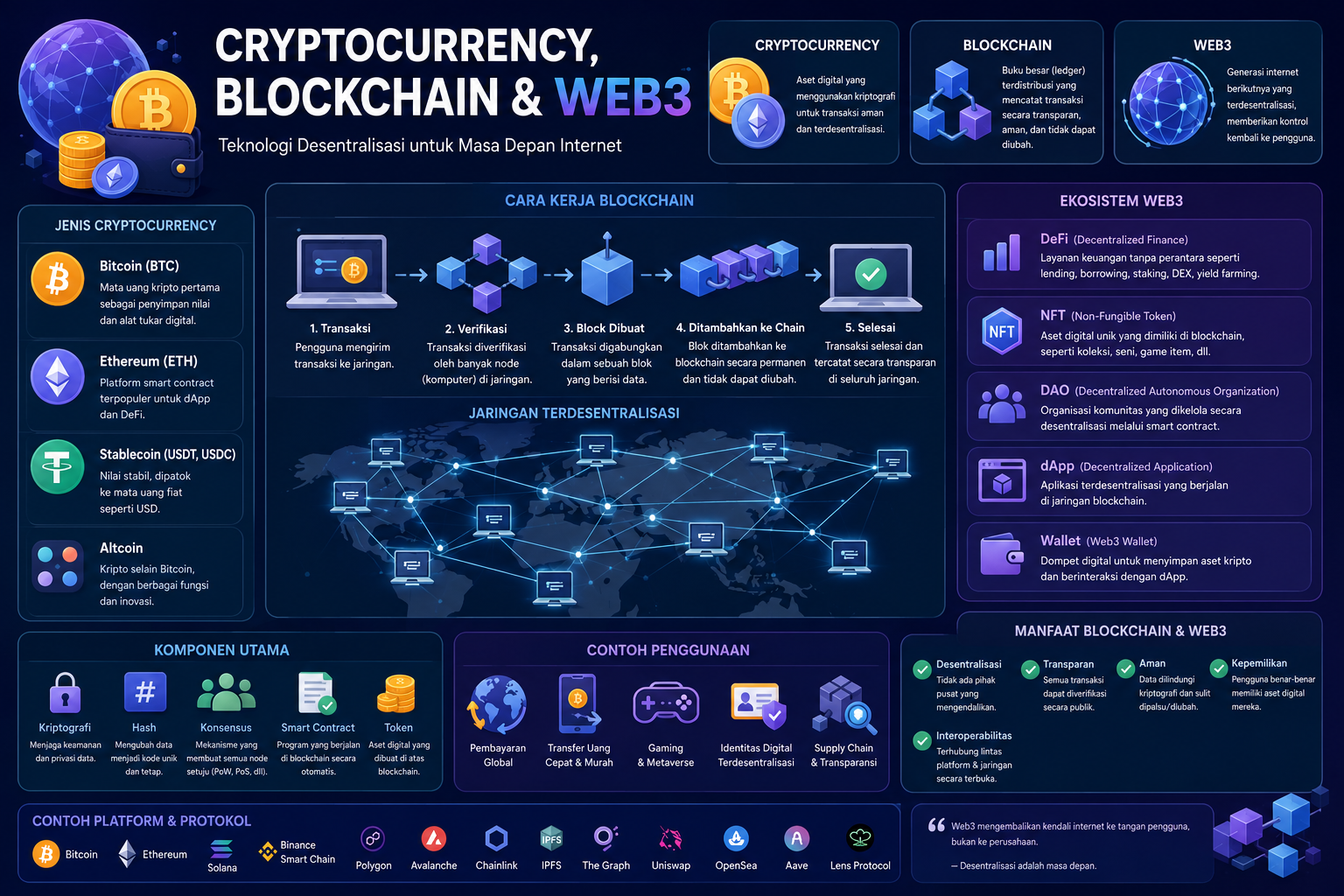
The concept of decentralization, primarily championed by blockchain technology and the broader Web3 movement, represents a profound architectural reimagining of the internet and economic systems. It's about shifting from centralized intermediaries to distributed, trustless networks.
- Distributed Ledger Technology (DLT): The core architectural innovation where transaction records are maintained across multiple nodes rather than a single central server. This distributed nature provides inherent security, transparency, and immutability, eliminating single points of failure and censorship.
- Consensus Mechanisms: Architectures like Proof-of-Work (PoW), Proof-of-Stake (PoS), and their variants are the invisible engines that ensure agreement across decentralized networks without a central authority. These mechanisms are critical for maintaining the integrity and security of the ledger.
- Smart Contract Platforms: Beyond mere cryptocurrency, smart contracts are self-executing agreements whose terms are directly written into code. Platforms like Ethereum provide the architectural infrastructure (the Ethereum Virtual Machine, EVM) for these contracts to operate, enabling decentralized applications (dApps) and complex financial instruments without intermediaries.
- Interoperability Protocols: As the decentralized ecosystem grows, architectural solutions for different blockchains to communicate and exchange value (e.g., cross-chain bridges, layer-2 solutions) are becoming crucial. These unseen protocols are vital for building a truly interconnected and scalable decentralized web.
These architectural shifts are laying the groundwork for a new digital economy built on transparency and user sovereignty, challenging traditional financial systems and data ownership models. The evolution of these invisible architectures is key to understanding the future of digital finance and the internet itself.
Edge Computing: The Architecture of Proximity
Cloud computing transformed how businesses operate, but a new architectural shift is emerging: edge computing. This involves moving computation and data storage closer to the source of data generation, at the "edge" of the network.
- Distributed Processing Networks: Instead of sending all data to a centralized cloud server for processing, edge architectures distribute computing power to local devices, IoT sensors, and local servers. This reduces latency and bandwidth usage, crucial for real-time applications.
- Microservices & Containerization: To manage complex applications across diverse edge devices, architectural patterns like microservices (breaking applications into smaller, independent services) and containerization (packaging applications with their dependencies) are vital. These allow for flexible deployment and management in highly distributed environments.
- Local AI Inference: Edge computing enables AI models to run directly on devices (e.g., smart cameras, autonomous vehicles) rather than relying on constant cloud connectivity. This architectural choice enhances privacy, security, and responsiveness for critical AI applications.
Edge computing isn't replacing the cloud but complementing it, creating a hybrid architecture that optimizes performance, security, and cost-efficiency for a burgeoning array of IoT devices and data-intensive applications.
Digital Twins & The Metaverse: Blueprints for Virtual Worlds
The concept of the Metaverse, alongside its industrial counterpart, the Digital Twin, relies on sophisticated, often invisible, architectural underpinnings to create persistent, immersive, and interactive digital environments.
- Real-time 3D Rendering Engines: The core architecture for generating and displaying complex virtual worlds. Engines like Unity and Unreal are constantly evolving to handle higher fidelity graphics, more complex physics, and dynamic lighting, all rendered in real-time.
- Persistent State Synchronization: For a Metaverse or Digital Twin to feel real and cohesive, its state must be continuously synchronized across all users and applications. This requires robust, low-latency data architectures that manage vast amounts of dynamic information about objects, environments, and user interactions.
- Interoperability Standards: A truly open Metaverse requires architectural standards for assets, identities, and experiences to move seamlessly between different virtual platforms. Initiatives focusing on open protocols for 3D content (e.g., glTF, USD) and decentralized identity are laying this foundational groundwork.
- Spatial Computing Platforms: The underlying operating systems and hardware interfaces that allow for the interaction with and manipulation of digital content within a physical space or an immersive virtual one. This includes complex sensor fusion, tracking algorithms, and low-latency display technologies.
These architectural endeavors are about building entire digital universes, complete with their own physics, economies, and social constructs, promising to redefine how we work, play, and connect in the coming decades. They are among the invisible architectures that drive tomorrow's tech revolution.
Quantum Computing: Reimagining Computation Itself
While still in its nascent stages, quantum computing represents the most radical architectural shift in information processing in generations. It doesn't just improve upon classical computation; it fundamentally redefines it.
- Qubit Architectures: Unlike classical bits, which are 0 or 1, qubits can exist in a superposition of states and be entangled. The physical realization of qubits (e.g., superconducting circuits, trapped ions, topological qubits) and their intricate control systems are the most crucial and challenging architectural elements.
- Error Correction Protocols: Qubits are highly fragile and prone to errors. Developing architectural methods for quantum error correction, which involves redundantly encoding quantum information, is essential for building fault-tolerant quantum computers.
- Quantum Algorithms: New algorithms (e.g., Shor's, Grover's) are being developed that leverage quantum phenomena to solve specific problems intractable for classical computers. These algorithms are themselves architectural blueprints for how quantum processors will manipulate information.
- Cryogenic and Vacuum Systems: Many quantum architectures require extremely cold temperatures (millikelvins) or ultra-high vacuums to maintain qubit coherence. The engineering of these support systems is an invisible, yet critical, part of the overall quantum computing architecture.
The architecture of quantum computers is about harnessing the bizarre rules of quantum mechanics to unlock computational power orders of magnitude beyond what is currently possible, promising breakthroughs in fields like medicine, materials science, and cryptography.
Societal Implications and Ethical Architectures
As these invisible architectures become more pervasive, their societal implications grow exponentially. The very structures we build—or fail to build—will determine the fairness, security, and accessibility of our digital future. This brings to light the critical need for "ethical architectures":
- Privacy-Preserving Architectures: Implementing differential privacy, homomorphic encryption, and federated learning at the architectural level to ensure data protection by design, rather than as an afterthought.
- Bias Mitigation Frameworks: Developing architectural components within AI systems to detect, measure, and mitigate algorithmic bias, ensuring equitable outcomes across diverse user groups.
- Decentralized Identity Systems: Architectures that give individuals control over their digital identities, moving away from centralized repositories that are vulnerable to breaches and censorship.
- Regulatory Compliance by Design: Embedding legal and ethical compliance requirements directly into the architectural specifications of new technologies, ensuring that innovation aligns with societal values from the outset.
These ethical considerations are not external add-ons but must be woven into the core architectural design of our digital systems. The future of technology is not just about what we can build, but how responsibly and equitably we build it, demanding a conscious architectural approach to ethics.
Conclusion: The Blueprint for Tomorrow
The latest technology news and trends are a fascinating kaleidoscope of innovation, but their true significance lies in the invisible architectures that empower them. From the foundational data pipelines of AI to the distributed ledgers of Web3, and the quantum mechanical underpinnings of future computation, these are the blueprints for tomorrow's world. Understanding these unseen threads allows us to move beyond mere observation to a deeper comprehension of the forces reshaping our digital and physical realities.
As technologists, policymakers, and citizens, our collective task is not only to marvel at the innovations but to critically engage with their underlying architectures. It is in these often-overlooked foundations that the power, pitfalls, and potential of our technological future truly reside. By decoding these invisible architectures, we gain the foresight to guide technological evolution towards a more equitable, secure, and prosperous future for all.