The Symbiotic Revolution: Unpacking the Interconnected Architectures Driving 2026's Tech Future
Introduction: Beyond the Hype – The Interconnectedness of Modern Technology
In the rapidly evolving landscape of technological innovation, it's easy to get lost in the whirlwind of buzzwords and standalone advancements. We hear about Artificial Intelligence, Blockchain, Quantum Computing, and Extended Reality as discrete phenomena, each promising to revolutionize specific facets of our lives. However, a deeper, more nuanced understanding reveals a far more intricate tapestry: a symbiotic web of technologies where individual advancements are not isolated but profoundly interconnected, each driving and being driven by others. The true revolution lies not just in what each technology can do, but in how they converge, forming complex, "invisible architectures" that underpin and propel the future. This article delves into the latest technology news and trends for 2026, offering a unique perspective on these underlying interdependencies and the profound implications they hold for our digital future.
The year 2026 marks a pivotal point where the seeds of innovation sown over the past decade are beginning to bear fruit, not as singular breakthroughs, but as integrated systems. To truly grasp the scope of this transformation, we must look beyond the surface, examining the unseen forces and reciprocal relationships that define this new era. It’s a shift from a linear progression of technology to an exponential, multidimensional evolution, where the whole is far greater than the sum of its parts.
Artificial Intelligence and Machine Learning: The Universal Enabler
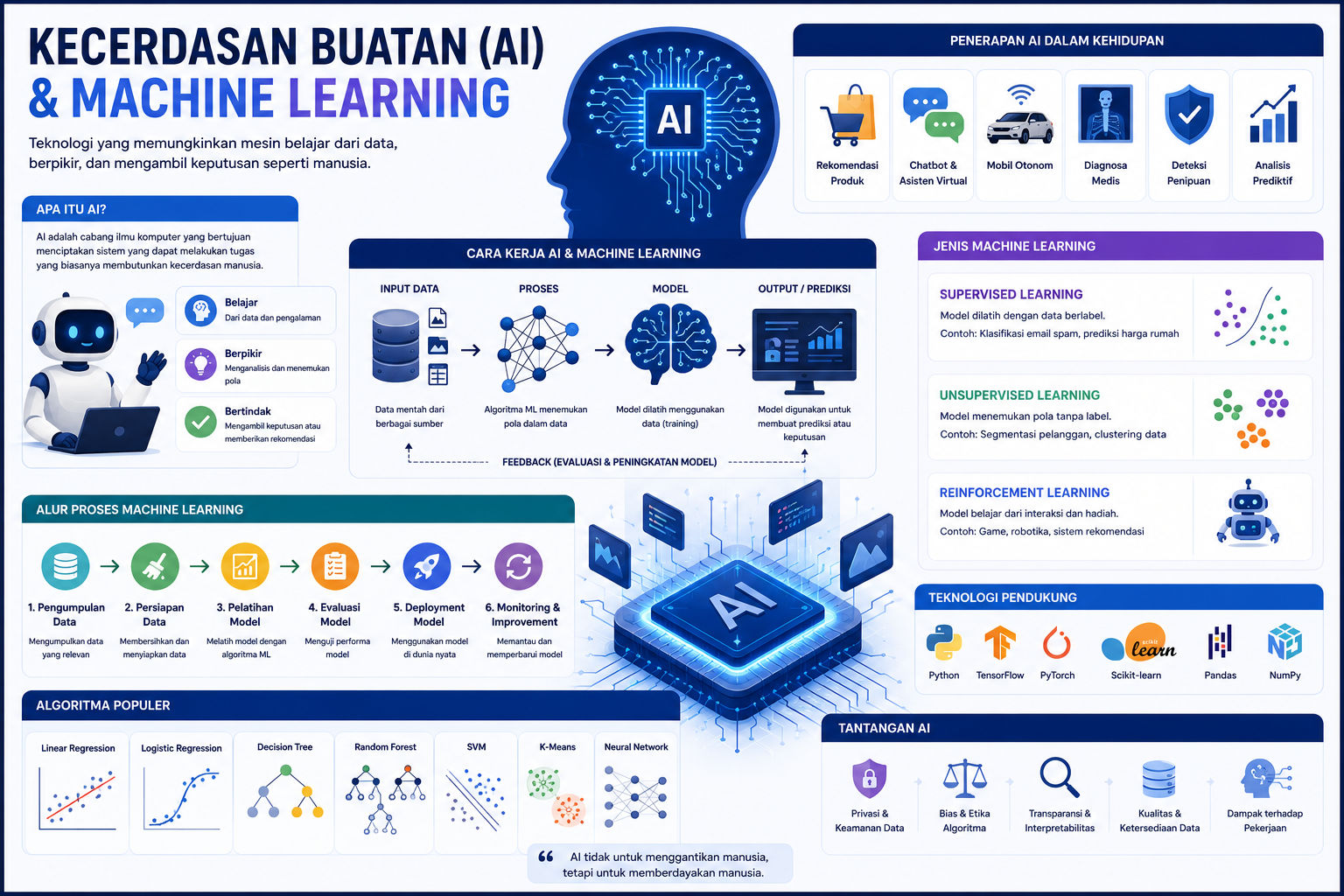
At the heart of this symbiotic revolution is Artificial Intelligence (AI) and Machine Learning (ML). Far from being just another trend, AI has solidified its position as the central nervous system of virtually every other emerging technology. In 2026, AI is no longer a futuristic concept but a pervasive utility, embedded in everything from autonomous systems and smart infrastructure to personalized healthcare and advanced scientific research.
- Generative AI Evolution: Beyond simple text generation, generative AI models are now creating hyper-realistic multimedia content, designing complex molecular structures, and even formulating advanced code with unprecedented efficiency. This capability profoundly impacts content creation, drug discovery, and software development, blurring the lines between human and machine creativity.
- Edge AI Integration: The processing power of AI is increasingly moving closer to the data source – to edge devices. This allows for real-time decision-making, reduced latency, and enhanced privacy in applications like autonomous vehicles, industrial IoT, and smart city sensors. This decentralization makes AI more robust and resilient.
- AI as an Orchestrator: AI algorithms are now sophisticated enough to manage and optimize entire technological ecosystems. They orchestrate complex cloud operations, streamline supply chain logistics, and even manage energy grids, ensuring efficiency and resilience across vast networks.
The symbiotic relationship here is clear: AI itself is enhanced by massive datasets and robust computational infrastructures (cloud, edge, and increasingly quantum), while simultaneously enhancing the capabilities and intelligence of every technology it touches. It is the invisible intelligence that learns, adapts, and optimizes, making other systems smarter and more efficient.
Quantum Computing: The Future's Unseen Architect
While still in its nascent stages, Quantum Computing stands as a foundational, albeit largely invisible system, that promises to redefine the limits of computational power. Its ability to process information in fundamentally new ways will unlock solutions to problems currently intractable for even the most powerful supercomputers. By 2026, we are witnessing significant strides in error correction and qubit stability, moving quantum computers closer to practical applications.
- AI Acceleration: Quantum algorithms are being developed to dramatically speed up machine learning tasks, particularly in complex pattern recognition, optimization problems, and the training of deep neural networks. This synergy will lead to breakthroughs in AI capabilities that are currently unimaginable.
- Drug Discovery & Materials Science: Quantum simulations can model molecular interactions with unprecedented accuracy, accelerating the discovery of new drugs, advanced materials, and sustainable energy solutions.
- Enhanced Cryptography: The very power of quantum computing necessitates the development of post-quantum cryptography, creating a new arms race in data security that will profoundly impact blockchain and secure digital transactions.
The symbiotic role of quantum computing is that it doesn't just perform tasks; it fundamentally changes the *nature* of what computing can achieve, creating a new bedrock for AI, cybersecurity, and scientific discovery.
Extended Reality (XR) & Spatial Computing: Blurring Digital and Physical Worlds
Extended Reality, encompassing Virtual Reality (VR), Augmented Reality (AR), and Mixed Reality (MR), is evolving beyond niche entertainment into a powerful platform for spatial computing. This involves digital content interacting seamlessly with the physical world, creating immersive and intuitive user experiences. By 2026, advanced optics, haptic feedback, and sophisticated AI are converging to make XR more pervasive and practical.
- AI-Powered Immersion: AI enhances XR by creating more intelligent virtual agents, dynamic environments that react to user input, and personalized experiences based on user behavior and biometric data. It also aids in real-time object recognition and environmental mapping for AR applications.
- 5G/6G & Edge Computing: The low latency and high bandwidth of 5G (and the emerging 6G) are critical for delivering seamless, high-fidelity XR experiences without lag. Edge computing further reduces latency by processing data closer to the user, enabling truly real-time interaction in complex virtual spaces.
- Digital Twins & Metaverse Applications: XR is the interface for interacting with "digital twins" – virtual replicas of physical assets – used in manufacturing, urban planning, and healthcare. It's also a key component of the evolving metaverse, providing immersive social and economic interactions.
XR's symbiosis lies in its reliance on high-speed infrastructure and AI to deliver its promise, while in turn providing new, intuitive interfaces for human-computer interaction that drive demand for these underlying technologies.
Blockchain & Web3: Reshaping Trust and Ownership
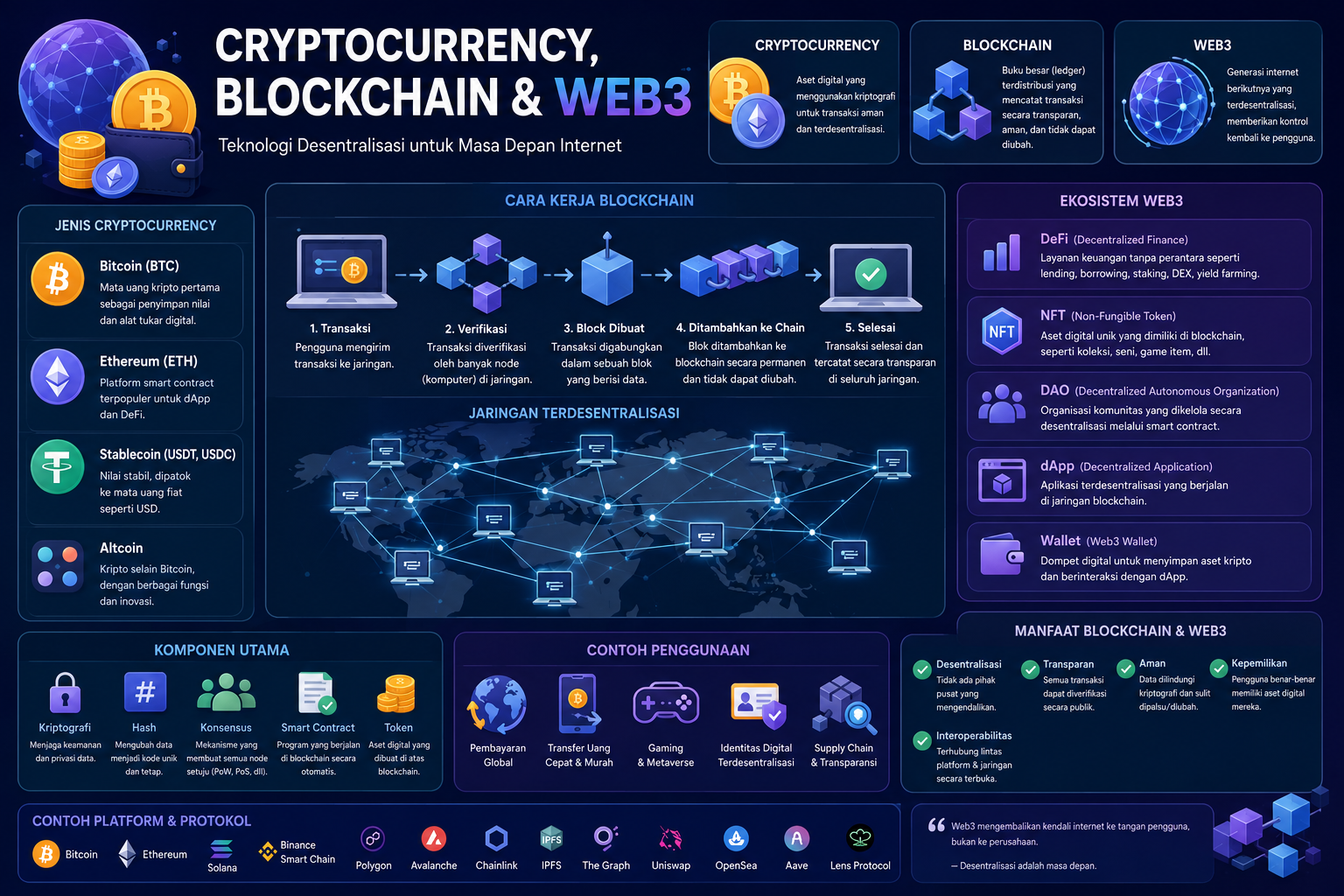
Beyond the volatile world of cryptocurrencies, Blockchain technology, and the broader concept of Web3, continue to mature into a powerful framework for decentralized trust, verifiable ownership, and transparent operations. In 2026, its applications are expanding significantly, moving into enterprise solutions and national digital infrastructures.
- Decentralized Identity & Data Ownership: Blockchain is foundational for self-sovereign identity solutions, allowing individuals to control their personal data and digital identities, moving away from centralized authorities. This is critical for privacy and security in an increasingly digital world.
- Supply Chain Transparency: Companies are leveraging blockchain for immutable record-keeping to track products from origin to consumer, ensuring authenticity, ethical sourcing, and efficient recalls. This creates unprecedented transparency and accountability.
- Tokenization of Real-World Assets: Real estate, art, and intellectual property are being tokenized on blockchain, making them more liquid, fractionalizable, and accessible for investment and transfer.
Blockchain's symbiotic role is its ability to provide a secure, transparent, and immutable layer of trust, which is increasingly essential as other technologies generate vast amounts of data and foster new forms of digital ownership. Its security models are often reinforced by advanced cryptographic techniques, which in turn could be influenced by future quantum advancements, highlighting the symbiotic web of technologies at play.
Sustainable Technology & Green AI: The Ethical Imperative
As technology permeates every aspect of society, its environmental footprint has become a critical concern. In 2026, sustainable technology and "Green AI" are no longer optional but an ethical and economic imperative. This trend is deeply interconnected with how we design, power, and utilize all other technologies.
- Energy-Efficient Hardware: Innovations in chip architecture, materials science, and cooling systems are reducing the energy consumption of data centers and edge devices.
- AI for Sustainability: AI is being deployed to optimize energy grids, predict climate patterns, manage waste, and improve agricultural efficiency. It helps identify inefficiencies and propose solutions for a greener future.
- Circular Economy Principles: Tech companies are adopting circular economy models, focusing on repairability, recyclability, and reducing electronic waste throughout the product lifecycle.
The symbiotic relationship here is two-fold: technology must become more sustainable to mitigate its impact, and in turn, technology (especially AI) is a powerful tool for achieving broader environmental sustainability goals.
The Invisible Infrastructure: 5G/6G, Edge Computing, and Cloud Networks
Underpinning all these advancements is a robust and increasingly sophisticated digital infrastructure. The rollout of 5G continues globally, with 6G research accelerating, promising even faster speeds and lower latencies. This, coupled with the continued expansion of edge computing and resilient cloud networks, forms the silent, powerful backbone of the symbiotic revolution.
- Hyper-Connectivity: 5G enables massive IoT deployments and real-time communication essential for autonomous systems, smart cities, and enhanced XR experiences. 6G promises to take this further, enabling truly ubiquitous intelligence.
- Distributed Processing: Edge computing brings processing power closer to the data source, reducing the reliance on central cloud servers for immediate decisions, crucial for sensitive applications like self-driving cars and critical infrastructure monitoring.
- Cloud-Edge-Quantum Continuum: The future is a seamless continuum where data flows intelligently between edge devices, robust cloud platforms, and specialized quantum computing resources, optimized by AI for efficiency and performance.
This infrastructure is inherently symbiotic; each component enhances the capabilities of the others, and together they provide the essential platform upon which all other technological trends can flourish.
Conclusion: Navigating the Converging Currents of Innovation
The technology landscape of 2026 is not a collection of isolated islands of innovation, but rather a vast, interconnected archipelago, where currents of AI, quantum computing, XR, blockchain, and sustainable tech flow into and reinforce each other. The true power and disruptive potential lie in their convergence, creating complex, "invisible architectures" that are transforming industries, economies, and societies on a global scale. Understanding these symbiotic relationships is crucial not only for technologists and business leaders but for anyone seeking to navigate the future effectively. As we move deeper into this era, the most impactful innovations will emerge from the thoughtful integration and harmonious interplay of these diverse technological forces, shaping a future that is more intelligent, immersive, and interconnected than ever before.