The Hidden Architecture: Why the Most Important Tech Trends of 2026 Are the Ones You Can't See
Every year, the technology world bombards us with headlines about revolutionary gadgets, flashy new applications, and groundbreaking software releases. We hear about the latest smartphone cameras, the fastest processors, and the most immersive virtual reality headsets. Yet, beneath this surface-level noise of consumer-facing innovation lies a far more consequential reality: the most transformative technology trends of 2026 are not the ones you can see, touch, or download from an app store. They are the invisible architectures — the foundational systems, protocols, and infrastructures — that quietly orchestrate the digital world around us.
This article takes you beyond the hype cycle to explore the unseen forces shaping our technological future. These are the developments that will redefine industries, reshape economies, and fundamentally alter how society functions — and most people have never heard of them.
The Myth of Visible Innovation
Our understanding of technological progress is heavily biased toward visibility. We celebrate the product launch, the sleek design, the user interface that makes our lives easier. But this is like judging an iceberg by its tip. The true mass — and the true danger and opportunity — lies beneath the waterline.
Consider this: when you tap your phone to pay for coffee, you see a simple transaction. What you do not see is a sprawling, multi-layered infrastructure involving tokenization protocols, real-time fraud detection algorithms running across distributed cloud networks, cross-border settlement systems, and compliance engines that simultaneously check your transaction against dozens of regulatory frameworks in milliseconds. The visible act takes one second. The invisible architecture powering it represents decades of accumulated engineering, negotiation, and standardization.
This pattern repeats across every domain of modern technology. The trend in 2026 is not any single visible product. It is the deepening, hardening, and quiet expansion of the invisible systems underneath.
Autonomous AI Infrastructure: The Rise of Self-Evolving Systems
Artificial intelligence has been the dominant technology narrative for several years, but the conversation in 2026 has shifted dramatically. The question is no longer "What can AI do?" The question now is: "What infrastructure allows AI to operate autonomously, reliably, and at scale without constant human oversight?"
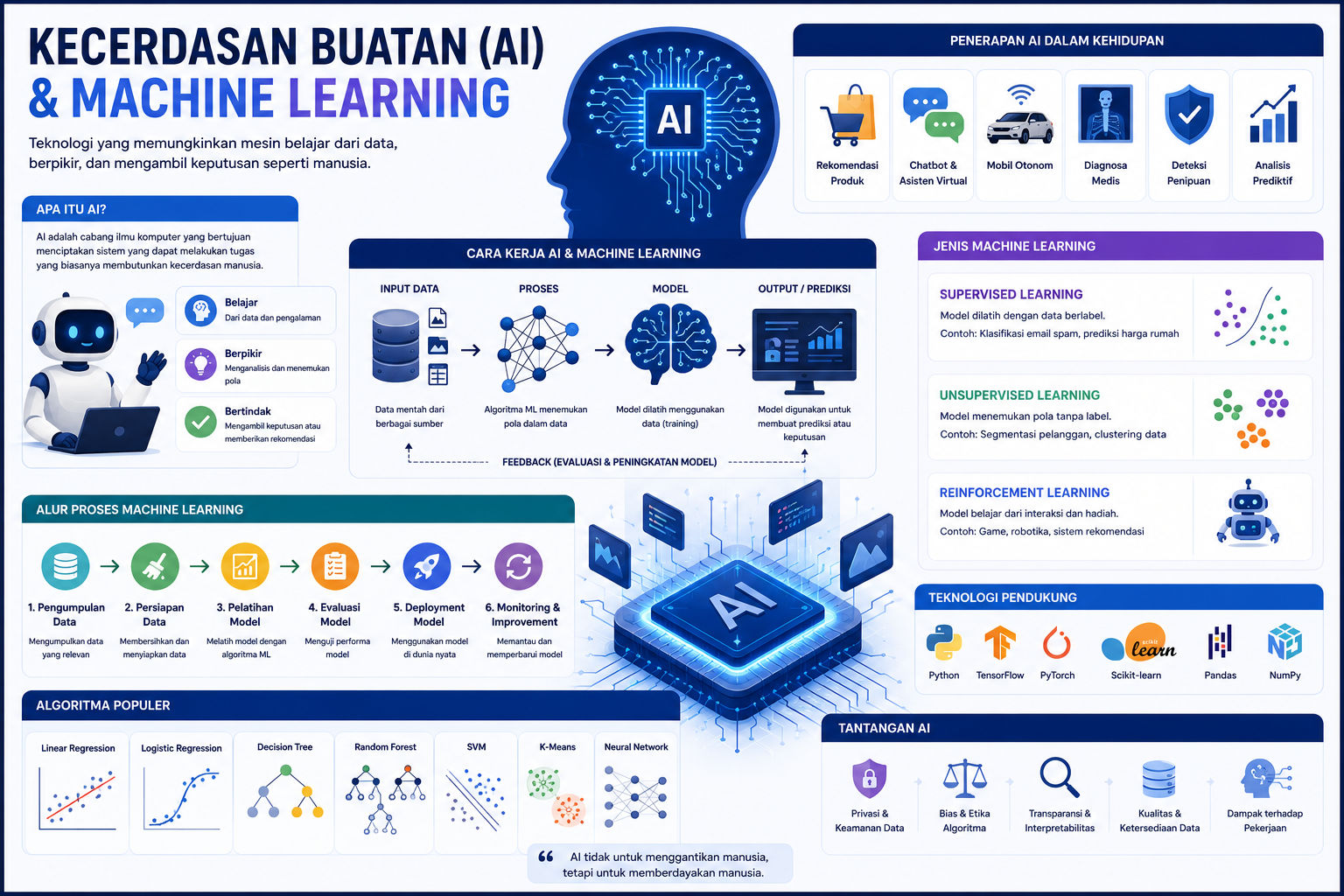
The latest developments in autonomous AI infrastructure focus on what researchers call "self-evolving model orchestration." This refers to systems where AI models do not just perform tasks but actively monitor their own performance, identify degradation, retrain on new data pipelines, and deploy updated versions — all without human intervention. Companies building these systems are not selling AI as a product. They are selling the invisible machinery that keeps AI running in production environments across thousands of servers.
Equally significant is the emergence of AI-to-AI communication protocols. As organizations deploy dozens or even hundreds of specialized AI models — one for customer service, another for supply chain optimization, a third for financial forecasting — these models need to talk to each other. The invisible trend here is the development of standardized inter-AI communication frameworks that allow models trained on different architectures, by different teams, to share insights and coordinate actions seamlessly.
This is not a consumer product. It will never appear on a keynote stage. But it is the backbone upon which the entire AI economy is being built. For a deeper exploration of how interconnected systems are reshaping our technological future, see our analysis on how interconnected technologies are redefining our future.
The Silent Revolution in Digital Finance Infrastructure
While cryptocurrency markets grab headlines with their volatility, the real revolution in digital finance is happening in the plumbing. Central Bank Digital Currencies (CBDCs) are now operational in over 130 countries at various stages of development. But the truly transformative trend is not the currencies themselves — it is the entirely new financial infrastructure being built to support them.

Traditional financial infrastructure was built over decades, layer upon layer, like geological strata. SWIFT messaging, ACH networks, clearing houses, correspondent banking relationships — each layer added complexity, latency, and cost. The new digital finance infrastructure being built in 2026 is different. It is being designed from scratch as a unified, programmable system.
Programmable money — currency that carries embedded logic about how, when, and by whom it can be spent — requires an entirely new transaction processing architecture. This includes real-time compliance verification, automated tax calculation and remittance at the point of transaction, and conditional payment releases triggered by smart contract events. None of this is visible to the end user. All of it represents a fundamental reimagining of how money moves.
Cross-border payment systems are perhaps the most dramatic example. The traditional correspondent banking model involves multiple intermediaries, each adding time and cost. The new infrastructure uses atomic settlement protocols — systems where the transfer of assets and the transfer of payment happen simultaneously, eliminating settlement risk entirely. This is not a new app on your phone. It is a new foundation beneath the entire global financial system.
Edge Computing and the Disappearing Cloud
For the past decade, the dominant paradigm in computing has been centralization: send data to the cloud, process it in massive data centers, and return results to the user. In 2026, this paradigm is quietly reversing. The trend is not toward bigger data centers. It is toward making the cloud itself disappear — distributing computing power so widely that the concept of "the cloud" as a distinct location becomes meaningless.
Edge computing has evolved far beyond its original concept of simply placing servers closer to users. The current frontier is "ambient computing fabric" — a continuous, seamless computing layer that spans from micro-sensors in industrial equipment to regional micro-data centers to hyperscale cloud facilities. Applications do not run in "the cloud" or "the edge." They run across a fluid, adaptive fabric that automatically places computation wherever it is most efficient at any given moment.
This has profound implications for latency-sensitive applications. Autonomous vehicles cannot wait for a round trip to a distant data center. Remote surgical systems cannot tolerate unpredictable delays. Smart factory robots need real-time coordination that only localized, ultra-low-latency computing can provide. The invisible trend is the standardization of the orchestration layer that manages this fluid computing environment — the software that decides, in real time, where each computation should occur.
Zero-Trust Security Architecture: Trust Is No Longer a Location
The traditional model of cybersecurity was based on the concept of a trusted perimeter. If you were inside the network, you were trusted. If you were outside, you were blocked. This model has been eroding for years, but 2026 marks the point where it officially dies.
Zero-trust architecture operates on a fundamentally different principle: trust is never assumed, regardless of where a user or device is located. Every access request is verified, every transaction is authenticated, and every data flow is encrypted and logged. But the invisible trend in 2026 is not the adoption of zero-trust principles — it is the development of the infrastructure that makes zero-trust practical at scale.
Implementing true zero-trust across a large organization with thousands of applications, millions of devices, and complex supply chain relationships requires an enormous amount of behind-the-scenes infrastructure. Continuous identity verification engines, real-time behavioral analysis systems, automated policy enforcement points, and encrypted micro-segmentation of network traffic — all of this must operate invisibly, without creating friction for legitimate users.
The companies leading this trend are not selling you a security product you can install. They are building the invisible verification layer that sits between every user, every device, and every resource in the digital ecosystem.
Quantum-Resistant Cryptography: Preparing for a Threat That Doesn't Exist Yet
Perhaps the most fascinating invisible trend of 2026 is the massive, coordinated effort to upgrade the world's cryptographic infrastructure before quantum computers become powerful enough to break it. This is a technology trend defined by a threat that has not yet materialized — and that makes it both critically important and almost entirely invisible to the public.
Current encryption standards — the algorithms that protect everything from banking transactions to government communications to your private messages — rely on mathematical problems that are extremely difficult for classical computers to solve. Quantum computers, using principles of quantum mechanics, could solve these problems in hours or minutes. The timeline for this capability is uncertain, but most experts estimate it within the next 10 to 15 years.
The invisible infrastructure being built now is the migration to post-quantum cryptographic algorithms — new mathematical approaches that are resistant to both classical and quantum attacks. This is not a simple software update. It requires replacing cryptographic libraries in billions of devices, updating protocols that underpin the entire internet, and ensuring backward compatibility with systems that cannot be easily upgraded. It is one of the largest infrastructure projects in the history of computing, and almost no one outside the cybersecurity community is talking about it.
The Standardization Wars: The Invisible Battle for Control
Behind every major technology trend, there is a battle that consumers never see: the fight over standards. Standards determine how systems interoperate, who controls key interfaces, and where economic value accumulates. In 2026, this battle is intensifying across every domain.
In AI, the question is which model communication protocols will become the default. In digital finance, it is which settlement layers will underpin cross-border transactions. In IoT, it is which device communication standards will enable the next generation of smart infrastructure. The companies and consortia that win these standardization battles will shape the technology landscape for decades — not because they build the best product, but because they control the invisible rules that everyone else must follow.
This is why some of the most consequential technology news in 2026 is not about product launches at all. It is about consortium formations, standards body votes, and interoperability agreements that sound boring on the surface but carry enormous strategic weight. For a comprehensive look at the driving forces behind these trends, explore our deep dive into the invisible architectures driving technology trends.
Why This Matters: The Responsibility of Understanding
The invisibility of these systems is not accidental. It is a feature, not a bug. Invisible infrastructure is easier to build, easier to standardize, and easier to control. It does not require consumer buy-in or public understanding. It simply needs to work.
But this invisibility carries risk. When the systems that govern our financial transactions, protect our data, coordinate our AI models, and secure our communications are invisible, they become difficult to scrutinize, regulate, and hold accountable. The most important technology trends of 2026 are not just engineering challenges. They are governance challenges.
Understanding that the real action is happening beneath the surface is the first step toward meaningful engagement with our technological future. The next time you read about a shiny new gadget or a breakthrough application, ask yourself: what invisible architecture makes this possible? Who built it? Who controls it? And what happens when it fails?
These are the questions that will define the next decade of technology — not the ones on the stage, but the ones in the infrastructure. The future is not just being built. It is being buried. And it is time we started digging.