The Silent Shift: How Invisible Infrastructure is Redefining the 2026 Tech Landscape
When we talk about current tech news and trends, the spotlight usually falls on the most visible innovations: the flashiest new smartphones, the most conversational AI chatbots, or the sleekest electric vehicles. However, the most profound technological revolution of 2026 is not happening on our screens; it is happening beneath them. We are entering the era of "invisible infrastructure"—a silent shift where the foundational layers of our digital ecosystem are being completely rewritten without the average user even noticing.
The Concept of Invisible Infrastructure
Invisible infrastructure refers to the backend architectures, protocols, and data-routing mechanisms that make our digital experiences seamless. In the past, technological progress was defined by what we could see and interact with. Today, progress is measured by what disappears. The ultimate goal of modern engineering is to remove friction entirely, making complex technological feats feel as natural as breathing. This paradigm shift is the true driver behind the latest technology trends, where the underlying complexity is hidden to deliver unparalleled user simplicity.
The Decentralized Backbone: Beyond the Cryptocurrency Hype
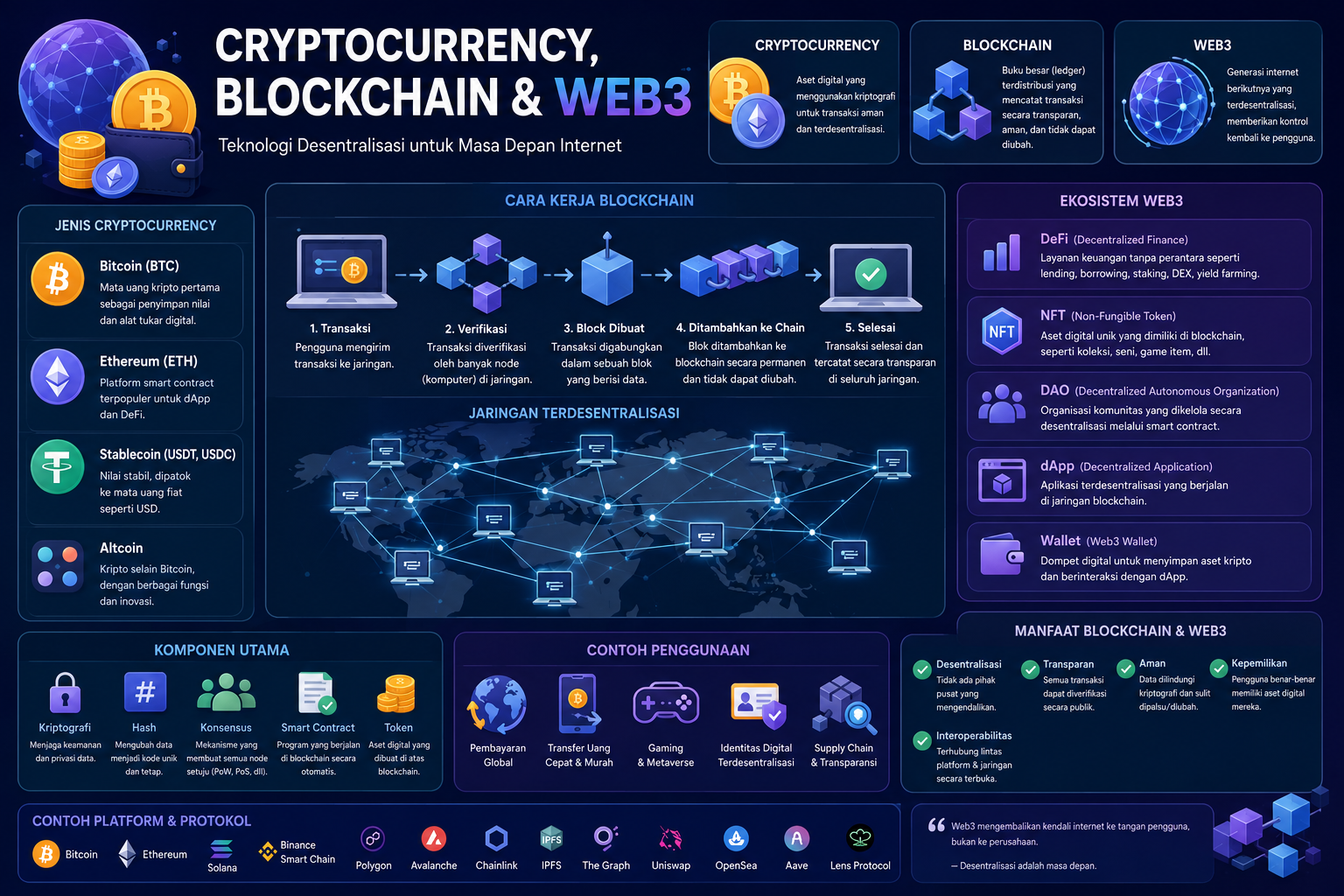
While the mainstream media often reduces blockchain to cryptocurrency speculation, the true technological trend lies in its application as an invisible infrastructure. In 2026, we are witnessing the maturation of Web3 protocols not as consumer-facing apps, but as enterprise-grade backend solutions. Decentralized compute networks, zero-knowledge proofs, and layer-3 scaling solutions are now quietly powering traditional financial systems, supply chain logistics, and even identity verification systems.
When you authenticate a payment or verify your credentials online in seconds, you are likely interacting with a cryptographic proof running on a decentralized network without ever seeing a crypto wallet. This silent integration is what makes the current era of digital finance so transformative. The infrastructure ensures security, transparency, and immutability, while the user interface remains as familiar as a traditional banking app.
AI at the Edge: The Disappearance of the Cloud
For the last decade, "The Cloud" has been the central buzzword in technology. However, the current tech news cycle is quietly being dominated by a massive architectural migration: Edge AI. As artificial intelligence models become more efficient—specifically through the development of Small Language Models (SLMs) and micro-models—the need to send every request to a massive centralized data center is vanishing.
Instead, AI is moving directly to the "edge"—onto our smartphones, laptops, IoT devices, and even our cars. This invisible shift drastically reduces latency, enhances privacy, and ensures functionality even when internet connectivity is spotty. When your phone seamlessly translates a menu in real-time or your smart home system predicts your routine without pinging an external server, you are experiencing Edge AI. The cloud hasn't disappeared, but its role is shifting from a processing hub to a training and synchronization repository. The processing itself has become an invisible, localized phenomenon.
Zero-Trust Architecture: The Unseen Security Perimeter
As digital ecosystems become more distributed, the traditional concept of a network perimeter has effectively died. The latest technology trends in cybersecurity are defined by Zero-Trust Architecture (ZTA), a model where trust is never assumed, and verification is required from everyone and everything trying to access resources, regardless of whether they are sitting inside or outside the corporate network.
For the end-user, this infrastructure is entirely invisible, yet it fundamentally alters how data is protected. Micro-segmentation, continuous authentication, and dynamic policy enforcement happen in milliseconds in the background. You don't see the hundreds of cryptographic checks validating your session as you navigate a corporate portal, but they are the silent guardians of the modern digital economy. This hidden layer of relentless verification is what allows us to work from anywhere in the world without bringing entire organizations to a halt through a single breached password.
The Ambient Internet of Things (AIoT)
We have moved from the Internet of Things (IoT) to the Ambient Internet of Things (AIoT). Previously, IoT required active sensors, powered devices, and deliberate data transmission. Today, the trend is toward ambient intelligence—environments that are aware and responsive without explicit commands. This is driven by ultra-low-power sensors, energy-harvesting devices, and ambient backscatter communication techniques that allow devices to transmit data by reflecting existing radio frequencies (like Wi-Fi or cellular signals) without needing a battery.
In modern smart buildings, thousands of these invisible sensors monitor structural integrity, energy usage, and spatial occupancy. They communicate in the background, optimizing HVAC systems and lighting based on real-time presence without a human ever touching a thermostat. This ambient layer of data collection and automated response is a prime example of how invisible infrastructure is quietly changing the rules of the future, creating spaces that adapt to us rather than forcing us to adapt to them.
The Convergence: Why the Invisible Matters
The true power of these current tech trends lies in their convergence. Edge AI processes data locally, Zero-Trust secures the localized data flow, Web3 provides a decentralized and immutable ledger for verification, and AIoT acts as the sensory network. Together, they form a cohesive, invisible digital nervous system.
Consider the logistics industry: an ambient sensor on a shipping container detects a temperature change (AIoT). A localized AI model immediately analyzes if this change breaches safety protocols (Edge AI). If it does, a cryptographic proof of the breach is generated and logged immutably for all stakeholders to see without revealing proprietary data (Web3/Zero-Knowledge Proofs), while Zero-Trust protocols ensure only authorized parties are alerted. The entire sequence happens in milliseconds, autonomously, and entirely out of sight. This is the reality of modern digital finance and global trade.
Challenges in the Unseen Layers
However, the shift toward invisible infrastructure is not without its perils. When technology becomes invisible, it becomes harder to audit, regulate, and understand. The opacity of algorithmic decision-making at the edge, the regulatory gray areas of decentralized networks, and the potential for systemic failures in hyper-connected ambient systems pose significant challenges. If we do not understand the infrastructure supporting our society, we cannot effectively govern it or intervene when things go wrong.
Therefore, the mandate for technologists, policymakers, and digital citizens in 2026 is to develop "X-ray vision" for digital systems. We must cultivate an understanding of the underlying protocols that govern our lives, ensuring that what is invisible is not also unaccountable.
Conclusion: Embracing the Unseen
The most significant current tech news and trends are no longer defined by the devices we hold in our hands, but by the invisible matrices of code, cryptography, and connectivity that surround us. As we continue to build out this invisible infrastructure, our digital experiences will become increasingly frictionless, intuitive, and ambient. The revolution will not be televised, nor will it be displayed on a bright screen; it will be the quiet hum of a world that simply works. To stay ahead in this rapidly evolving landscape, one must look past the surface and understand the hidden architectures shaping our digital future.