Beyond the Buzz: Unveiling the Invisible Architectures Driving Today's Tech Trends
In a world saturated with headlines about the latest technological marvels, it’s easy to get swept up in the surface-level excitement of new gadgets, viral apps, and groundbreaking AI models. Yet, to truly comprehend the profound shifts occurring in our digital landscape, we must look beyond the immediate spectacle. The most significant advancements often lie not in the visible interface but in the intricate, often invisible architectures that form the very foundation of our digital revolution. These are the hidden forces – the algorithms, data structures, network protocols, and ethical frameworks – that quietly shape how technology evolves, functions, and ultimately impacts our lives. This article delves into the current technology news and trends, not just reporting on what’s new, but uncovering the underlying structures that truly matter.
The pace of technological change is relentless, but its direction is often guided by fundamental shifts in how we design, deploy, and interact with digital systems. From the burgeoning sophistication of Artificial Intelligence to the quiet maturation of Web3, and the foundational advancements in sustainable computing, the real story is in the scaffolding. By understanding these unseen frameworks, we can gain a deeper appreciation for the resilience, potential, and challenges embedded within the fabric of our future.
The AI Renaissance: More Than Just Models
Artificial Intelligence continues to dominate tech headlines, with Generative AI and Large Language Models (LLMs) like GPT-4 and its successors pushing the boundaries of what machines can create and understand. Beyond their impressive linguistic and creative capabilities, the true revolution lies in the evolving architectures that empower them.
- Data Pipelines and Infrastructure: The sheer volume and variety of data required to train these models necessitate robust, scalable data pipelines. The invisible architecture here involves distributed storage systems, efficient data labeling processes, and high-bandwidth networking that can feed petabytes of information to supercomputing clusters.
- Computational Infrastructure (GPUs and Beyond): The power behind AI isn't just software; it's hardware. Graphics Processing Units (GPUs) are the workhorses, but custom AI accelerators (TPUs, NPUs) are becoming increasingly vital. These specialized chips represent a hidden layer of innovation, optimizing parallel processing for neural networks.
- Algorithmic Advancements: Transformer architectures, diffusion models, and reinforcement learning algorithms are the mathematical blueprints. Their ongoing refinement, coupled with techniques like sparse attention and parameter-efficient fine-tuning, allows models to achieve more with less computational overhead, making AI more accessible and efficient.
- Ethical AI Frameworks: As AI becomes more pervasive, the architectural layer of ethical considerations – fairness, transparency, accountability, and privacy-preserving AI (e.g., federated learning, differential privacy) – is becoming critical. These are not merely guidelines but embedded design principles that shape how AI systems are built and interact with society.
Web3's Quiet Evolution: From Speculation to Substructure
While the speculative fervor around cryptocurrencies and NFTs has cooled, the underlying principles of Web3 – decentralization, transparency, and user ownership – continue to drive significant, albeit less flashy, developments. The focus is shifting from quick gains to building robust, functional infrastructure.
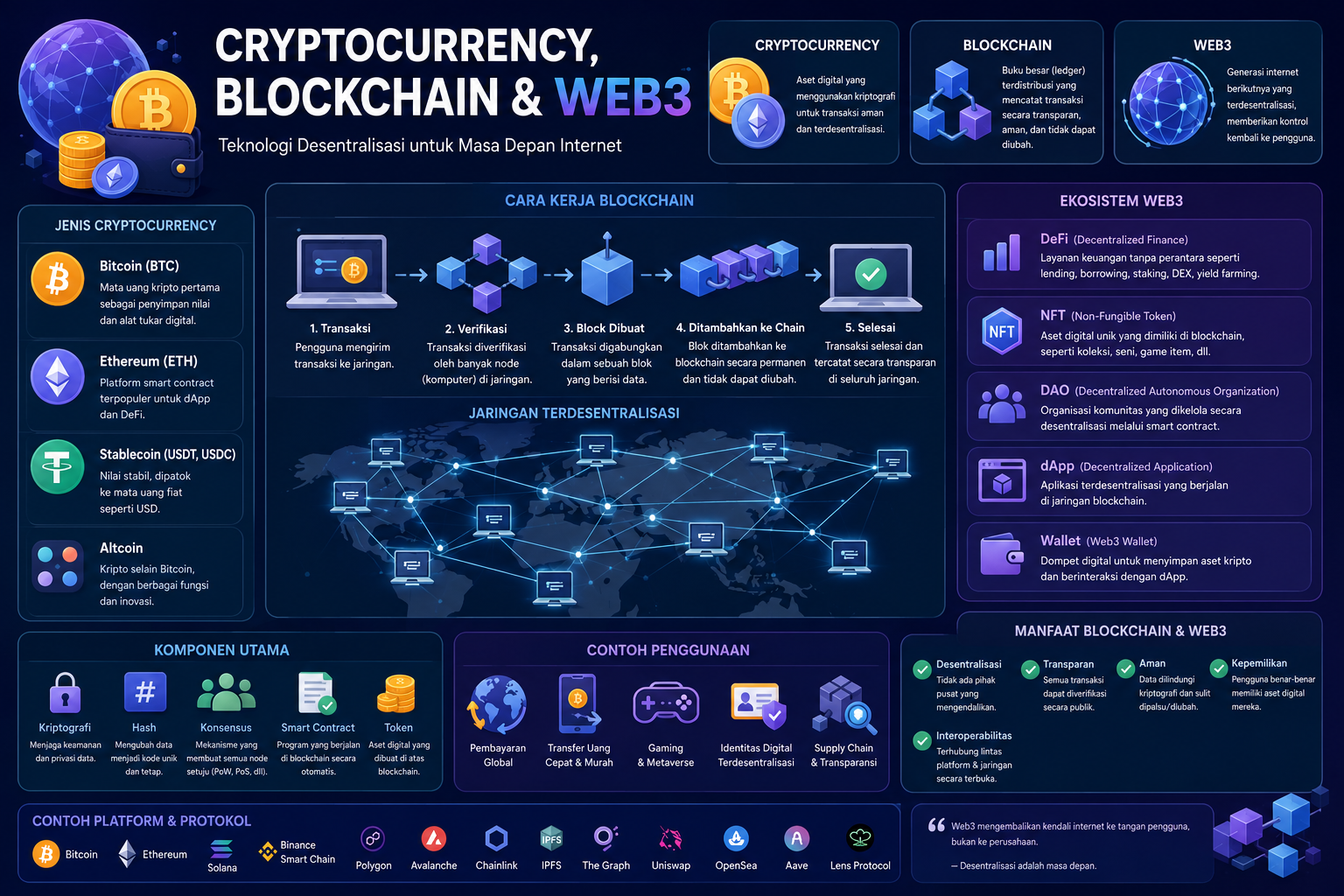
- Consensus Mechanisms and Scalability Solutions: Beyond Proof-of-Work, new consensus mechanisms like Proof-of-Stake and delegated Proof-of-Stake are creating more energy-efficient and scalable blockchain architectures. Layer-2 solutions (rollups, sidechains) are further enhancing transaction throughput, moving the core innovation into how these networks can handle enterprise-level demands without compromising security or decentralization.
- Interoperability Protocols: The vision of a truly decentralized web requires seamless communication between different blockchains. Protocols like Polkadot's parachains, Cosmos's IBC, and various cross-chain bridges are building the connective tissue, forming an underlying network of networks that allows assets and data to flow freely.
- Decentralized Identity (DID): True user ownership extends to identity. DID frameworks are emerging as a critical architectural component, allowing individuals to control their digital identities without reliance on centralized authorities, fostering greater privacy and security in online interactions.
- Smart Contract Security and Auditing: The integrity of Web3 hinges on the reliability of smart contracts. The architectural focus here is on formal verification, robust auditing tools, and community-driven security practices to prevent vulnerabilities and ensure the immutability of digital agreements. These foundational elements are essential for fostering trust and adoption in this evolving digital frontier. Indeed, a deeper understanding of the hidden architectures that shape tech trends is vital to grasp the true potential of Web3.
Quantum Computing: The Dawn of a New Paradigm
Still largely experimental, quantum computing continues to make incremental but significant progress. Its invisible architecture is fundamentally different from classical computing, operating on principles that challenge our intuitive understanding of information processing.
- Qubits and Entanglement: The core architectural unit is the qubit, which can exist in multiple states simultaneously (superposition). Entanglement, a unique quantum phenomenon, allows qubits to be linked in such a way that the state of one instantly influences another, regardless of distance. These are the building blocks for quantum algorithms.
- Cryogenic Systems and Error Correction: Maintaining the delicate quantum states of qubits requires extreme cold (near absolute zero) and sophisticated isolation from environmental noise. Quantum error correction, while computationally intensive, is a crucial architectural layer designed to mitigate errors and make quantum computations reliable.
- Quantum Algorithms: Beyond hardware, the architectural innovation extends to algorithms like Shor's and Grover's, which exploit quantum properties to solve specific problems exponentially faster than classical computers. The search for new, practical quantum algorithms is a critical frontier.
Sustainable Technology: Innovation for a Greener Future
As the climate crisis intensifies, technology's role in both contributing to and mitigating environmental impact is under scrutiny. The underlying architectures of sustainable technology are designed to optimize resource use and reduce carbon footprints.
- Energy-Efficient Hardware Design: From low-power processors to modular data centers that reuse heat, hardware innovation is focusing on energy efficiency at the chip and system level. This includes advanced cooling techniques and materials science for greener manufacturing.
- Green AI and Machine Learning: The training of large AI models is energy-intensive. Researchers are developing "green AI" architectures that prioritize efficiency, using techniques like model pruning, quantization, and efficient federated learning to reduce the energy footprint of AI development and deployment.
- Circular Economy Technologies: Architectures supporting the circular economy involve tracking systems for product lifecycles, advanced recycling technologies, and platforms for product-as-a-service models, all aimed at minimizing waste and maximizing resource utilization.
- Smart Grids and Renewable Integration: IoT, AI, and robust communication networks form the architectural backbone of smart grids, enabling efficient management of energy from diverse renewable sources and optimizing distribution to reduce waste.
The Metaverse and Spatial Computing: Building New Realities
The concept of the metaverse, while still largely aspirational, is driving significant investment in spatial computing – the fusion of digital and physical realities. Its architectural underpinnings are complex and multi-layered.
- Advanced Rendering Engines and Graphics Processing: Creating immersive, persistent virtual worlds demands extremely powerful rendering capabilities. Real-time ray tracing, advanced physics engines, and highly optimized graphic pipelines are critical architectural components.
- Haptic Feedback and Sensory Integration: Beyond sight and sound, the metaverse aims for multi-sensory immersion. The development of haptic devices, olfactory systems, and brain-computer interfaces represents an emerging architectural layer to bridge the digital and physical senses.
- Low-Latency Connectivity (5G/6G): Seamless, real-time interaction in shared virtual spaces requires ultra-low latency and high bandwidth. The rollout of 5G and the development of 6G are fundamental network architectures enabling the metaverse's vision.
- Digital Ownership and Interoperability: For users to truly invest in virtual worlds, there must be reliable architectural frameworks for digital asset ownership (often leveraging Web3 principles) and interoperability between different metaverse platforms.
Edge Computing and 5G/6G: The Distributed Digital Nervous System
The move to process data closer to its source, rather than relying solely on centralized cloud data centers, is a critical architectural shift. This "edge" paradigm is inextricably linked with advancements in wireless communication.
- Distributed Processing Networks: Edge computing involves a network of smaller, localized data centers and processing units that reduce latency and bandwidth consumption by handling data at the periphery. This distributed architecture is crucial for applications requiring instantaneous responses, such as autonomous vehicles or industrial IoT.
- Optimized Network Protocols: To facilitate the massive data flow between edge devices, local networks, and cloud infrastructure, new and optimized communication protocols are being developed. These protocols are part of the invisible backbone ensuring efficient data routing and prioritization.
- Micro-Data Centers and Modular Infrastructure: The physical architecture of edge computing involves deploying compact, often rugged, micro-data centers in diverse locations, from factory floors to cellular towers. Their modular design allows for rapid deployment and scalability.
- Security at the Edge: Extending computing power to the edge also extends the attack surface. Robust security architectures, including zero-trust models, endpoint encryption, and AI-driven threat detection, are becoming paramount at this distributed layer.
Cybersecurity in an Interconnected World: The Unseen Battlefront
As our digital footprint expands, so does the sophistication of cyber threats. Cybersecurity is not just a feature; it's an interwoven architectural layer critical to the functionality and trust of all modern technology.
- AI-Driven Threat Intelligence Platforms: AI is increasingly being used to analyze vast amounts of threat data, identify patterns, and predict potential attacks. These AI models form an invisible architectural layer, constantly learning and adapting to new cyber threats.
- Zero-Trust Architectures: Moving away from perimeter-based security, zero-trust models assume that no user or device, inside or outside the network, should be trusted by default. This architectural shift requires granular access controls, continuous verification, and micro-segmentation of networks.
- Quantum-Resistant Cryptography: With the theoretical advent of quantum computers capable of breaking current encryption standards, researchers are actively developing post-quantum cryptographic algorithms. These new encryption architectures are being designed to secure data for a quantum-enabled future.
- Automated Compliance and Governance Tools: The increasing complexity of regulations (GDPR, CCPA, etc.) necessitates architectural solutions for automated compliance, data governance, and privacy management, ensuring that data handling practices are secure and legal by design.
Conclusion: The Continuous Unveiling: Why Understanding the Beneath is Key
The landscape of current technology news and trends is a vibrant tapestry woven from threads of innovation, challenges, and societal impact. However, true understanding comes not from merely observing the patterns on the surface but from dissecting the invisible architectures and hidden forces that drive these technological trends. From the intricate data pipelines fueling AI to the decentralized protocols underpinning Web3, the quantum physics behind new computing paradigms, and the ethical frameworks guiding responsible development, each layer contributes to the profound transformation of our world.
As we navigate this accelerating digital era, it is imperative for innovators, policymakers, and the public alike to cultivate a deeper appreciation for these foundational elements. By doing so, we move beyond mere consumption of technology to thoughtful engagement, enabling us to better harness its potential, mitigate its risks, and collectively shape a future that is not only advanced but also robust, equitable, and sustainable. The true measure of technological progress lies not just in what we build, but in how intelligently and responsibly we construct its unseen foundations.