The Quiet Revolution: Unpacking the Invisible Technologies Reshaping Our World
In an era saturated with flashy product launches, viral apps, and the relentless pursuit of the next big thing, it's easy to overlook the true architects of our digital future. While headlines often trumpet the latest smartphone or social media feature, a more profound, "invisible revolution" is quietly underway. This revolution isn't about what you can see, touch, or immediately download; it's about the foundational technologies, underlying infrastructures, and subtle shifts in data processing that are fundamentally reshaping industries, societies, and our daily lives from beneath the surface.
Far from the spotlight, these hidden technological trends are orchestrating a transformation more significant than any single consumer gadget. They are the silent engines driving efficiency, intelligence, and connectivity, creating a tapestry of innovation that will define the coming decades. Understanding these subtle currents is crucial for anyone hoping to navigate the complex technological landscape of tomorrow.
The Unseen Hand of Artificial Intelligence
When most people think of Artificial Intelligence (AI), chatbots, smart assistants, or perhaps self-driving cars come to mind. Yet, the most impactful applications of AI are often embedded deep within existing systems, working tirelessly behind the scenes. This is the AI that optimizes supply chains, predicts equipment failures in factories, sifts through vast medical data for diagnostic insights, and even fine-tunes energy grids for maximum efficiency. It's the intelligence that learns from patterns, automates complex decisions, and enhances human capabilities without demanding explicit interaction.
Consider the realm of financial technology, for instance. AI algorithms are constantly monitoring transactions for fraud detection, personalizing investment advice, and even powering algorithmic trading. In cybersecurity, AI acts as an invisible sentinel, identifying and neutralizing threats before they can cause damage. These are not features you interact with directly; they are the intelligent layers that make our systems safer, more efficient, and more responsive.
The Foundational Shift: Blockchain and Decentralization
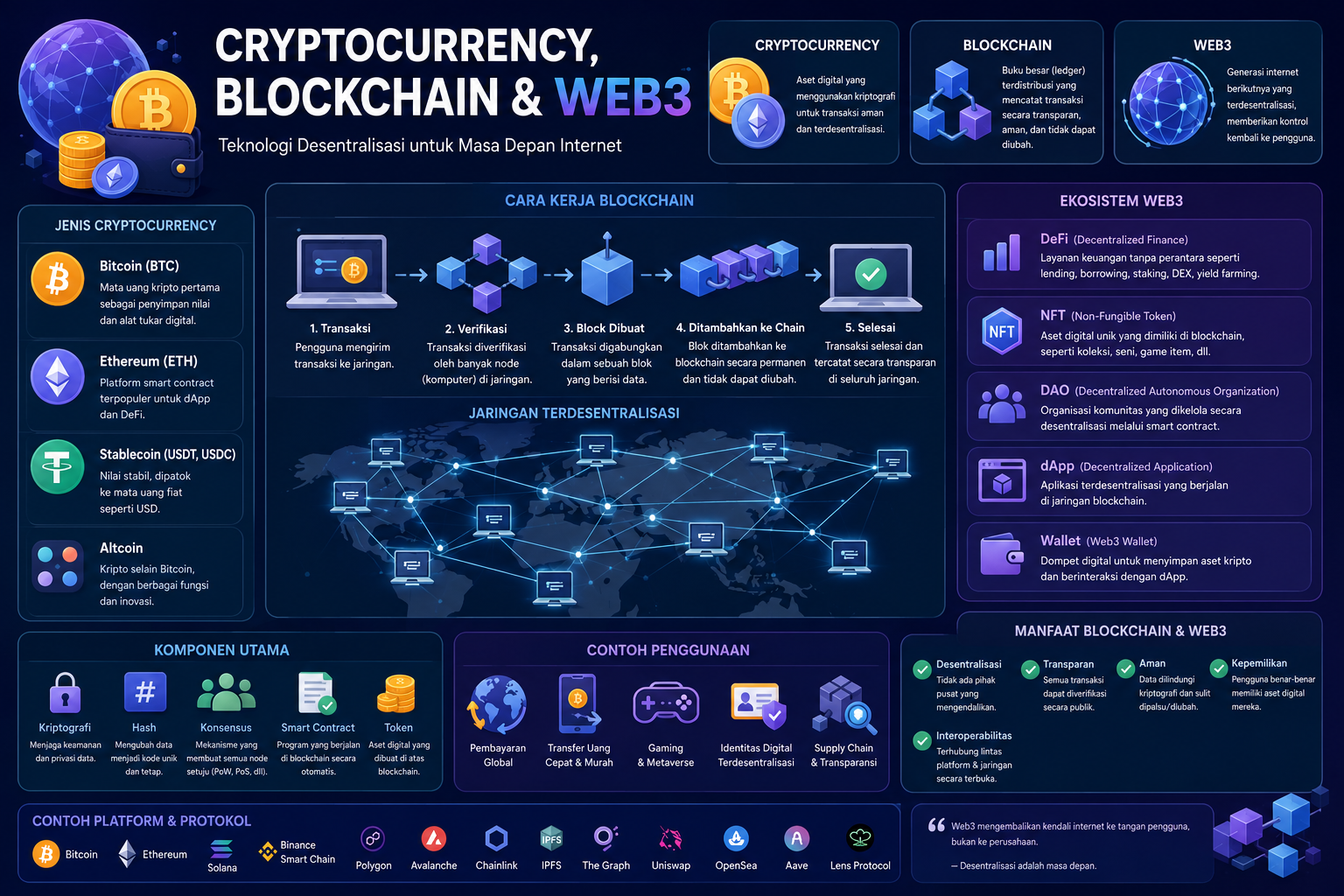
Blockchain technology, often sensationalized through its association with cryptocurrencies like Bitcoin, represents another significant, yet often invisible, foundational shift. Beyond digital currencies, blockchain's true power lies in its ability to create immutable, transparent, and decentralized ledgers. This distributed ledger technology is quietly revolutionizing supply chain management, ensuring the authenticity of goods and ethical sourcing. It's simplifying cross-border payments, making them faster and cheaper by cutting out intermediaries. In healthcare, blockchain offers a secure way to manage and share patient records, enhancing privacy and interoperability.
The concept of Web3, built upon blockchain and decentralized principles, aims to give users more control over their data and digital identities, moving away from centralized platforms. While still in its nascent stages for widespread consumer adoption, the underlying infrastructure of Web3 is a critical component of the invisible revolution, promising a future where digital interactions are more secure, private, and equitable.
Edge Computing: Bringing Intelligence Closer
The proliferation of IoT devices – from smart home gadgets to industrial sensors – generates an astounding amount of data. Traditionally, this data would travel to centralized cloud servers for processing. However, this model creates latency, bandwidth issues, and potential security risks. Enter edge computing, a technology that brings computation and data storage closer to the sources of data.
Edge computing is a quintessential example of an invisible technology. You don't "see" the edge server, but you experience its benefits. For autonomous vehicles, it means real-time decision-making without relying on a distant cloud. For smart factories, it enables immediate analysis of sensor data to prevent machinery breakdowns. In smart cities, it allows for instant traffic management and emergency response. By processing data locally, edge computing minimizes delays, enhances privacy, and reduces the strain on network infrastructure, making numerous next-generation applications feasible.
Advanced Connectivity: The Unseen Superhighway
While 5G networks are now a common topic, the continued evolution of wireless communication (towards 6G and beyond) and the expansion of satellite internet (like Starlink) are forming an unseen superhighway for the digital world. These advancements aren't just about faster downloads; they are about enabling new paradigms of connectivity and accessibility.
- Enhanced IoT Capabilities: More reliable and widespread connectivity allows billions of IoT devices to communicate seamlessly, forming truly smart environments.
- Remote Work and Learning: High-speed, low-latency connections facilitate immersive virtual collaboration and educational experiences from anywhere.
- Digital Divide Reduction: Satellite internet is bringing connectivity to remote and underserved areas, bridging the digital gap and fostering global inclusion.
- Augmented and Virtual Reality: The next generation of AR/VR applications, requiring massive bandwidth and minimal latency, will rely heavily on these advanced networks.
These networks are the invisible veins and arteries of the digital economy, silently channeling the data that powers everything from telemedicine to precision agriculture.
Quantum Computing: The Future's Foundation
Still largely confined to research labs, quantum computing represents a monumental, yet deeply invisible, technological frontier. Unlike classical computers that store information as bits (0s or 1s), quantum computers use qubits, which can exist in multiple states simultaneously. This allows them to perform complex calculations at speeds impossible for even the most powerful supercomputers today.
The impact of quantum computing, though years away from widespread commercialization, will be profound and foundational. It promises to revolutionize drug discovery and material science, enabling the simulation of molecular structures with unprecedented accuracy. It could break existing encryption methods, necessitating entirely new cybersecurity protocols, and optimize complex logistical problems far beyond current capabilities. Quantum computing is not a visible product; it is a fundamental shift in computation that will power the next wave of scientific and technological breakthroughs, often in ways that remain hidden technological trends to the general public until their applications become apparent.
Biotechnology and Personalized Medicine
The advancements in biotechnology are perhaps the most intimate of the invisible revolutions, operating at the cellular and genetic level. Tools like CRISPR gene editing, while still facing ethical debates, are transforming our understanding and ability to manipulate life itself. Personalized medicine, guided by genetic sequencing and AI analysis, is moving towards treatments tailored to an individual's unique biological makeup, leading to more effective therapies and preventative care.
This invisible transformation in healthcare means earlier disease detection, more targeted drug development, and a shift from reactive to proactive health management. The technologies enabling these changes are microscopic, operating within labs and data centers, yet their impact on human health and longevity will be immeasurable.
The Ethical Imperative: Navigating the Unseen
As these invisible technologies continue to evolve, they bring with them a unique set of ethical challenges. The ubiquitous collection and processing of data by AI and edge computing raise critical questions about privacy, surveillance, and algorithmic bias. The power of biotechnology to alter life forms necessitates careful consideration of societal and moral boundaries. The decentralization promised by blockchain also brings complexities in governance and accountability.
Understanding the invisible revolution, therefore, extends beyond technical comprehension. It requires a societal dialogue about the values we want to embed into these foundational technologies. Who controls the data? How do we ensure equitable access to these advancements? What are the limits of technological intervention in human life and society? These are questions that demand proactive engagement from policymakers, technologists, ethicists, and the public alike.
Conclusion: Beyond the Hype
The true pulse of technological progress often beats loudest not in the glitzy product launches, but in the quiet hum of servers, the intricate dance of algorithms, and the microscopic precision of genetic tools. The invisible revolution is a testament to the fact that the most impactful innovations are frequently those that disappear into the fabric of our existence, becoming so seamlessly integrated that we cease to notice them – until their absence would make our modern world crumble.
To truly stay ahead in the rapidly evolving digital age, one must look beyond the immediate surface. It requires a keen eye for the underlying shifts, the foundational breakthroughs, and the subtle currents that are collectively forging the future. By paying attention to these quiet innovations, we can better understand not just what technology is, but what it is actively becoming, and how it will continue to reshape our world in profound, often unseen, ways.