The Symbiotic Evolution: How AI Agents and Quantum Computing are Reshaping Human-Technology Interaction
In an era defined by relentless innovation, the landscape of technology is undergoing a profound transformation. What once seemed like distant science fiction is rapidly becoming our tangible reality, driven by the exponential advancements in artificial intelligence and the burgeoning power of quantum computing. These are not merely isolated developments; rather, they represent a symbiotic evolution, each pushing the boundaries of the other, fundamentally reshaping how we interact with the digital world and, by extension, our physical one.
The latest technology news and trends point towards a future where intelligent systems are increasingly autonomous, and computational problems previously deemed intractable are within reach. This article delves into the unique perspective of this convergence, exploring how AI agents are becoming more sophisticated, how quantum computing is unlocking unprecedented processing power, and the profound implications of their combined force on society, industry, and the very definition of human capability.
The Ascent of AI Agents: Beyond Mere Algorithms
Artificial Intelligence has moved far beyond its initial confines of rule-based systems and statistical analysis. Today, the spotlight is firmly on AI Agents – autonomous entities capable of perceiving their environment, making decisions, and executing actions to achieve specific goals, often without direct human oversight. From conversational assistants that manage our schedules to complex algorithms that trade stocks or design new molecules, AI agents are evolving into indispensable digital companions and workers.
The sophistication of these agents stems from advancements in deep learning, natural language processing, and reinforcement learning. They are no longer passive tools but active participants in various domains. In personalized medicine, AI agents analyze vast genomic data to recommend tailored treatments. In e-commerce, they optimize supply chains and personalize shopping experiences with uncanny accuracy. For individuals, AI agents are transforming productivity, automating repetitive tasks, synthesizing information, and even fostering creativity by generating content or suggesting novel ideas.
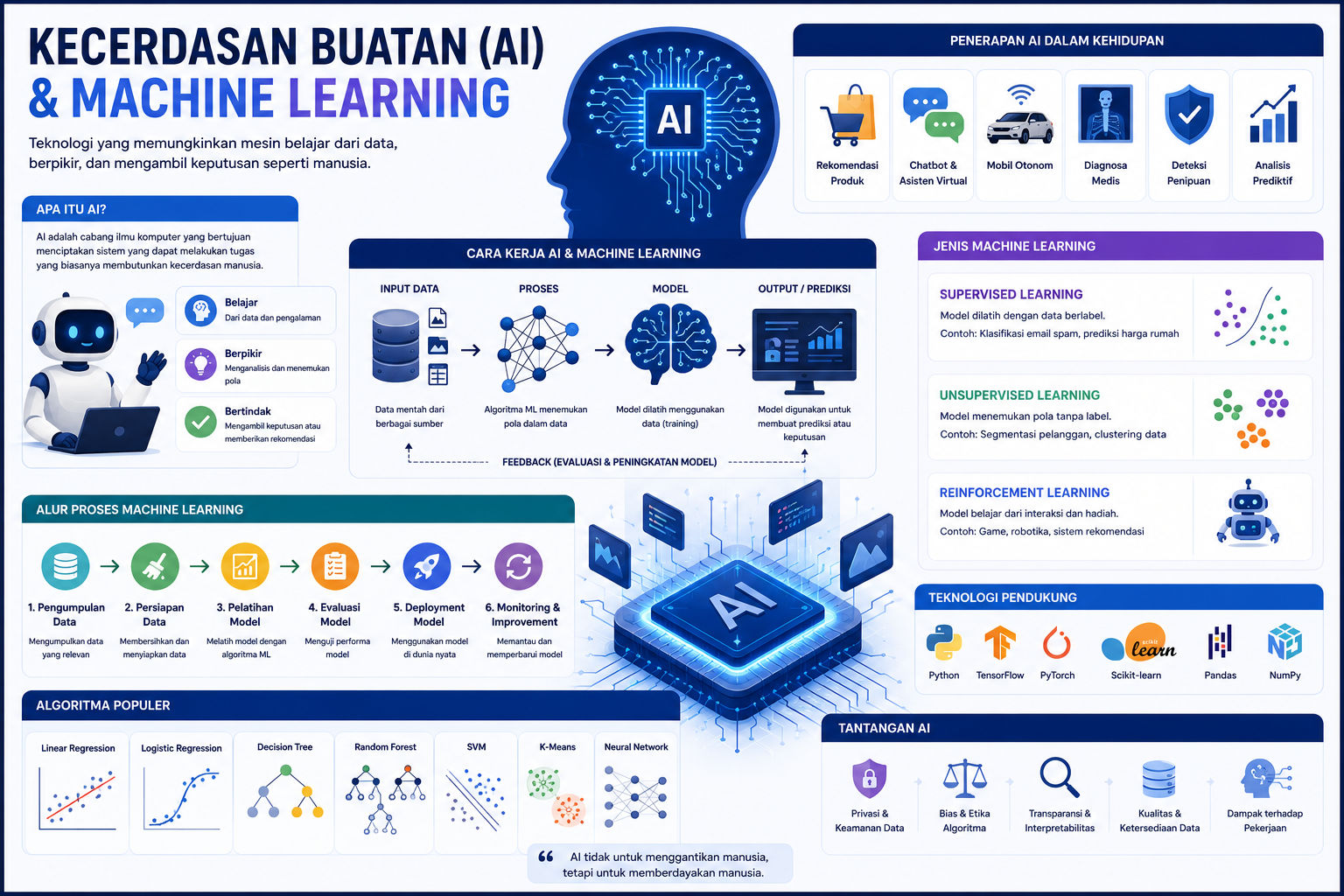
However, the rise of AI agents also brings a wave of ethical considerations. Questions of autonomy, accountability, and bias are at the forefront. As agents become more independent, who is responsible when they make errors or generate unintended consequences? Ensuring these systems are developed and deployed ethically, with transparency and fairness baked into their core, is paramount to harnessing their full potential without compromising societal values. The ongoing discourse around these issues is a critical component of the latest technology news and trends, particularly concerning how AI agents and quantum computing are redefining the tech landscape in 2026.
Quantum Computing: A Leap into the Unseen
While AI agents are reshaping our interaction with information, quantum computing promises to redefine the very limits of what's computationally possible. Unlike classical computers that store information as bits (0s or 1s), quantum computers use qubits, which can exist in multiple states simultaneously (superposition) and become interconnected in ways that allow for exponential increases in processing power (entanglement). This fundamental difference enables them to tackle problems that would take even the most powerful supercomputers billions of years to solve.
The field of quantum computing is still nascent, but its potential applications are staggering. In drug discovery, quantum simulations could model molecular interactions with unprecedented accuracy, accelerating the development of new medicines and materials. Financial institutions could use quantum algorithms to optimize complex portfolios and detect fraud more effectively. Cryptography, too, faces a quantum reckoning, as existing encryption standards could be vulnerable to quantum attacks, necessitating the development of quantum-resistant algorithms.
Despite its promise, quantum computing faces significant hurdles. Building and maintaining stable qubits requires extreme conditions (near absolute zero temperatures) and sophisticated error correction mechanisms. The technology is still largely confined to research labs, with commercial availability and practical applications years, if not decades, away for many complex problems. Yet, the rapid progress in quantum hardware and software development suggests that the "quantum age" is not a question of if, but when. The anticipation of this shift is palpable among experts, who are closely watching the evolving technological landscape of 2026, where AI agent competition and the dawn of quantum computing mark a new era.
The Convergence: A New Era of Superintelligence and Unfathomable Power
The truly unique perspective in current technology trends lies in the potential convergence of AI agents and quantum computing. Imagine AI agents, currently limited by classical processing power, suddenly empowered by quantum processors. This synergy could lead to breakthroughs in areas that are currently theoretical:
- Hyper-Intelligent Agents: AI agents could achieve new levels of problem-solving, capable of processing vast, complex datasets, identifying subtle patterns, and formulating strategies with a depth of understanding beyond current capabilities. This could revolutionize scientific research, urban planning, and climate modeling.
- Quantum Machine Learning: The field of machine learning could be dramatically accelerated. Quantum algorithms for pattern recognition, optimization, and data analysis could train AI models faster and with greater accuracy, especially for incredibly complex datasets, leading to more robust and less biased AI systems.
- Breakthroughs in Materials Science and Drug Discovery: Quantum-enhanced AI agents could simulate and design novel materials with desired properties or discover new drug compounds at an unparalleled pace, leading to revolutions in manufacturing, energy, and healthcare.
- Fortified Cybersecurity: While quantum computing poses a threat to current encryption, a quantum-enhanced AI agent could also be the key to developing and defending against quantum-level cyber threats, creating a new arms race in digital security.
This convergence ushers in a "post-digital" world where the lines between physical and digital, human and machine, become increasingly blurred. We are moving towards an era of hyper-personalization, where AI agents anticipate our needs and desires with predictive capabilities informed by quantum-level data analysis. This isn't just about faster computers; it's about fundamentally altering our relationship with information, knowledge, and decision-making.
Societal and Economic Repercussions
The intertwining of advanced AI and quantum computing will inevitably send ripples through every facet of society and the global economy. Understanding these implications is crucial for navigating the future responsibly.
Job Market Transformation
The automation driven by AI agents, particularly when supercharged by quantum capabilities, will undoubtedly impact the job market. While some routine tasks will be fully automated, there will be a parallel demand for new skills – those involving creativity, critical thinking, complex problem-solving, and human-AI collaboration. New industries will emerge, creating jobs that don't yet exist, demanding a proactive approach to education and workforce retraining.
Privacy and Security Paradox
The ability of quantum computers to break current encryption raises immediate concerns for data privacy and national security. The race to develop quantum-resistant cryptography is already underway. Simultaneously, the sheer volume of data processed by quantum-enhanced AI agents will intensify debates around data ownership, consent, and the potential for surveillance at unprecedented scales.
Geopolitical Dynamics
Technological supremacy in AI and quantum computing will undoubtedly become a significant geopolitical factor. Nations investing heavily in these fields stand to gain substantial economic and strategic advantages, potentially leading to new forms of global competition and collaboration. International frameworks for responsible development and ethical guidelines will become more critical than ever.
Ethical Governance and Regulation
As these technologies mature, the need for robust ethical frameworks and proactive regulation becomes paramount. Governments, corporations, and civil society must collaborate to establish guidelines that prevent misuse, ensure fairness, and protect fundamental human rights. This includes addressing issues like algorithmic bias, autonomous decision-making in critical systems, and the potential for a widening digital divide.
Beyond the Hype: Practical Applications and Challenges Ahead
While the long-term potential of AI agents and quantum computing is revolutionary, it's important to ground these trends in current realities and foreseeable challenges. Today, practical applications of AI agents are already evident in industries like finance (fraud detection, algorithmic trading), healthcare (diagnostic support, drug discovery), and customer service (advanced chatbots). Quantum computing, while less commercially mature, is showing promise in specialized areas like materials science simulation and cryptographic research.
The journey forward will involve overcoming significant technical hurdles, managing immense investment requirements, and fostering a global ecosystem of interdisciplinary collaboration. Researchers from diverse fields—computer science, physics, ethics, social science—must work together to ensure these powerful tools are developed for the betterment of humanity. This calls for a sustained focus on fundamental research, infrastructure development, and talent cultivation across the globe.
Conclusion: Navigating the Future with Foresight
The latest technology news and trends paint a clear picture: we are at an inflection point. The symbiotic evolution of AI agents and quantum computing is not merely about incremental improvements but about a fundamental paradigm shift in our relationship with technology. This shift promises unprecedented opportunities for solving some of humanity's most pressing challenges, from climate change and disease to economic inequality.
However, it also presents profound ethical, social, and economic questions that demand our collective attention and thoughtful engagement. As we witness the unfolding of this new technological era, our responsibility is to ensure that these powerful advancements are guided by principles of inclusion, fairness, and sustainability, charting a course towards a future where technology truly serves humanity.