Rethinking School Mathematics: From Abstract Symbols to Real‑World Storytelling
Mathematics has long been portrayed in schools as a collection of abstract symbols, isolated formulas, and endless worksheets. While this traditional view has produced generations of competent calculators, it often fails to ignite curiosity or demonstrate relevance to students’ everyday lives. This article explores a unique perspective: treating school mathematics as a narrative art—a language of patterns that can be told, visualized, and lived. By reframing math lessons as stories, educators can deepen conceptual understanding, foster critical thinking, and bridge the gap between classroom theory and real‑world application.
1. Why a Narrative Approach Works
Human brains are wired for stories. Neuroscientific research shows that narrative structures activate the same neural pathways used for memory and problem‑solving. When a math concept is embedded in a storyline, students are more likely to:
- Remember the underlying principle because it is linked to characters, motivations, and outcomes.
- Apply the concept to novel situations, as they have practiced “transferring” the story’s logic.
- Engage emotionally, turning a dry calculation into a meaningful quest.
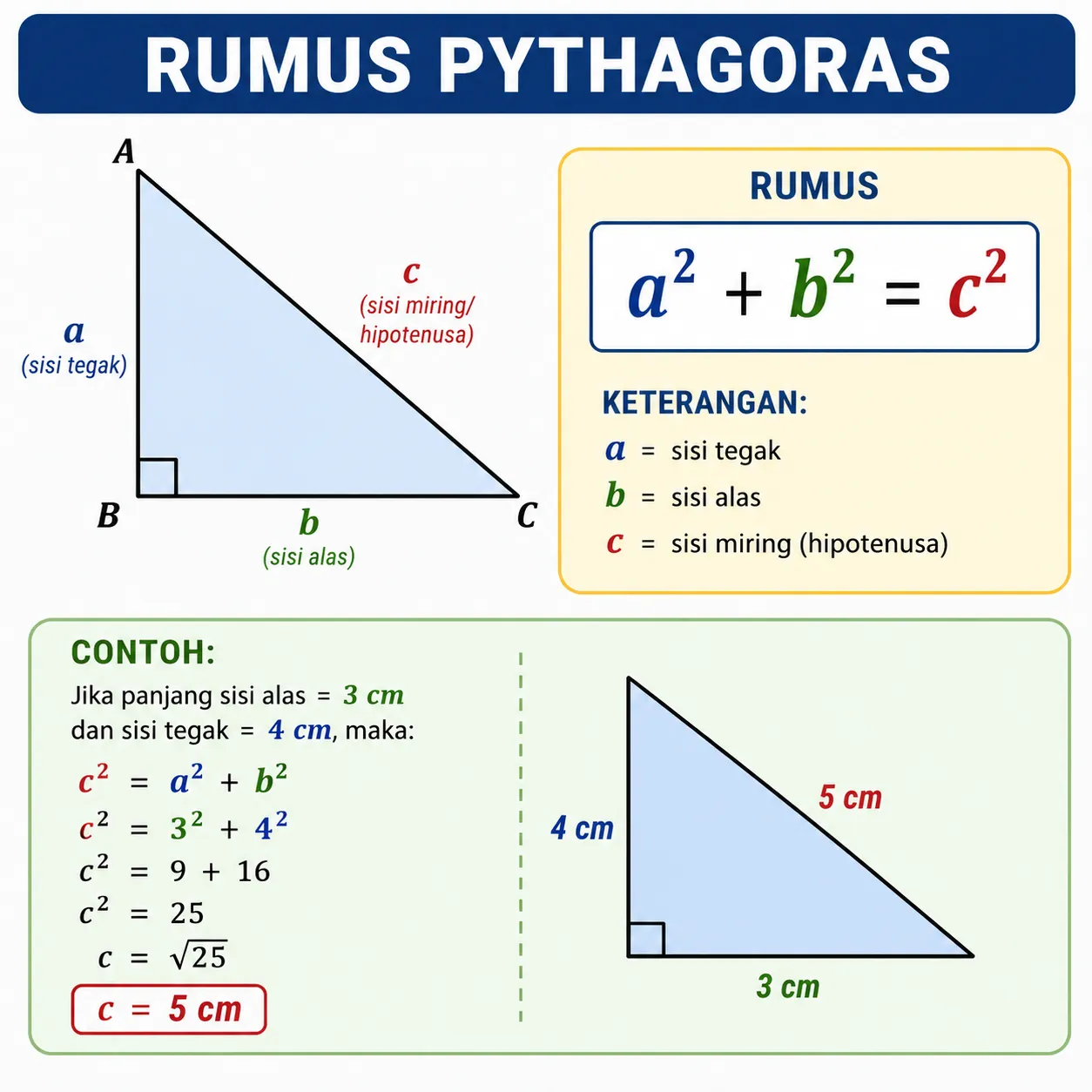
For example, instead of presenting the Pythagorean theorem as “a² + b² = c²,” a teacher might frame it as a detective story where a right‑angled triangle hides a secret distance that the hero must uncover to rescue a trapped explorer. This narrative hook instantly gives purpose to the algebraic manipulation.
2. Building a Story‑Centric Curriculum
Implementing a storytelling framework does not require a complete overhaul of the syllabus. Instead, educators can weave narrative elements into existing units. Below is a step‑by‑step guide:
- Identify the Core Concept: Choose the mathematical idea (e.g., linear equations, probability, or fractions).
- Craft a Relatable Scenario: Develop a short plot that naturally requires the concept for resolution. For fractions, imagine sharing a pizza among friends; for probability, consider the odds of drawing a specific card in a game.
- Introduce Characters and Stakes: Assign roles (e.g., a baker, a game designer, a city planner) and define a clear goal that hinges on solving the math problem.
- Guide the Exploration: Let students work through the problem as “detectives,” encouraging them to ask “what if” questions and test hypotheses.
- Reflect and Generalize: After the story concludes, discuss how the mathematical principle applies beyond the narrative, reinforcing transferability.
3. Case Studies: Storytelling in Action
3.1. The “Eco‑City” Project (Geometry & Scaling)
Students are tasked with designing a sustainable mini‑city on a 1‑meter grid. The narrative: a mayor needs a blueprint that maximizes green space while keeping roads within budget. Learners must calculate area, perimeter, and scale factors to translate their designs into real‑world dimensions. This project simultaneously teaches geometry, budgeting, and environmental stewardship.
3.2. “The Mystery of the Missing Numbers” (Algebra)
In this mystery, a secret code is hidden in a series of algebraic equations. Each solved equation reveals a digit of a combination lock that opens a virtual treasure chest. The story compels students to practice solving for variables, understanding linear relationships, and checking their work for consistency.
3.3. “Probability Pirates” (Statistics)
A crew of pirates must decide whether to sail through a storm based on the likelihood of encountering a sea monster. By rolling dice and recording outcomes, students calculate experimental probability, compare it with theoretical models, and make a strategic decision for the crew. The narrative adds stakes and a playful context to probability concepts.
4. Integrating Technology to Amplify the Narrative
Digital tools can transform static stories into interactive experiences. Platforms such as future‑focused AI education suites enable students to simulate scenarios, visualize data, and receive instant feedback. For instance, a geometry story can be brought to life with 3‑D modeling software, allowing learners to manipulate shapes and observe how changes affect area and volume in real time.
Moreover, collaborative environments like shared whiteboards or coding notebooks let students co‑author the story, fostering communication skills alongside mathematical reasoning.
5. Assessing Understanding Through Narrative Metrics
Traditional tests often measure rote memorization rather than deep comprehension. When using a storytelling approach, assessment can be aligned with narrative milestones:
- Story Maps: Students create visual maps linking each plot point to the corresponding mathematical operation.
- Reflective Journals: Learners write brief reflections on how the story helped them grasp the concept, encouraging metacognition.
- Performance Tasks: Instead of multiple‑choice questions, students present a solution to the story’s problem, explaining their reasoning to peers.
These methods provide richer data on student thinking and allow teachers to pinpoint misconceptions more effectively.
6. Overcoming Common Challenges
Adopting a narrative framework may raise concerns:
- Time Constraints: Crafting stories takes preparation. Teachers can start with a small library of reusable story templates and adapt them each year.
- Curriculum Alignment: Ensure that each story directly targets the learning objectives outlined in standards. Use the “goal‑action‑result” structure to keep focus.
- Student Resistance: Some learners may initially view stories as “just fun.” Emphasize that the narrative is a scaffold for rigorous problem‑solving, not a distraction.
7. The Broader Impact: Mathematics as a Universal Language
When students experience math as a story, they begin to see it as a universal language that describes patterns in nature, technology, and human behavior. This perspective prepares them for interdisciplinary fields such as data science, engineering, and even the arts, where mathematical thinking underpins creativity.
In a world increasingly driven by algorithms and quantitative decision‑making, nurturing a narrative mindset in mathematics equips learners with both analytical precision and imaginative flexibility. As educators, we have the opportunity to rewrite the story of math education—turning it from a series of isolated drills into a compelling saga that students carry with them beyond the classroom.
For further inspiration on how emerging technologies can reshape educational narratives, explore our article on the latest technology trends shaping learning in 2026.