The Symphony of Disruption: How Converging Technologies are Orchestrating Our Future
In a world accelerating at an unprecedented pace, simply observing the latest technological advancements is no longer sufficient. To truly grasp the trajectory of our future, we must move beyond the surface-level buzzwords and delve into the intricate dance of converging technologies. It's a symphony of disruption, where seemingly disparate innovations are orchestrating a profound reshaping of our reality. This article explores the current technology landscape not as a collection of isolated trends, but as a complex adaptive system driven by unseen forces, revealing how these interconnected evolutions are setting the stage for tomorrow.
The AI Renaissance: Intelligence Weaving Into Everything
Artificial Intelligence (AI) is no longer a futuristic concept but a foundational layer integrating itself into nearly every facet of our lives. The past few years have witnessed an explosion in AI capabilities, particularly with the advent of large language models (LLMs) and generative AI. These models are not just writing coherent text or creating stunning art; they are becoming invaluable tools in scientific research, drug discovery, personalized education, and complex problem-solving. From optimizing supply chains to predicting market trends, AI's analytical prowess is enhancing decision-making across industries.
However, the AI renaissance extends far beyond its generative applications. Computer vision is revolutionizing sectors like retail, security, and healthcare diagnostics. Predictive AI is transforming maintenance schedules in manufacturing, preventing costly breakdowns. The integration of AI into embedded systems is giving rise to smarter devices and environments, where our surroundings adapt intuitively to our needs. Yet, this rapid expansion also brings crucial discussions to the forefront regarding ethical implications, bias in algorithms, data privacy, and the future of work. Governments and organizations worldwide are grappling with the challenge of fostering innovation while ensuring responsible AI development.
The Decentralized Digital Fabric: Beyond Cryptocurrencies
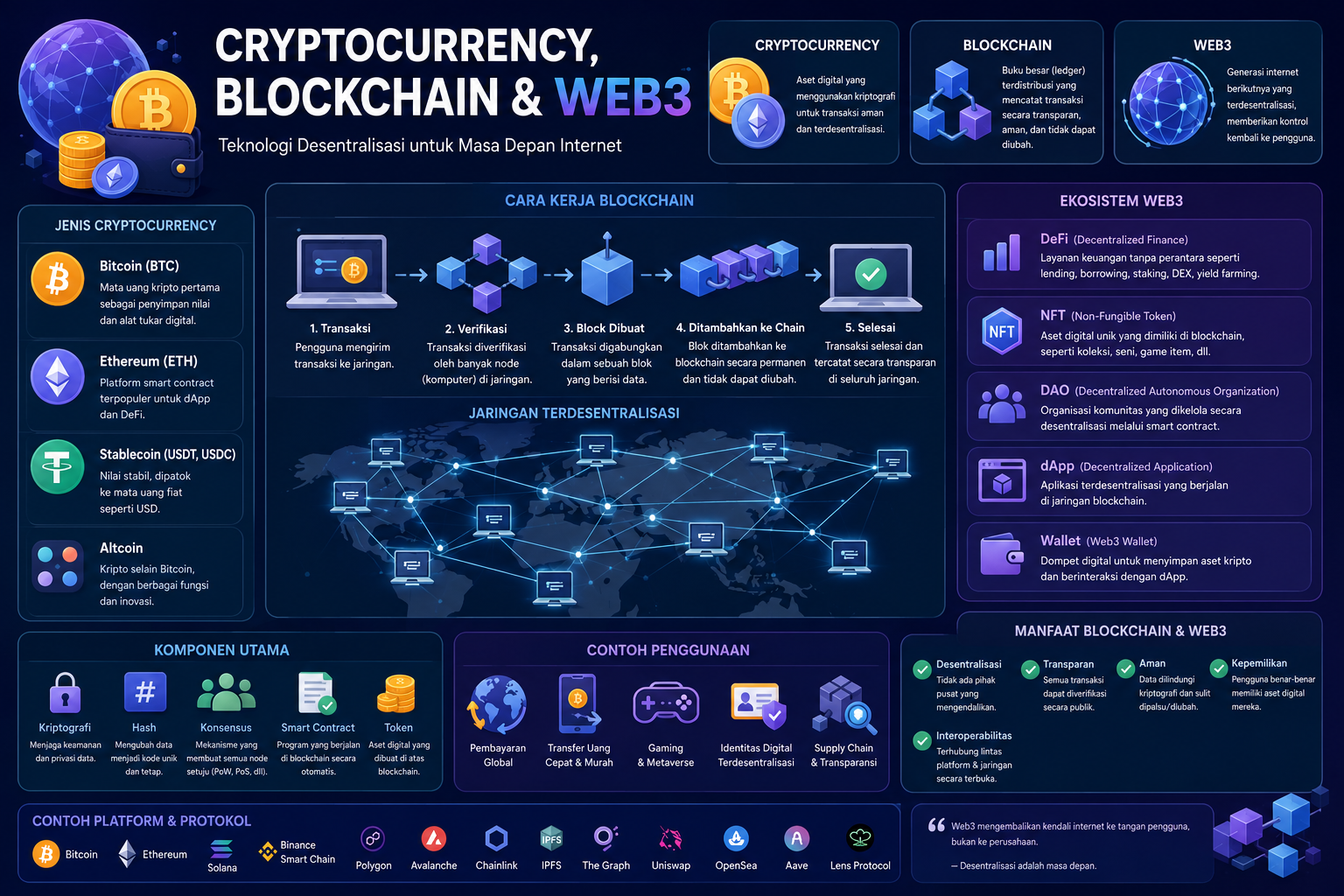
While often conflated with volatile digital currencies, the underlying principles of blockchain and Web3 represent a fundamental shift towards decentralization, transparency, and user-centricity in the digital realm. This evolving digital fabric aims to empower individuals by giving them greater control over their data, digital assets, and online interactions. Beyond Bitcoin and NFTs, we are seeing the emergence of decentralized applications (DApps) that offer new paradigms for social media, gaming, finance (DeFi), and even identity management.
Decentralized Autonomous Organizations (DAOs) are experimenting with new models of governance and collective decision-making, challenging traditional corporate structures. The concept of digital ownership is being redefined, moving from mere licensing to true, verifiable ownership of digital goods and experiences. While still in its nascent stages and facing scalability and regulatory hurdles, the push for a more open, interoperable, and permissionless internet through Web3 technologies holds the potential to fundamentally alter how we interact with digital services and create value online.
Quantum Computing's Silent Ascent: The Future is Unfolding
Often perceived as abstract and distant, quantum computing is steadily progressing from theoretical physics labs to practical, albeit early-stage, applications. While commercial quantum computers are still some years away from widespread use, the breakthroughs being made today are laying the groundwork for a technological revolution with implications far grander than classical computing. Quantum computers leverage the principles of quantum mechanics—superposition and entanglement—to perform calculations that are impossible for even the most powerful supercomputers.
The potential applications are breathtaking: accelerating drug discovery and material science by simulating molecular interactions at an unprecedented scale, optimizing complex logistical problems that currently stump traditional algorithms, and breaking or creating new forms of cryptography that could redefine cybersecurity. The race for quantum supremacy is intensifying among global powers and tech giants, signifying its strategic importance. Though practical use cases are still being refined, the silent ascent of quantum computing is a critical trend to monitor, as it promises to unlock solutions to problems currently considered intractable.
Hyper-Connectivity and Spatial Computing: Merging Realities
The relentless pursuit of hyper-connectivity, driven by advancements like 5G and the impending 6G, is creating an environment ripe for revolutionary interactions. This ultra-low latency, high-bandwidth infrastructure is not just about faster internet; it's the backbone for the next generation of immersive experiences and intelligent environments. Coupled with the rise of spatial computing—a paradigm that allows digital content to interact with the real world—we are witnessing the merging of our physical and digital realities.
Beyond the consumer-centric metaverse hype, spatial computing is finding profound applications in industries. Industrial metaverse platforms are enabling remote collaboration, digital twins are optimizing manufacturing processes and infrastructure management, and augmented reality (AR) is transforming everything from surgical training to field service. The Internet of Things (IoT) will become even more pervasive and intelligent, with billions of connected devices forming vast networks that collect data, react to their environment, and communicate seamlessly. This convergence promises to create "smart" cities, homes, and workplaces that are highly responsive and personalized.
Sustainable Technology and Green Innovation: Tech for a Healthier Planet
As the urgency of climate change becomes undeniable, technology is increasingly being positioned as a key enabler of sustainable solutions. Green innovation is a growing trend, focusing on developing and applying technology to mitigate environmental impact and foster ecological balance. This includes advancements in renewable energy sources, such as more efficient solar panels and wind turbines, coupled with smart grid technologies that optimize energy distribution and reduce waste.
Precision agriculture, powered by AI, IoT, and drones, is minimizing resource use while maximizing yields. Carbon capture technologies are evolving, aiming to remove greenhouse gases directly from the atmosphere. Even in the realm of computing itself, there's a strong push towards "green computing" – designing hardware and software that are energy-efficient and minimize environmental footprint throughout their lifecycle. This pivot towards sustainability is not just an ethical imperative but also an economic opportunity, driving innovation in cleantech and circular economy models.
The Unseen Architects: Intersections and Convergences
The true power and transformative potential of these current trends lie not in their individual prowess, but in their intricate konvergensi. It's at these intersections that the "unseen architects" truly begin to shape our future. Consider how AI, when combined with advanced IoT and 5G, creates truly intelligent smart cities capable of dynamic traffic management, optimized energy consumption, and predictive public safety. Or how blockchain's immutable ledger can enhance the transparency and security of AI models, creating a more trustworthy digital ecosystem.
Imagine the synergy of quantum computing securing decentralized financial networks built on Web3, offering unprecedented levels of privacy and resilience. The interplay between sustainable tech and hyper-connectivity can lead to highly efficient resource management systems, monitoring environmental conditions with unparalleled accuracy and driving real-time ecological interventions. These are not separate phenomena but threads woven into an ever-more complex tapestry, each augmenting the capabilities of the others. The profound impact of these interconnected trends on society and economics is a theme also examined in Die Entschlüsselung der Zukunft: Wie konvergierende Technologien unsere Realität neu gestalten, emphasizing the need for a holistic understanding.
This dynamic interplay means that the impact of a single technological breakthrough can ripple across multiple sectors, creating exponential change. Understanding these cross-pollinations is crucial for anticipating future challenges and opportunities. It requires a multidisciplinary approach, transcending traditional silos, to truly comprehend the emergent properties of this technological blend.
Conclusion: Navigating the Orchestrated Future
The current technology landscape is far more than a collection of shiny new gadgets or fleeting fads. It is an intricate, self-organizing system where AI, decentralization, quantum mechanics, hyper-connectivity, and sustainability are not just coexisting but actively collaborating to orchestrate our future. These converging tides are the unseen architects, silently yet powerfully redrawing the blueprints of human society, economy, and interaction.
Navigating this orchestrated future demands more than just technological literacy; it requires critical thinking, ethical foresight, and a profound understanding of these interdependencies. As these technologies mature and converge further, they will continue to redefine industries, reshape social norms, and challenge our very understanding of what is possible. The challenge and opportunity lie in harnessing this symphony of disruption to build a future that is not only innovative and efficient but also equitable, sustainable, and truly human-centric.