The Invisible Architecture: How Converging Tech Trends Are Redefining Our Future
In a world accelerating at an unprecedented pace, technology is not just evolving; it's converging, creating an intricate, dynamic ecosystem that is reshaping every facet of human existence. This isn't merely a series of isolated breakthroughs, but rather an invisible architecture that meticulously choreographs our future, influencing industries, societies, and individual lives in profound ways. To truly grasp the current landscape and anticipate what lies ahead, we must move beyond simply identifying individual technological advancements and instead, understand their intricate interplay and collective momentum.
The Dawn of Ubiquitous Intelligence: AI's Pervasive Spread
Artificial Intelligence (AI) continues to dominate headlines, moving far beyond its initial applications in data analytics and automation. The past year has seen an explosion in generative AI, with models like GPT-4, Midjourney, and Stable Diffusion transforming creative industries, content generation, and even complex problem-solving. These tools are no longer just fascinating curiosities; they are becoming integral parts of workflows, empowering individuals and businesses to innovate at speeds previously unimaginable.
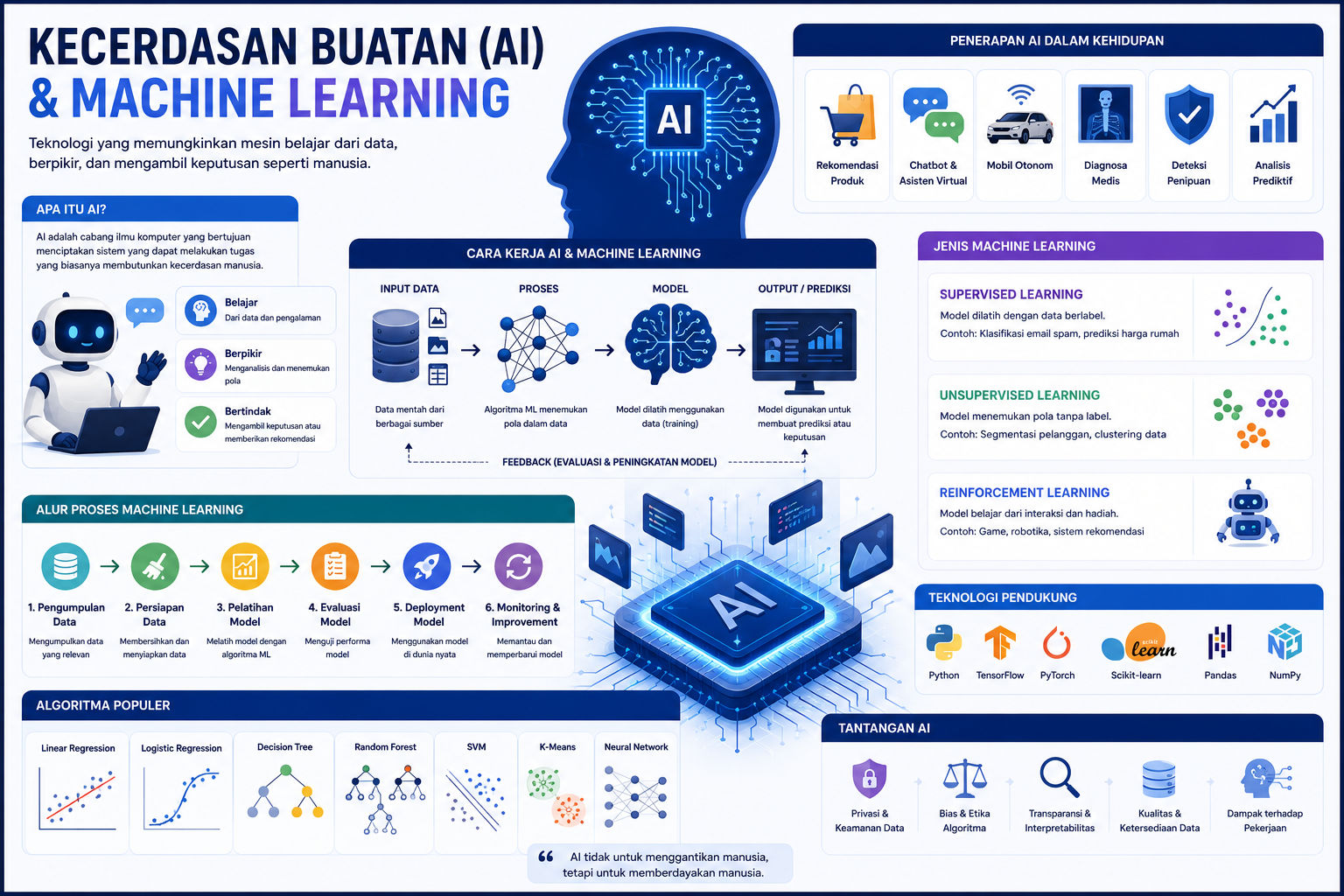
Beyond generative capabilities, AI is also becoming increasingly embedded at the edge – in our devices, sensors, and everyday objects. Edge AI enables faster processing, enhanced privacy, and greater reliability by bringing AI computations closer to the data source. This shift is crucial for applications ranging from autonomous vehicles and smart cities to predictive maintenance in industrial settings. Furthermore, advancements in multimodal AI, which can process and understand information from various sources like text, images, and audio simultaneously, are paving the way for more human-like interactions and comprehensive AI systems.
Quantum Leaps: The Promise of a New Computational Paradigm
While still in its nascent stages, quantum computing continues to make significant strides, drawing substantial investment and research interest. Companies and national labs are pushing the boundaries, developing more stable qubits and improving error correction techniques. The theoretical power of quantum computers to solve problems intractable for even the most powerful supercomputers holds immense promise for fields like drug discovery, materials science, financial modeling, and cryptography. While widespread practical applications remain years away, the incremental progress in quantum hardware and algorithms suggests a future where quantum capabilities could complement classical computing, unlocking solutions to some of humanity's most complex challenges.
Web3 and the Decentralized Future: Beyond the Hype
The concept of Web3, powered by blockchain technology, continues to evolve from speculative cryptocurrencies to a foundational layer for a more decentralized and user-centric internet. While the crypto market has seen its ups and downs, the underlying principles of Web3 – decentralization, transparency, and user ownership – are steadily gaining traction. We are witnessing the development of robust decentralized applications (dApps) in areas such as supply chain management, digital identity verification, secure data storage, and the creation of truly interoperable metaverse environments. NFTs, beyond their initial art-collectible phase, are being explored for real-world utility in ticketing, loyalty programs, and property rights. This shift aims to give users greater control over their data and digital assets, reducing reliance on centralized intermediaries.
Extended Realities: Blurring the Lines Between Physical and Digital
Extended Reality (XR), encompassing Virtual Reality (VR), Augmented Reality (AR), and Mixed Reality (MR), is steadily moving from niche entertainment to mainstream adoption across various sectors. New generations of VR headsets are becoming lighter, more powerful, and increasingly affordable, offering immersive experiences for gaming, education, and remote collaboration. AR applications are enhancing everything from retail shopping and interior design to industrial maintenance and medical training, overlaying digital information onto the real world. Mixed Reality, which allows for dynamic interaction between virtual objects and physical environments, is poised to create highly intuitive and interactive workspaces. As these technologies mature, they contribute significantly to the vision of the metaverse – an interconnected, persistent virtual space where users can interact in real-time, facilitated by sophisticated digital twins and spatial computing.
Biotechnology Meets Digital: The Convergence of Life Sciences and Tech
The intersection of biotechnology and digital technology is ushering in a new era of personalized medicine and biological innovation. Advances in genomics, like CRISPR gene editing, coupled with AI-driven drug discovery platforms, are accelerating the development of targeted therapies and vaccines. Wearable devices and smart implants are collecting vast amounts of real-time health data, enabling proactive health management and early disease detection. Furthermore, synthetic biology and bioengineering are leveraging computational power to design new biological systems and materials with unprecedented precision. This convergence holds the potential to revolutionize healthcare, agriculture, and environmental sustainability, offering solutions to age-old problems through biological engineering.
The Green Imperative: Sustainable Technology and Climate Action
As global awareness of climate change intensifies, the drive for sustainable technology has become a critical trend. Innovation is focused on developing more energy-efficient hardware, 'green AI' models that reduce computational energy consumption, and advanced renewable energy solutions like next-generation solar panels and battery storage. Smart grids, powered by AI and IoT, are optimizing energy distribution and consumption. Technologies for carbon capture, precision agriculture (reducing resource waste), and circular economy models (reusing and recycling materials through advanced tracking) are also seeing rapid development. Technology is increasingly being viewed not just as a driver of progress, but as an indispensable tool for mitigating environmental impact and building a more sustainable future.
Cybersecurity: The Unseen Shield of the Digital Age
With the proliferation of connected devices, cloud computing, and digital transformation initiatives across all sectors, cybersecurity has never been more critical. The latest trends emphasize proactive, AI-driven threat detection and response, moving beyond traditional perimeter defenses. Zero-trust architectures, which assume no user or device can be trusted by default, are becoming standard. Behavioral analytics, machine learning, and automation are being deployed to identify sophisticated attacks, protect sensitive data, and ensure business continuity. The increasing complexity and interconnectedness of our digital world mean that cybersecurity is no longer an IT concern alone, but a fundamental pillar of national security, economic stability, and individual privacy.
The Grand Convergence: Weaving the Future's Fabric
What makes these individual trends so powerful is not their standalone capabilities, but their profound synergy. AI is the brain for quantum computing's immense power, accelerates biotech discoveries, and powers the smart systems of sustainable tech. Blockchain provides the trust layer for digital identities in XR metaverses and secures the data pipelines across all sectors. XR offers new interfaces for interacting with AI-driven data and virtual representations of biological systems. This interconnectedness forms an intricate and dynamic invisible choreography, reshaping our reality in ways both subtle and dramatic.
This convergence demands a holistic understanding and adaptive strategies. Businesses must identify how these technologies intersect to create new opportunities and disrupt existing models. Governments must craft policies that foster innovation while addressing ethical concerns, privacy, and societal impact. Individuals must cultivate digital literacy and adaptability to thrive in a continuously evolving landscape. The future is not just about adopting new tools, but about comprehending the complex dance of technologies that are collectively building the next era of human civilization.
Conclusion: Navigating the Tides of Transformation
The current wave of technological innovation is characterized by an unparalleled convergence, where advancements in AI, quantum computing, Web3, XR, biotechnology, sustainable tech, and cybersecurity are not merely progressing in parallel but are actively interweaving to create a more integrated and intelligent world. This "invisible architecture" of converging technologies promises unprecedented possibilities, from solving global challenges to revolutionizing daily life. However, it also presents complex ethical, social, and economic questions that require thoughtful consideration and collaborative action. By embracing continuous learning and fostering a forward-thinking mindset, we can better navigate these transformative tides, harnessing the power of these trends to build a future that is innovative, equitable, and sustainable for all.