Beyond the Hype: Unpacking the Convergent Forces Shaping Tomorrow's Reality
In a world perpetually awash with technological advancements, it's easy to get caught up in the latest gadget or the most audacious software release. Yet, beneath the surface of individual innovations, a more profound transformation is occurring. We are witnessing the emergence of an invisible architecture, a complex interplay of convergent forces that quietly sculpt our reality, redefining industries, societies, and human experiences. This isn't merely about new technologies; it's about how these technologies intertwine, amplify each other, and create a future far more integrated and intelligent than we can often perceive.
To truly understand the trajectory of innovation, we must look beyond the isolated headlines and instead focus on the "shadow architects" – the underlying principles and deep integration that transform discrete advancements into a cohesive, impactful force. It's this perspective that allows us to discern not just what’s new, but what’s truly transformative. Indeed, understanding these shadow architects is key to navigating the future.
AI & The Intelligent Fabric: Beyond Automation
Artificial Intelligence (AI) continues to dominate technology conversations, moving rapidly from theoretical concepts to pervasive practical applications. What’s truly remarkable is AI’s shift from a tool for specific tasks to an intelligent fabric woven into almost every digital interaction. Generative AI, spearheaded by large language models (LLMs) and diffusion models, has democratized content creation, coding, and problem-solving, pushing the boundaries of human-computer collaboration. Beyond mere automation, AI is becoming a co-creator, a personalized tutor, and a sophisticated analyst, powering everything from hyper-personalized marketing to advanced medical diagnostics.
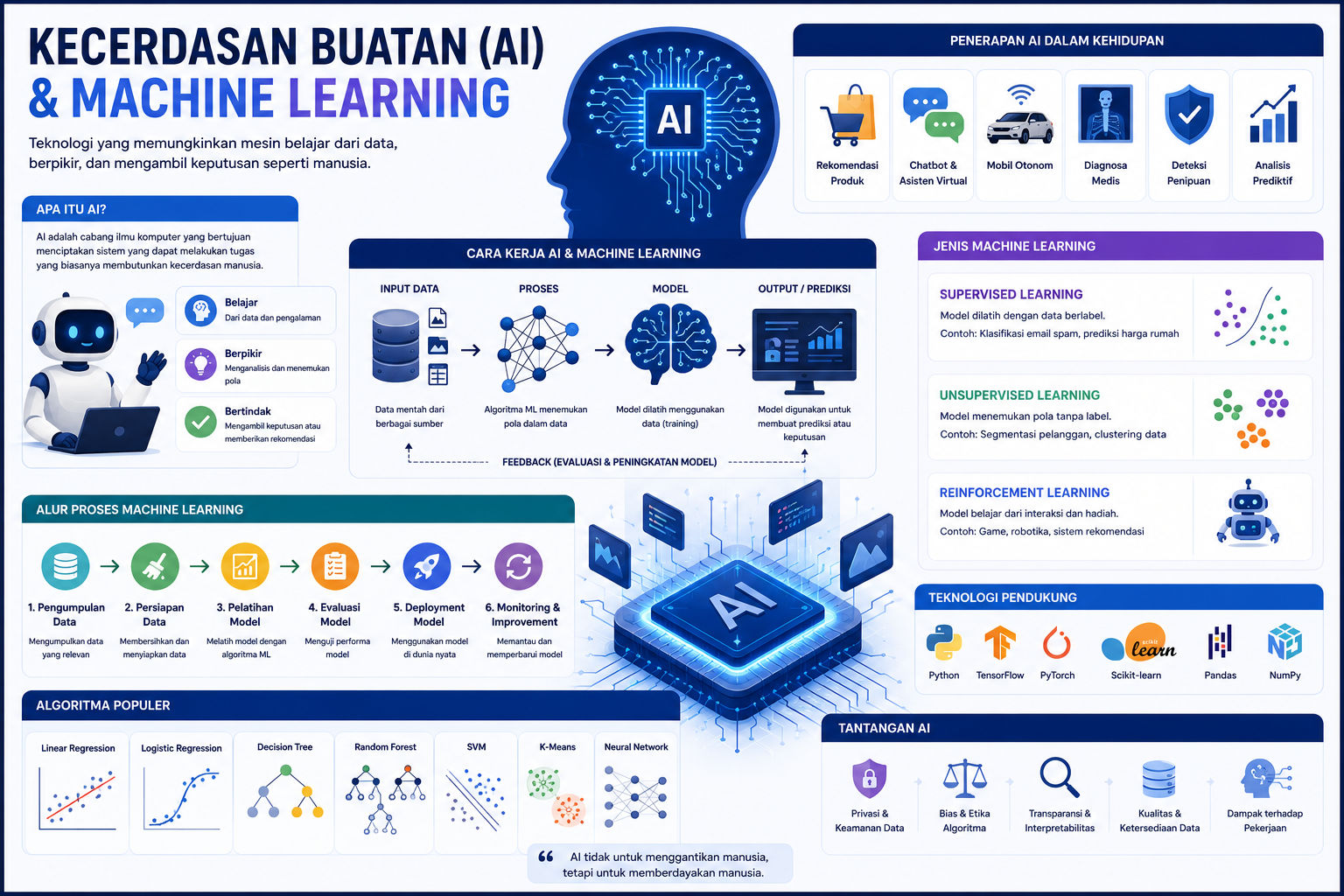
The integration of AI into edge computing devices—from smartphones to IoT sensors—is also crucial. This allows for real-time decision-making without constant reliance on cloud servers, enhancing privacy, speed, and reliability. This distributed intelligence is foundational for smart cities, autonomous vehicles, and advanced robotics, where immediate data processing is critical. As AI becomes more sophisticated, its ethical implications—bias, privacy, job displacement—also come into sharper focus, necessitating robust regulatory frameworks and a societal discourse on responsible AI development.
Quantum Computing's Silent Ascent: Reshaping the Impossible
While still in its nascent stages, quantum computing is steadily progressing, promising to solve problems currently intractable for even the most powerful classical supercomputers. Its potential applications span from drug discovery and material science to financial modeling and cryptography. The ability of quantum computers to process vast amounts of data simultaneously, leveraging principles like superposition and entanglement, could revolutionize fields like personalized medicine by simulating molecular interactions with unprecedented accuracy, leading to new treatments and therapies.
However, the journey to practical quantum computing is complex, involving overcoming significant engineering challenges related to qubit stability and error correction. Yet, breakthroughs in superconducting qubits, trapped ions, and topological qubits hint at a future where quantum capabilities are accessible, albeit likely via cloud-based services initially. The immediate impact lies not just in fully functional quantum computers, but in quantum-inspired algorithms that run on classical machines, already demonstrating improved efficiency in optimization problems.
Extended Reality (XR): Blurring the Lines of Perception
Extended Reality (XR), encompassing Virtual Reality (VR), Augmented Reality (AR), and Mixed Reality (MR), is transitioning from niche entertainment to mainstream utility. The Metaverse, once a futuristic concept, is gradually taking shape, driven by advancements in hardware, haptic feedback, and spatial computing. Enterprise applications are flourishing, with AR enhancing field service, VR revolutionizing employee training, and MR enabling collaborative design in engineering and architecture.
The next wave of XR innovation focuses on creating more immersive, intuitive, and accessible experiences. Lighter, more powerful headsets, improved eye-tracking, and sophisticated hand-tracking are reducing barriers to adoption. As XR platforms mature, they hold the potential to redefine remote work, education, social interaction, and even commerce, creating digital twins of our physical world and offering new avenues for creativity and connection. The convergence of AI within XR promises hyper-realistic avatars, intelligent virtual assistants, and dynamic, responsive virtual environments.
Blockchain & The Decentralized Promise: Reimagining Trust
Beyond the speculative frenzy of cryptocurrencies, blockchain technology continues to mature, offering a robust framework for decentralized trust, transparency, and immutability. Its core promise lies in enabling secure, peer-to-peer transactions and data management without the need for central intermediaries. This has profound implications for supply chain management, intellectual property rights, digital identity, and even voting systems.
Web3, built on blockchain principles, envisions a decentralized internet where users have greater control over their data and digital assets. Concepts like NFTs (Non-Fungible Tokens) are redefining digital ownership and intellectual property, while Decentralized Autonomous Organizations (DAOs) offer new models for governance and community-led initiatives. While challenges remain in scalability, regulatory clarity, and user adoption, blockchain's foundational shift towards verifiable digital trust is a powerful architect of future digital economies and societal structures.
Edge Computing: The Proximity Imperative
As the Internet of Things (IoT) proliferates and AI applications demand real-time responsiveness, edge computing has become increasingly vital. Instead of sending all data to a centralized cloud for processing, edge computing brings computation and data storage closer to the data sources – the "edge" of the network. This minimizes latency, reduces bandwidth consumption, enhances data security, and enables continuous operation even with intermittent connectivity.
The synergy between edge computing and AI is particularly potent. AI models can be deployed directly on edge devices, allowing for instantaneous analysis and action in scenarios like smart manufacturing, predictive maintenance, and autonomous systems. This distributed intelligence is a critical enabler for smart infrastructure, precision agriculture, and responsive healthcare, where every millisecond counts. Edge computing is the unsung hero, quietly ensuring that the deluge of data generated by our connected world can be processed efficiently and intelligently.
Bio-Convergence: Where Tech Meets Life
Perhaps one of the most exciting and ethically complex trends is the convergence of technology with biology. Advances in biotechnology, particularly gene editing tools like CRISPR, are unlocking unprecedented capabilities to modify living organisms, offering potential cures for genetic diseases, enhancing agricultural yields, and even developing synthetic biological systems. This field is moving rapidly from laboratory research to potential clinical applications, promising a future of personalized medicine tailored to an individual's unique genetic makeup.
Furthermore, brain-computer interfaces (BCIs) are making strides, allowing direct communication between the brain and external devices. While still largely experimental, BCIs hold immense promise for assisting individuals with disabilities, restoring lost senses, and potentially augmenting human cognition. The bio-convergence trend challenges our understanding of what it means to be human, raising profound ethical, philosophical, and societal questions that demand careful consideration and public dialogue.
Sustainable Tech: Innovating for a Greener Tomorrow
Amidst the relentless pursuit of technological advancement, a critical and growing trend is the focus on sustainability. The tech industry, with its significant energy consumption and material demands, is increasingly recognizing its environmental footprint. This has led to innovations in green computing, renewable energy-powered data centers, and the development of energy-efficient hardware and software.
Beyond simply reducing its own impact, technology is also being leveraged to address broader environmental challenges. AI-powered climate modeling, IoT for resource management, blockchain for supply chain transparency and carbon credit tracking, and advanced materials science for sustainable manufacturing are all playing crucial roles. This trend reflects a maturing industry understanding its responsibility to not only innovate but to do so in a manner that supports a healthier planet. Sustainable tech is no longer a niche concern but a fundamental design principle for future innovations.
The Grand Symphony of Convergence
The unique perspective here is not just about these individual advancements, but their invisible architecture: how these technologies are converging. AI enhances XR experiences with intelligent agents; blockchain secures the data flowing through edge devices; quantum computing could break existing encryption, necessitating new blockchain solutions; and biotechnology benefits from AI-driven drug discovery platforms. This intricate web of interconnectedness creates a symbiotic relationship where each technology amplifies the capabilities and possibilities of the others.
This convergence means that solutions to complex problems are no longer found in isolated technological silos but in their orchestrated interplay. A smart city, for instance, relies on the seamless integration of IoT sensors (edge computing), AI for traffic and resource management, secure data sharing (blockchain), and perhaps even AR overlays for maintenance or navigation. Understanding this synergistic relationship is paramount to anticipating future disruptions and building resilient, innovative systems.
Navigating the Ethical Compass: Responsibility in Innovation
As these convergent forces reshape our world, the ethical considerations become more pressing than ever. Issues of data privacy, algorithmic bias, digital divide, cybersecurity, and the societal impact of automation demand proactive engagement from technologists, policymakers, and citizens alike. The speed of technological change often outpaces our ability to understand its full implications or establish appropriate guardrails.
Responsible innovation is not merely an afterthought but a foundational principle. It requires designing technologies with ethical considerations built-in, fostering transparency in AI models, advocating for equitable access, and promoting digital literacy. The future isn't just about what we can build, but what we should build, and how we ensure it benefits humanity broadly rather than exacerbating existing inequalities.
Conclusion: The Human Element in a Convergent Future
The current wave of technological trends paints a picture of a future characterized by unprecedented intelligence, immersion, and interconnectedness. From the ubiquitous reach of AI to the profound implications of bio-convergence, these advancements are not just changing our tools but fundamentally altering our relationship with information, reality, and even life itself.

Yet, amidst this whirlwind of innovation, the human element remains central. It is our creativity, our ethical judgment, and our capacity for collaboration that will ultimately steer these powerful technologies towards a future that is not just advanced, but also equitable, sustainable, and humane. The responsibility to understand these convergent forces, to critically engage with their implications, and to guide their development rests with all of us. The future isn't just happening to us; it's being built by us, one interwoven technological thread at a time.