The Invisible Architect: Unpacking How Converging Tech Trends Are Reshaping Our Digital and Physical Realities
In an era defined by relentless innovation, technology is no longer just a tool; it is an omnipresent, "invisible architect" actively reshaping the very foundations of our existence. Far from being isolated advancements, today's cutting-edge technologies are converging, creating a synergistic effect that amplifies their individual impacts and sculpts our digital and physical realities in profound ways. This article delves into the latest technology news and trends, exploring this unique perspective of convergence and how these intertwined innovations are fundamentally altering human experience, economy, and society.
The pace of technological change is breathtaking, often leaving us marveling at new gadgets or software updates without fully grasping the underlying currents that connect them. What if we viewed these advancements not as discrete events, but as threads in a grand tapestry being woven by an unseen force? This force is the intricate dance of technologies like Artificial Intelligence, Quantum Computing, Extended Reality, and Hyper-Connectivity, each playing a crucial role in constructing our future. Understanding these interdependencies is key to navigating the opportunities and challenges of the coming decades. Indeed, much like an invisible architect of our future, these trends are quietly but powerfully defining our world.
The AI Revolution: Intelligence Everywhere
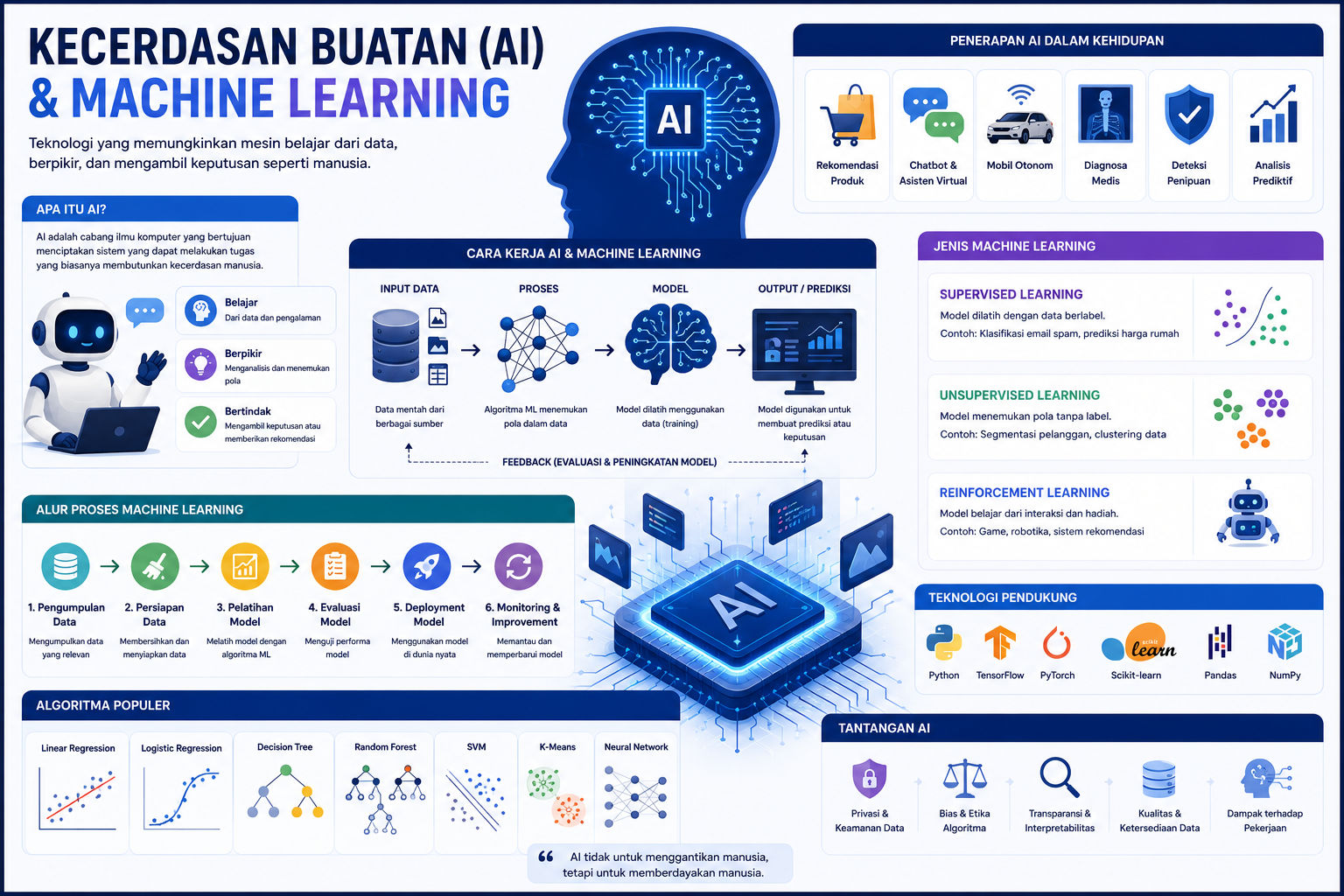
Artificial Intelligence (AI) has transcended its niche in academic research and specialized applications to become a pervasive force, arguably the most impactful trend of our time. Recent advancements, particularly in generative AI models like large language models (LLMs) and image generators, have demonstrated capabilities once thought to be purely human domains. From drafting complex code and writing compelling prose to designing intricate visuals and synthesizing vast amounts of data, AI is democratizing creation and augmenting human potential on an unprecedented scale.
Beyond the headline-grabbing generative models, AI's tendrils extend deep into scientific discovery, accelerating research in drug development, material science, and climate modeling. Machine learning algorithms are optimizing supply chains, predicting consumer behavior, and personalizing education experiences. In healthcare, AI assists in early disease detection, enhances diagnostic accuracy, and even helps perform robotic surgeries with greater precision. The convergence of AI with other fields is particularly potent. When paired with robotics, AI gives rise to intelligent automation, capable of performing complex tasks in manufacturing, logistics, and even exploration. Coupled with biotech, AI is unlocking new frontiers in understanding the human genome and designing personalized therapies.
However, the rapid proliferation of AI also brings significant ethical considerations. Bias embedded in training data can lead to discriminatory outcomes. The "black box" nature of some advanced AI models raises questions about transparency and accountability. The future of work is a constant debate, with AI poised to automate many routine tasks while creating new roles that require uniquely human skills. Governing AI responsibly, ensuring fairness, privacy, and control, remains a critical challenge that society must address collaboratively.
The Quantum Leap: Reshaping Computation
While still in its nascent stages compared to AI, quantum computing represents a paradigm shift in computational power. Unlike classical computers that store information as bits (0s or 1s), quantum computers use qubits, which can represent both 0 and 1 simultaneously through superposition. This, combined with entanglement, allows quantum computers to process exponentially more information than classical machines, enabling them to solve problems currently intractable for even the most powerful supercomputers.
The implications are staggering. In drug discovery, quantum simulations could model molecular interactions with unprecedented accuracy, dramatically accelerating the development of new medicines and vaccines. For material science, it promises to unlock novel materials with properties previously unimaginable, from superconductors to more efficient batteries. Quantum cryptography could provide unbreakable encryption, while simultaneously posing a threat to existing security protocols if quantum computers are used to break them. Optimization problems, from financial modeling to logistics, could see revolutionary improvements. While practical, stable, and error-corrected quantum computers are still some years away from widespread use, the progress in quantum hardware and algorithms is a trend to watch closely. Its eventual convergence with AI could lead to quantum AI, capable of solving incredibly complex problems even faster.
Extended Reality (XR) & Spatial Computing: Merging Digital and Physical
Extended Reality (XR), an umbrella term encompassing Virtual Reality (VR), Augmented Reality (AR), and Mixed Reality (MR), is evolving beyond niche entertainment into a transformative platform for interaction and commerce. The latest trend in this space is "spatial computing," which refers to the ability of devices to understand and interact with the physical world in a sophisticated way, blending digital content seamlessly into our physical environments.
Apple's recent entry into the market with its Vision Pro device highlights this shift, emphasizing intuitive, hands-free interaction with digital content that feels inherently part of one's surroundings. This move signals a broader industry push towards integrating digital information directly into our line of sight and auditory perception, moving beyond flat screens. Applications are vast: immersive training simulations for surgeons and pilots, collaborative remote work environments where colleagues share a virtual workspace, enhanced retail experiences, and new forms of education that allow students to explore virtual historical sites or dissect virtual organs. The convergence of XR with AI, 5G, and IoT promises hyper-realistic, context-aware, and highly personalized digital overlays on our physical world, creating new dimensions of human experience and redefining how we interact with information and each other.
The Ubiquitous Network: 5G, 6G & IoT
Underpinning many of these advanced technologies is the relentless march towards hyper-connectivity. 5G networks, now widely deployed, offer significantly faster speeds, lower latency, and greater capacity than their predecessors. This foundational infrastructure is essential for the seamless operation of autonomous vehicles, real-time remote surgery, and the burgeoning Internet of Things (IoT).
The IoT continues its exponential expansion, connecting everything from smart home appliances and wearable health monitors to industrial sensors and entire smart cities. This vast network generates an unprecedented deluge of data, which, when analyzed by AI, provides actionable insights for efficiency, predictive maintenance, and personalized services. Looking ahead, 6G research is already underway, promising even greater speeds, ultra-low latency, and the integration of AI directly into the network architecture, enabling truly intelligent environments. This ubiquitous, intelligent network is the nervous system of our future, allowing for instantaneous communication and data exchange between billions of devices, facilitating the convergence of all other technologies.
Biotech & Healthtech: The Future of Being Human
Advances in biotechnology and health technology are poised to redefine what it means to be human. Gene editing tools like CRISPR are moving beyond research labs, holding the promise of curing genetic diseases, enhancing human capabilities, and even combating aging. Personalized medicine, driven by AI analysis of individual genetic profiles and lifestyle data, is tailoring treatments to be more effective and less toxic. Wearable devices and implantable sensors are continuously monitoring our vital signs, providing real-time health insights and enabling proactive healthcare management. AI-powered diagnostics are improving accuracy and speed, while robotic surgery offers unprecedented precision.
This era of technological convergence in health also raises profound ethical and philosophical questions about human enhancement, equitable access to cutting-edge treatments, and the definition of health itself. As technology delves deeper into our biological essence, careful consideration of its societal impact and moral boundaries becomes paramount.
Sustainable Tech: Innovation for a Greener Future
Amidst the excitement of technological progress, a critical trend is the pivot towards sustainability. Innovation is increasingly directed at addressing the climate crisis and fostering a greener future. Renewable energy technologies, such as advanced solar panels, more efficient wind turbines, and even the nascent but promising field of nuclear fusion, are seeing continuous breakthroughs. Carbon capture and storage technologies are improving, offering potential solutions to mitigate existing emissions.
AI and IoT play a vital role here, optimizing energy grids, managing waste more efficiently, and enabling precision agriculture to reduce resource consumption. New materials science is developing biodegradable plastics and sustainable alternatives to traditional resources. The concept of a circular economy, where products are designed for durability, reuse, and recycling, is gaining traction, driven by technological solutions for tracking and managing resources. This trend acknowledges that technology must not only advance human capability but also preserve the planet that sustains us.
The Interplay and Societal Impact: The Invisible Architect at Work
The truly transformative power of these trends lies not in their individual prowess, but in their synergistic interplay. AI is not just smart software; it's the intelligence that powers spatial computing's immersive environments, analyzes the vast data from IoT devices, and optimizes quantum algorithms. 5G and 6G aren't just faster internet; they are the high-bandwidth nervous system enabling autonomous systems, real-time XR experiences, and instantaneous data transfer for AI analysis. Biotech advancements are supercharged by AI, while sustainable technologies leverage IoT and AI for optimal resource management. It's this intricate web of interconnectedness that forms the "invisible architect," silently but profoundly shaping our societies.
The societal impact of this convergence is multifaceted. On one hand, it promises unprecedented opportunities: enhanced healthcare, personalized education, sustainable living, and new forms of creative expression and economic activity. On the other, it presents formidable challenges: the widening digital divide, ethical dilemmas around privacy and algorithmic bias, the potential for job displacement, and the need for robust regulatory frameworks. As technologies become more integrated into our lives, questions of digital sovereignty, data ownership, and the very definition of human autonomy become increasingly pressing.
Navigating this complex landscape requires more than just technological prowess; it demands a human-centered approach to innovation. We must proactively design technologies that empower individuals, foster equity, and promote societal well-being. Education systems need to evolve to equip future generations with the skills to thrive in an AI-driven, hyper-connected world. Policymakers must collaborate internationally to establish ethical guidelines and regulatory frameworks that ensure responsible development and deployment of these powerful tools.
Conclusion
The latest technology news and trends reveal a future that is not merely evolving, but being actively constructed by a dynamic interplay of converging innovations. The "invisible architect" of our future is not a single entity, but the collective force of AI, quantum computing, XR, hyper-connectivity, biotech, and sustainable tech, constantly building and rebuilding the structures of our digital and physical realities. Understanding this intricate dance of technologies is not just an academic exercise; it's essential for every individual, business, and government.
As we stand on the precipice of this new era, the responsibility falls upon us to actively participate in shaping this architectural marvel. The future is not a predetermined destination but a landscape we are continuously designing. By embracing thoughtful innovation, ethical considerations, and a commitment to human-centric progress, we can ensure that this invisible architect builds a future that is not only technologically advanced but also equitable, sustainable, and enriching for all humanity.