The Symbiotic Shift: How Converging Tech Trends are Sculpting Our Future
In an era defined by relentless innovation, the landscape of technology is not merely evolving; it's undergoing a profound symbiotic shift. We are moving beyond a period where technological advancements operated in silos, each pushing its own frontier. Instead, the most compelling narrative of our time is the convergence of disparate technologies, intertwining to create an entirely new reality. This isn't just about faster processors or slicker apps; it's about the fundamental reshaping of industries, economies, and human experience through the powerful interplay of multiple cutting-edge trends.
To truly grasp the magnitude of this transformation, we must look beyond the individual buzzwords and understand the "unseen threads" that connect them. It’s in these intersections that true innovation flourishes, creating capabilities and challenges that are far greater than the sum of their parts. From artificial intelligence to quantum computing, blockchain to extended reality, these trends are not just growing in parallel; they are feeding into one another, creating a feedback loop that accelerates progress and dictates the contours of tomorrow.
The Pillars of Convergence: Key Technologies at Play
Several foundational technologies form the bedrock of this symbiotic shift. Understanding each component is crucial before we delve into their interactions.
Artificial Intelligence (AI) & Machine Learning (ML)
AI continues to be the most influential force driving technological evolution. Beyond automating mundane tasks, advanced AI models are now capable of complex problem-solving, creative generation, and intricate data analysis that was once the exclusive domain of human intellect. Machine Learning, as a subset of AI, has propelled this forward, enabling systems to learn from data without explicit programming. Its applications span every conceivable sector, from personalized medicine and autonomous vehicles to sophisticated financial fraud detection and dynamic content creation.
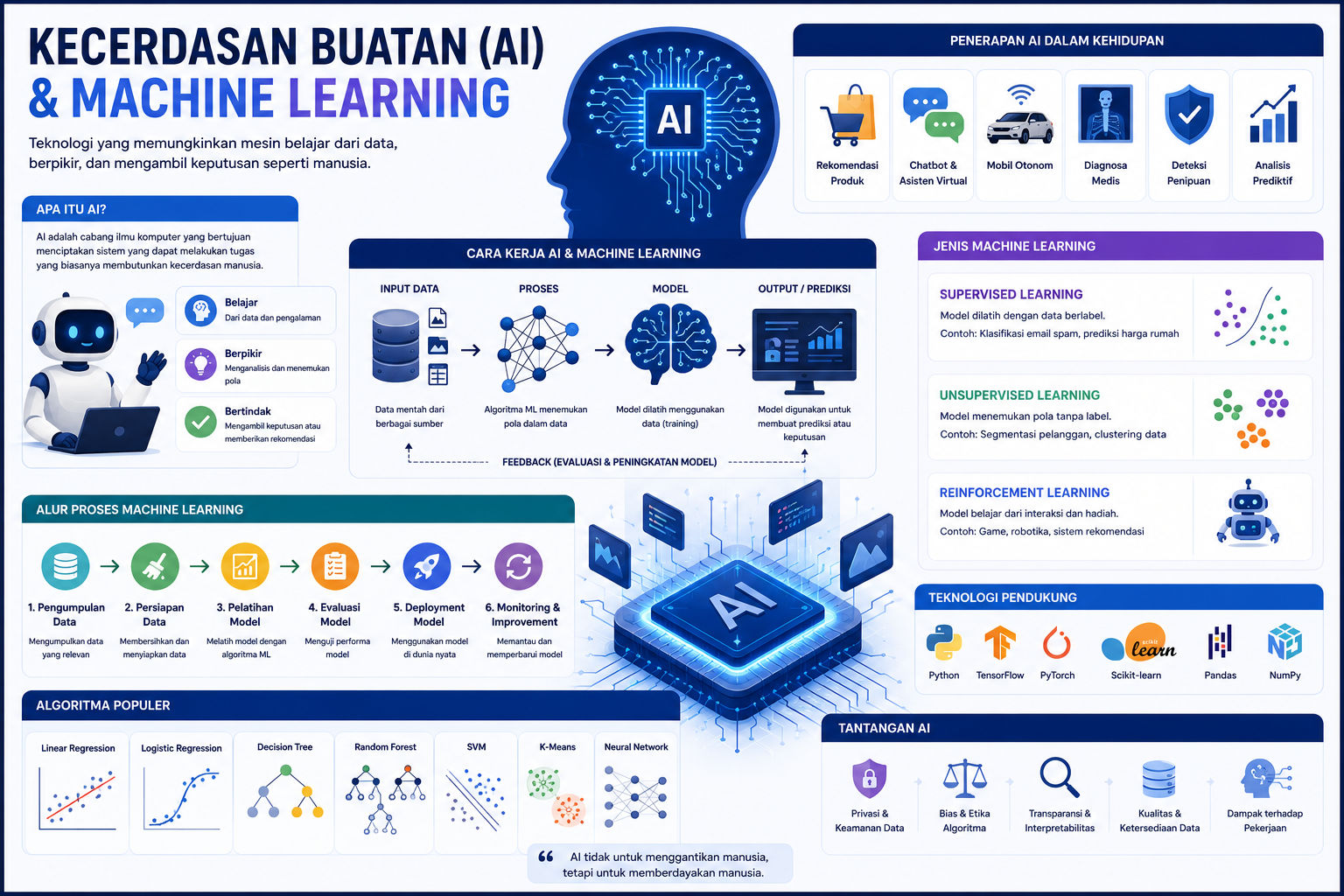
The latest breakthroughs involve large language models (LLMs) and generative AI, which are not just processing information but creating it. These systems are becoming integral to human-computer interaction, transforming how we search for information, develop software, and even compose art. The ethical implications and the potential for societal impact are profound, necessitating careful consideration as these technologies become more pervasive.
Blockchain & Web3: Reshaping Trust and Ownership
Once primarily associated with cryptocurrencies, blockchain technology is now recognized for its fundamental ability to create decentralized, immutable, and transparent ledgers. This distributed trust mechanism is poised to revolutionize not just finance but supply chains, digital identity, data ownership, and intellectual property management. Web3, the vision of a decentralized internet built on blockchain principles, promises to empower users with greater control over their data and digital assets, moving away from the centralized platforms that currently dominate the web.
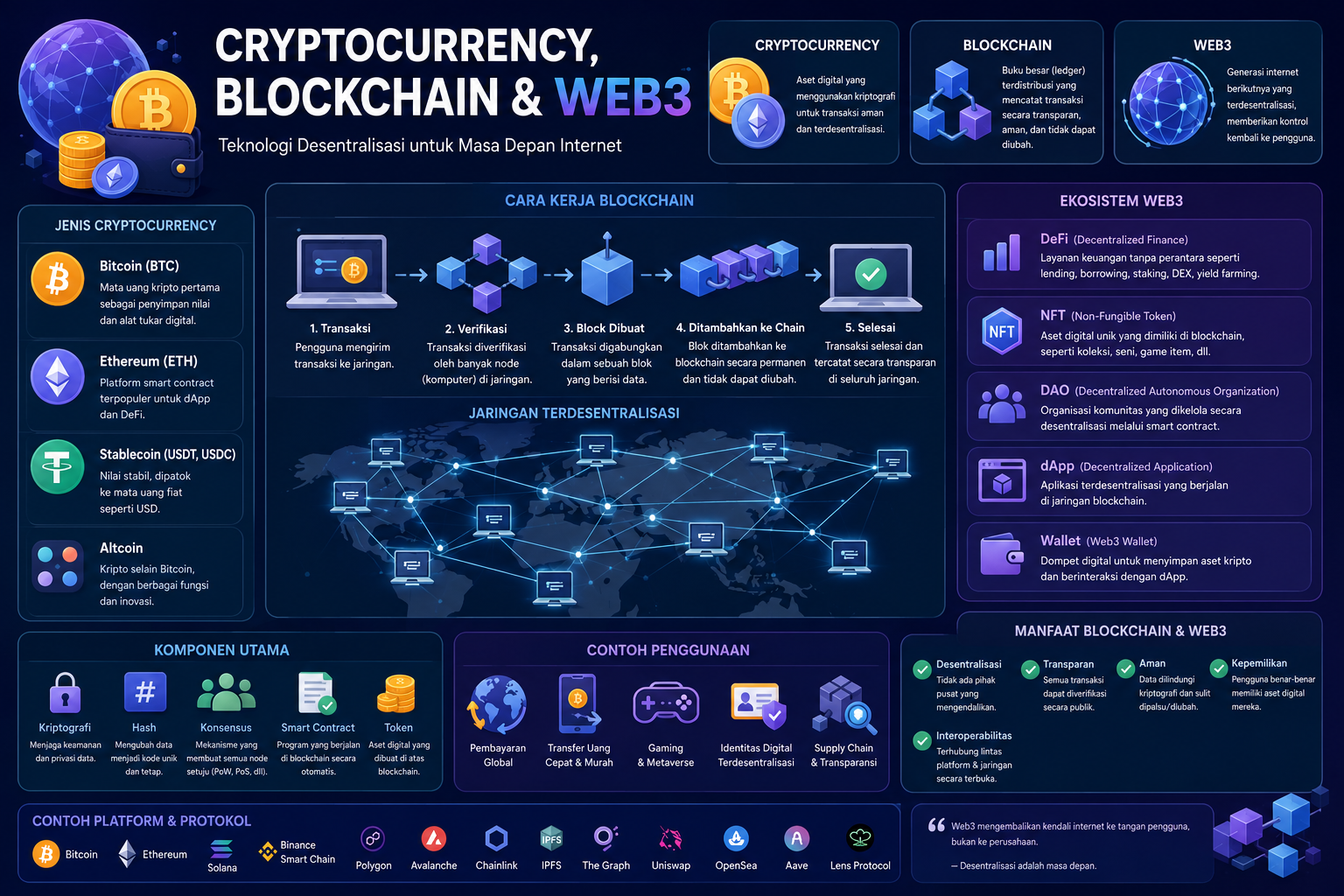
The move towards non-fungible tokens (NFTs) and decentralized autonomous organizations (DAOs) demonstrates the potential for new economic models and governance structures. While still in its nascent stages and facing significant scaling and regulatory hurdles, the core principles of decentralization and user sovereignty offered by blockchain and Web3 are powerful catalysts for future innovation.
Extended Reality (XR): Immersive Digital Worlds
Extended Reality (XR), encompassing Virtual Reality (VR), Augmented Reality (AR), and Mixed Reality (MR), is creating new dimensions for human interaction and experience. VR fully immerses users in digital environments, while AR overlays digital information onto the real world. MR blends these, allowing digital objects to interact with physical surroundings in real-time. Beyond gaming, XR is finding critical applications in fields like remote work collaboration, surgical training, architectural visualization, and educational experiences, promising to redefine how we perceive and interact with information and each other.
Quantum Computing: The Next Computational Frontier
While still largely experimental, quantum computing represents a monumental leap in computational power. Unlike classical computers that use bits representing 0s or 1s, quantum computers leverage qubits that can exist in multiple states simultaneously (superposition) and interact in complex ways (entanglement). This allows them to tackle problems currently intractable for even the most powerful supercomputers, with potential implications for drug discovery, material science, cryptography, and complex optimization problems. Its long-term impact on cybersecurity and AI could be transformative, though practical, large-scale applications are still years away.
Internet of Things (IoT) & Edge Computing: The Pervasive Network
The proliferation of interconnected devices, forming the Internet of Things (IoT), continues to grow exponentially. From smart homes and connected cars to industrial sensors and smart cities, IoT generates vast amounts of data. Edge computing emerges as a crucial complement, processing data closer to its source rather than sending it all to centralized cloud servers. This reduces latency, conserves bandwidth, and enhances data security and privacy, enabling real-time decision-making for critical applications like autonomous vehicles and smart factories. The combination of IoT and edge computing forms a pervasive, intelligent network that blurs the lines between the physical and digital worlds.
The Power of Intersections: How Trends Converge
The true revolutionary potential lies not in these technologies in isolation, but in their powerful interdependencies. This symbiotic convergence creates capabilities that were previously unimaginable, giving rise to new paradigms across every sector.
AI-Enhanced Everything: The Smartening of Systems
Artificial Intelligence is the prime enabler across all other trends. AI algorithms analyze the vast datasets generated by IoT devices, extracting insights and automating actions in smart homes, industrial IoT, and smart cities. For instance, AI-powered predictive maintenance on IoT sensors can forecast equipment failures before they occur, optimizing operations and preventing costly downtime. In XR, AI enhances realism, creates dynamic virtual environments, and personalizes user experiences, making interactions more intuitive and responsive.
The way these trends interact forms a complex web, profoundly reshaping our reality. Similar to how the unseen threads of technology weave together, we see a digital tapestry emerging where AI is the intelligent core, enabling seamless integration and autonomous functionality. This intelligent integration allows systems to adapt, learn, and evolve, moving beyond mere automation to genuine autonomy.
Blockchain for Trust and Transparency in AI & IoT
Blockchain provides a critical layer of trust and transparency for both AI and IoT. In AI, it can be used to track data provenance, ensuring the integrity of training datasets and auditing AI decision-making processes, addressing concerns about bias and accountability. For IoT, blockchain can secure device identities, manage access controls, and create immutable records of data transactions, crucial for supply chain transparency and secure data sharing among various stakeholders. Imagine smart contracts automatically executing based on verified IoT data, all recorded on a tamper-proof blockchain – this is the future of secure, automated ecosystems.
XR and the Metaverse: A New Interface for Digital Interaction
Extended Reality serves as the immersive interface through which many of these converged technologies will be experienced. The vision of the metaverse – a persistent, interconnected virtual world – relies heavily on the integration of high-fidelity XR, AI for intelligent non-player characters and dynamic environments, and blockchain for digital asset ownership (NFTs) and secure transactions within these virtual economies. This convergence promises to create deeply immersive social, economic, and creative experiences that blur the lines between physical and digital existence.
Quantum Computing's Long-Term Impact on Security and AI
Looking further ahead, quantum computing has the potential to profoundly impact both cybersecurity and AI. Its ability to break current encryption standards necessitates the development of quantum-resistant cryptography, a field known as post-quantum cryptography. Simultaneously, quantum AI, or QAI, could revolutionize machine learning by performing complex calculations at unprecedented speeds, leading to breakthroughs in areas like drug discovery, financial modeling, and materials science that are currently out of reach for classical AI.
Societal and Ethical Implications of the Symbiotic Shift
As these technologies converge and accelerate, so do the societal and ethical questions they raise. Understanding and addressing these implications is paramount to harnessing technology for collective good.
The Future of Work and the Digital Divide
The rapid automation driven by AI and IoT will inevitably reshape job markets. While new roles will emerge, there's a risk of widening the digital divide if access to technological education and retraining isn't equitable. Governments, educators, and industries must collaborate to prepare the workforce for an AI-augmented future.
Privacy, Data Governance, and Digital Ethics
The unprecedented collection and analysis of personal data by AI and IoT systems, even when secured by blockchain, raise significant privacy concerns. Robust data governance frameworks, ethical AI guidelines, and a renewed focus on individual data sovereignty (as championed by Web3) are essential. Anticipating and decoding the latest technology trends and their societal echoes requires a proactive approach to these ethical dilemmas.
Security and Resilience in Interconnected Systems
As systems become more interconnected and reliant on each other, the attack surface for cyber threats expands. A vulnerability in one component could cascade through an entire ecosystem. Developing resilient architectures, robust cybersecurity protocols, and international cooperation are critical to safeguarding our increasingly digital world.
Conclusion: Navigating the New Digital Frontier
The symbiotic convergence of technology trends is not just a passing phase; it is the defining characteristic of our digital age. It represents a fundamental shift from isolated innovations to interconnected ecosystems that amplify each other's capabilities. This intricate web of AI, blockchain, XR, quantum computing, and IoT is not just shaping our tools; it is sculpting our future, redesigning industries, reimagining human interaction, and challenging our ethical frameworks.
To navigate this new digital frontier successfully, we must adopt a holistic perspective, understanding not just what each technology does, but how they interact and what new possibilities (and responsibilities) arise from their combined power. The future is not a predetermined path but a landscape we are actively building, brick by technological brick, in a symphony of convergence. Engaging with these trends proactively, thoughtfully, and ethically will be key to unlocking their immense potential and ensuring a future that is innovative, inclusive, and equitable for all.