Unveiling 2026: The Pulse of Tech News & Trends Shaping Tomorrow
In the fast‑moving landscape of 2026, technology is no longer a peripheral buzzword—it’s the core driver of economic growth, social change, and everyday convenience. While the headlines often spotlight the next big gadget or a breakthrough algorithm, a deeper look reveals a complex tapestry of interwoven innovations: from AI‑powered personalization engines to decentralized finance (DeFi) ecosystems, from quantum‑enhanced security protocols to edge‑AI on wearables. This article takes a close‑up view of the most influential tech trends this year, exploring how they’re reshaping industries, consumer behaviors, and the very fabric of our digital lives.
1. AI: From Automation to Autonomy
Artificial Intelligence has transitioned from a niche research domain to a ubiquitous enterprise backbone. In 2026, generative models are not just content creators but strategic partners, guiding product design, market analysis, and even legal compliance. Companies like OpenAI and Anthropic have released AI frameworks that allow businesses to train domain‑specific agents with minimal data, reducing the barrier to entry for small and medium enterprises.
The rise of AI‑assisted design tools—which can generate code, UI mockups, and marketing copy in seconds—has accelerated the development cycle for startups. Meanwhile, AI‑driven supply chain optimization is cutting logistics costs by up to 30% for global retailers. This shift is not without challenges; ethical AI governance frameworks are now mandatory for sectors dealing with sensitive data, prompting a surge in demand for AI auditors and bias‑mitigation specialists.
2. Quantum‑Enabled Security and Computing
Quantum computing has moved from theoretical speculation to practical prototypes. While large‑scale quantum processors remain a few years away, quantum‑resistant cryptography is already being adopted by financial institutions and government agencies to safeguard data against future threats. The NIST Quantum Safe Cryptography project has published a suite of algorithms that can be integrated into existing TLS infrastructures with minimal performance impact.
In the realm of computing, heterogeneous processors that combine classical CPUs with neuromorphic cores are gaining traction. These hybrid chips enable real‑time data analytics at the edge, reducing latency for autonomous vehicles and remote monitoring systems.
3. Edge AI and the Internet of Things (IoT) Revolution
The proliferation of IoT devices—smart thermostats, wearable health monitors, industrial sensors—has generated an unprecedented volume of data. Edge AI, which processes this data locally rather than sending it to the cloud, is becoming essential for real‑time decision making. Manufacturers are deploying Cutting‑Edge Currents to benchmark the latest edge AI frameworks and evaluate their impact on latency and bandwidth consumption.
One notable application is in agriculture, where AI‑enabled drones and soil sensors analyze crop health on the field, delivering actionable insights to farmers within minutes. This real‑time feedback loop has increased yield efficiency by up to 18% in pilot studies across North America.
4. Blockchain, DeFi, and the Decentralized Web
Blockchain technology continues to mature beyond cryptocurrency. Decentralized finance (DeFi) platforms are now offering institutional-grade services, including tokenized real‑estate investments and cross‑border micro‑payments. The interoperability layer—a set of protocols that enable seamless asset transfer across multiple chains—has become a focal point for developers.
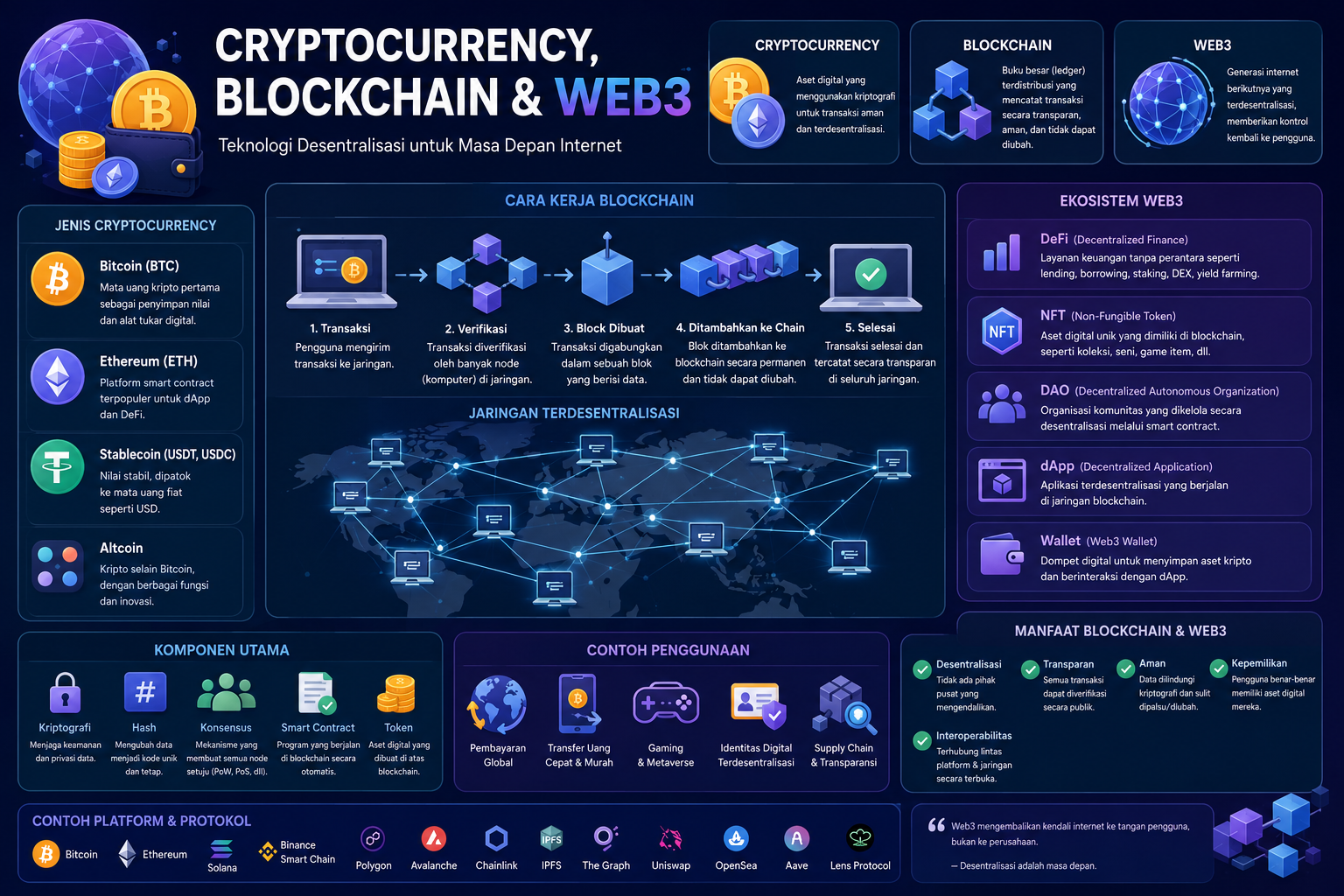
Meanwhile, the rise of non‑fungible tokens (NFTs) in the digital art and gaming sectors has sparked debates about ownership rights and environmental impact. Some platforms are adopting proof‑of‑stake consensus mechanisms to reduce energy consumption, aligning with global sustainability goals.
5. Digital Wallets and the Future of Money
Traditional banking is being challenged by a wave of digital wallets that integrate fiat, crypto, and loyalty points into a single interface. The adoption of 最新テクノロジーのニュースとトレンド:2026年の革新を探る reveals that over 65% of millennials now prefer mobile wallets for everyday transactions, citing convenience and security features such as biometric authentication.

Central Bank Digital Currencies (CBDCs) are also moving from pilot to mainstream. Countries like Sweden and the UAE have launched fully functional CBDCs that allow instant settlement across borders, reducing transaction costs for small businesses.
6. Sustainable Tech: Green Computing and AI for Climate
With climate change becoming an ever‑present threat, tech companies are investing heavily in green initiatives. Data centers powered by renewable energy and optimized by AI-driven cooling systems have cut their carbon footprint by up to 40%. AI models trained on satellite imagery are now able to predict deforestation patterns and recommend conservation strategies.
Furthermore, carbon‑neutral AI is a growing niche. Organizations are adopting model distillation and pruning techniques to reduce the energy consumption of large language models without compromising performance.
7. The Rise of Hyper‑Personalized Experiences
Consumers now expect hyper‑personalization—products and services tailored to their preferences in real time. AI algorithms analyze behavioral data, contextual signals, and even biometric inputs to deliver customized recommendations. In e‑commerce, this translates to dynamic pricing that adapts to user intent, while in entertainment, streaming platforms use AI to curate playlists that evolve with the user’s mood.
However, this hyper‑personalization raises privacy concerns. The General Data Protection Regulation (GDPR) and similar frameworks worldwide are pushing companies to adopt transparent data practices, leading to a surge in privacy‑by‑design solutions.
8. 5G, 6G, and the Next Generation of Connectivity
While 5G rollout continues to expand, research into 6G is already underway. Early prototypes promise speeds up to 1 Tbps and latency below 0.1 ms, enabling immersive AR/VR experiences and real‑time remote surgery. The convergence of 5G with edge AI is creating new opportunities for smart cities, where traffic lights, public safety systems, and environmental sensors communicate instantaneously.
9. The Human‑Tech Interface: Augmented Reality (AR) & Virtual Reality (VR)
AR and VR technologies are moving from niche gaming applications to mainstream productivity tools. Virtual collaboration spaces allow remote teams to interact in shared 3D environments, while AR overlays in retail enable customers to visualize products in their homes before purchasing.
In healthcare, VR simulators are used for surgical training, reducing error rates and improving patient outcomes. Meanwhile, AR navigation apps are integrating with autonomous vehicle systems to provide real‑time traffic updates and safety alerts.
10. The Future of Work: Remote, Hybrid, and AI‑Enhanced Collaboration
Workplaces are undergoing a paradigm shift. Hybrid models that blend in‑office and remote work are becoming the norm, supported by AI‑driven productivity tools. Intelligent scheduling assistants analyze calendar data and employee preferences to optimize meeting times, while AI‑powered knowledge graphs help teams find relevant information faster.
Cybersecurity remains a top priority. AI‑driven threat detection systems can identify zero‑day vulnerabilities in real time, providing a critical layer of defense against sophisticated cyber attacks.
Conclusion: Navigating the Tech‑Rich Landscape of 2026
2026 is a year of convergence—AI, quantum computing, blockchain, and sustainability initiatives are not isolated silos but interdependent forces shaping our digital future. Whether you’re a startup founder, a policy maker, or a curious consumer, staying ahead requires a holistic understanding of these trends and a willingness to adapt.
As we look forward, the question is not whether technology will continue to evolve, but how we can harness its power responsibly and ethically. By embracing transparency, prioritizing user privacy, and investing in green solutions, we can ensure that the next wave of innovation benefits everyone.