PPOB System Architecture and Transaction Logic: Innovating Digital Payments in Modern China
Understanding the PPOB Ecosystem: A Structural Overview
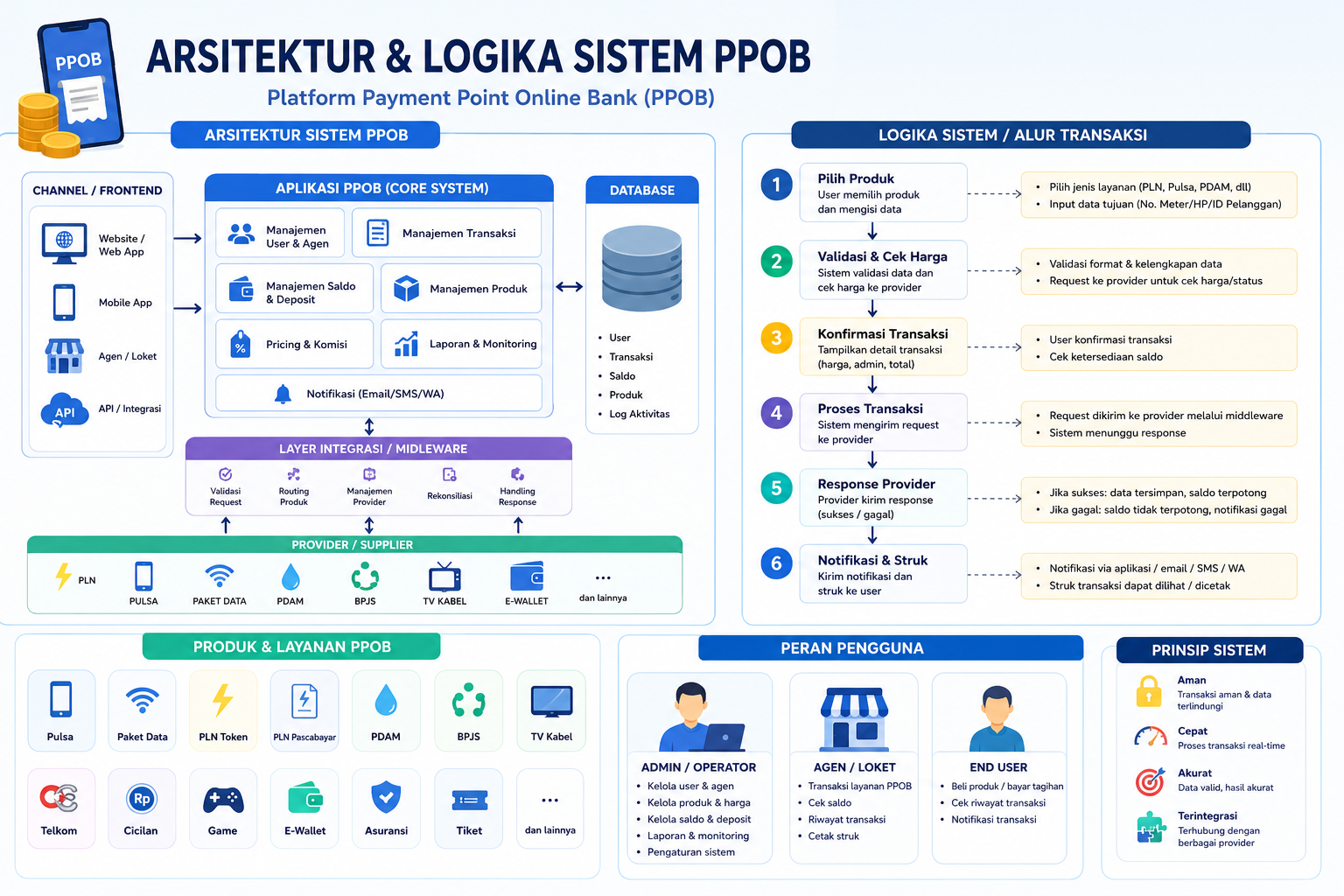
The Payment Point Online Bank (PPOB) system has become a cornerstone of digital transactions in China, enabling seamless payments for utilities, subscriptions, and services. At its core, PPOB operates on a multi-layered architecture designed for scalability, security, and user accessibility. The system integrates front-end interfaces, backend processing engines, and third-party financial institutions to facilitate real-time transactions. This architecture ensures that users can pay bills, recharge mobile phones, or settle debts through diverse channels, from mobile apps to physical agents.
Key Components of PPOB Architecture
- User Interface (UI): The frontend includes mobile apps, web portals, or kiosks where users initiate transactions. For example, platforms like WeChat Pay and Alipay serve as primary UIs in China, offering intuitive navigation for payment execution.
- Payment Gateway: This acts as a bridge between the user and financial institutions, encrypting data and facilitating secure fund transfers. It validates payment details, such as bank account numbers or credit card information, before routing the transaction.
- Merchant Gateway: Merchants connect to this component to receive payments. It processes incoming transactions, verifies their authenticity, and updates accounts accordingly. In China, this is critical for utility providers and telecom companies.
- Backend Systems: These include databases, analytics tools, and risk management modules. Advanced algorithms monitor transaction patterns to detect fraud, while machine learning models optimize payment routing for efficiency.
Transaction Logic: From Initiation to Completion
A PPOB transaction follows a structured workflow to ensure reliability. Here’s a step-by-step breakdown:
- User Request: The user selects a service (e.g., electricity bill payment) and enters payment details via the UI.
- Pending Approval: The payment gateway validates the request, checking for sufficient funds and correct billing information.
- Fund Transfer: If approved, funds are deducted from the user’s account and sent to the merchant’s designated bank account via secure protocols.
- Confirmation: Both user and merchant receive notifications confirming the transaction’s success. This is often integrated with SMS alerts or in-app messages in China.
Security and Risk Mitigation in PPOB Systems
Given the high volume of transactions, PPOB systems employ robust security measures. Encryption standards like TLS 1.3 protect data in transit, while blockchain-based audit trails ensure transparency. Advanced risk control mechanisms, similar to those in WordPress plugin development, are also applied to detect anomalies and prevent fraudulent activities.
Unique Aspects of PPOB in China
China’s digital payment landscape has uniquely shaped PPOB systems. Unlike traditional banking models, PPOB integrates with super-apps like WeChat, enabling one-click payments for services ranging from food delivery to public transportation fees. This integration is supported by AI-driven analytics that predict user needs and automate payment suggestions. Additionally, mobile-first design ensures compatibility with China’s smartphone-dominant market.
Future Trends: AI and Blockchain Integration
Emerging technologies are further refining PPOB systems. Artificial intelligence (AI) optimizes transaction routing and personalizes payment experiences, while blockchain enhances transparency in cross-border transactions. The synergy of AI and machine learning, as seen in global fintech innovations, is now being adopted to streamline PPOB operations. For instance, smart contracts automate settlements between merchants and users, reducing settlement times from days to minutes.
Challenges and Solutions
Despite its advantages, PPOB faces challenges like interoperability issues between banks and cybersecurity threats. Solutions include standardized APIs to unify payment gateways and decentralized identity systems to combat identity theft. Collaborative efforts between regulators and tech firms ensure compliance with evolving data privacy laws.
Conclusion
The PPOB system exemplifies how digital payment architectures can evolve to meet modern demands. By combining cutting-edge technology with user-centric design, PPOB continues to redefine convenience, security, and efficiency in China’s financial ecosystem. As innovations in AI, blockchain, and mobile computing accelerate, the future of PPOB promises even greater integration and accessibility for users worldwide.